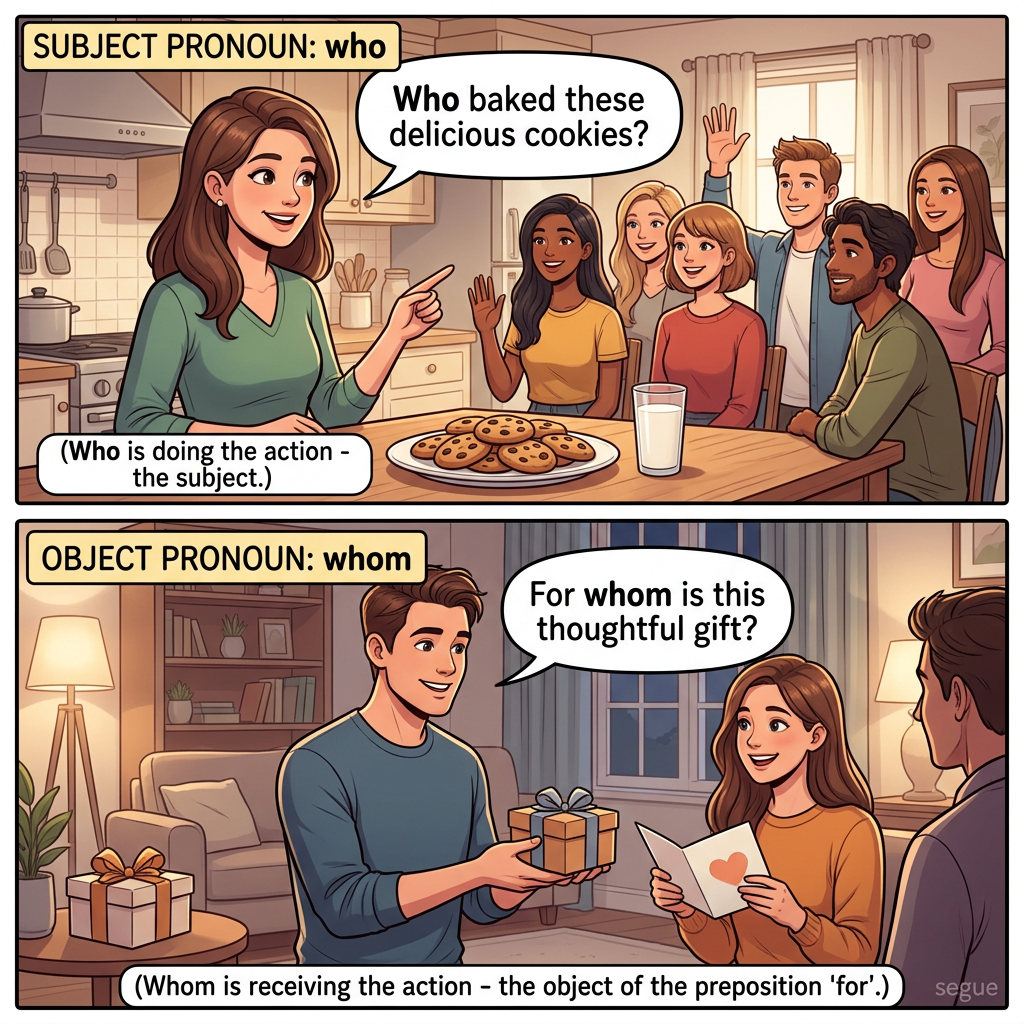
who vs. whom
/ˈhuː ˌvɜːrsəs ˈhuːm/
who is a subject pronoun; whom is an object pronoun
who vs. whom in a sentence
“Who called? To whom should I address this? (Try: he called / give it to him)”
Origin of who vs. whom
Old English hwa (nominative) vs. hwam (dative)
Related Words
fewer vs. less
fewer for countable items; less for uncountable quantities
farther vs. further
farther for physical distance; further for metaphorical or additional
imply vs. infer
speakers/writers imply; listeners/readers infer
compliment vs. complement
compliment is praise; complement is something that completes
disinterested vs. uninterested
disinterested means impartial; uninterested means not interested
compose vs. comprise
parts compose the whole; the whole comprises its parts