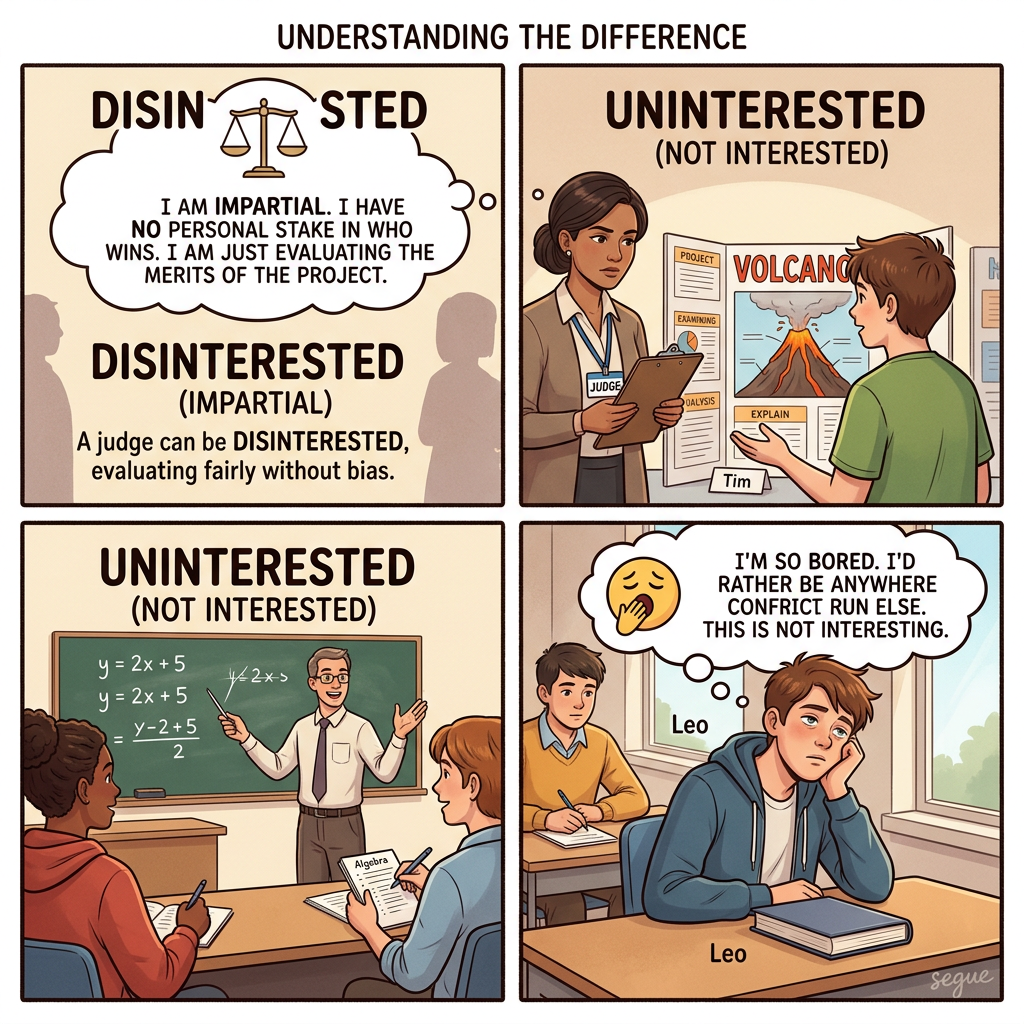
disinterested vs. uninterested
/dɪsˈɪntrəstɪd ˌvɜːrsəs ʌnˈɪntrəstɪd/
disinterested means impartial; uninterested means not interested
disinterested vs. uninterested in a sentence
“A judge should be disinterested. He was uninterested in the topic.”
Origin of disinterested vs. uninterested
Disinterested = without self-interest; uninterested = lacking interest
Related Words
compose vs. comprise
parts compose the whole; the whole comprises its parts
continual vs. continuous
continual means recurring with breaks; continuous means without interruption
affect vs. effect
affect is usually a verb (to influence); effect is usually a noun (the result)
lie vs. lay
lie means to recline (no object); lay means to place something (requires object)
who vs. whom
who is a subject pronoun; whom is an object pronoun
fewer vs. less
fewer for countable items; less for uncountable quantities