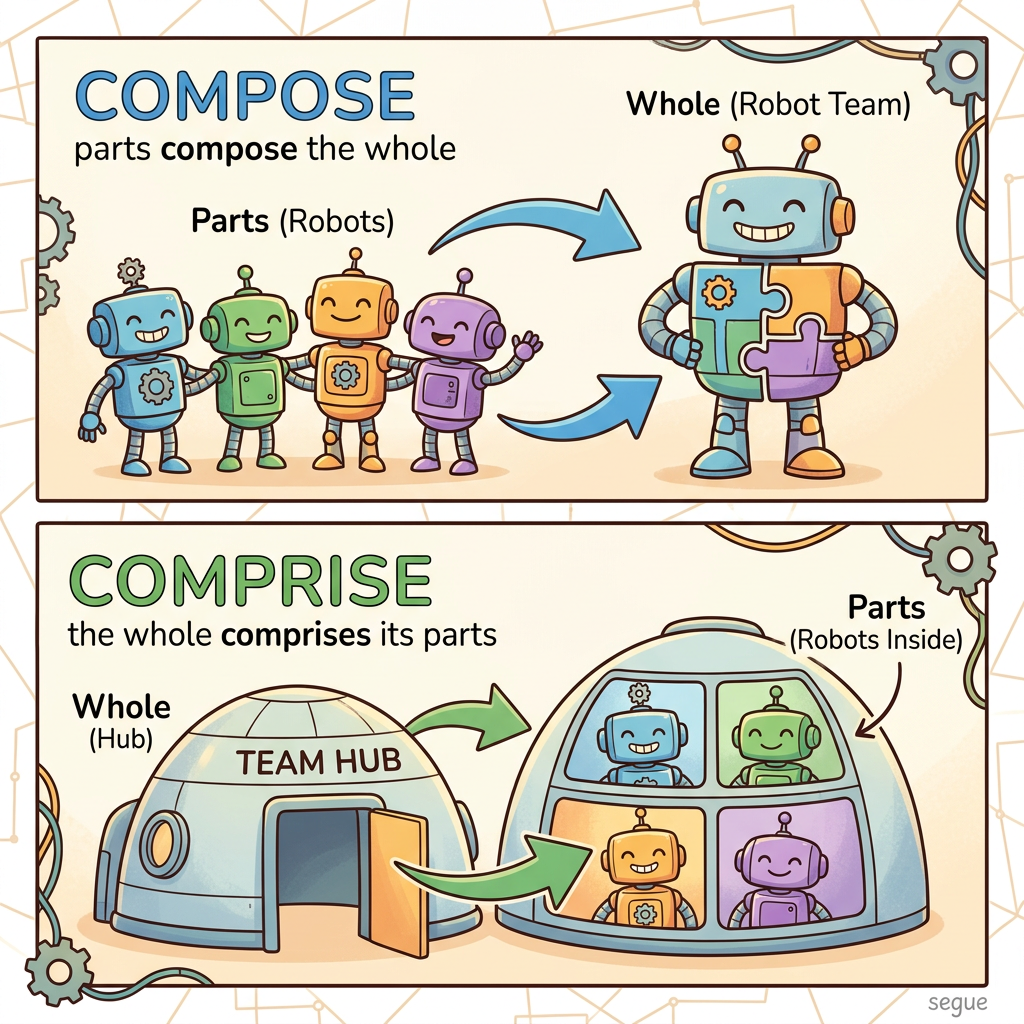
compose vs. comprise
/kəmˈpoʊz ˌvɜːrsəs kəmˈpraɪz/
parts compose the whole; the whole comprises its parts
compose vs. comprise in a sentence
“Fifty states compose the union. The union comprises fifty states.”
Origin of compose vs. comprise
Latin componere (put together) vs. comprendere (grasp, include)
Related Words
continual vs. continuous
continual means recurring with breaks; continuous means without interruption
affect vs. effect
affect is usually a verb (to influence); effect is usually a noun (the result)
lie vs. lay
lie means to recline (no object); lay means to place something (requires object)
who vs. whom
who is a subject pronoun; whom is an object pronoun
fewer vs. less
fewer for countable items; less for uncountable quantities
farther vs. further
farther for physical distance; further for metaphorical or additional