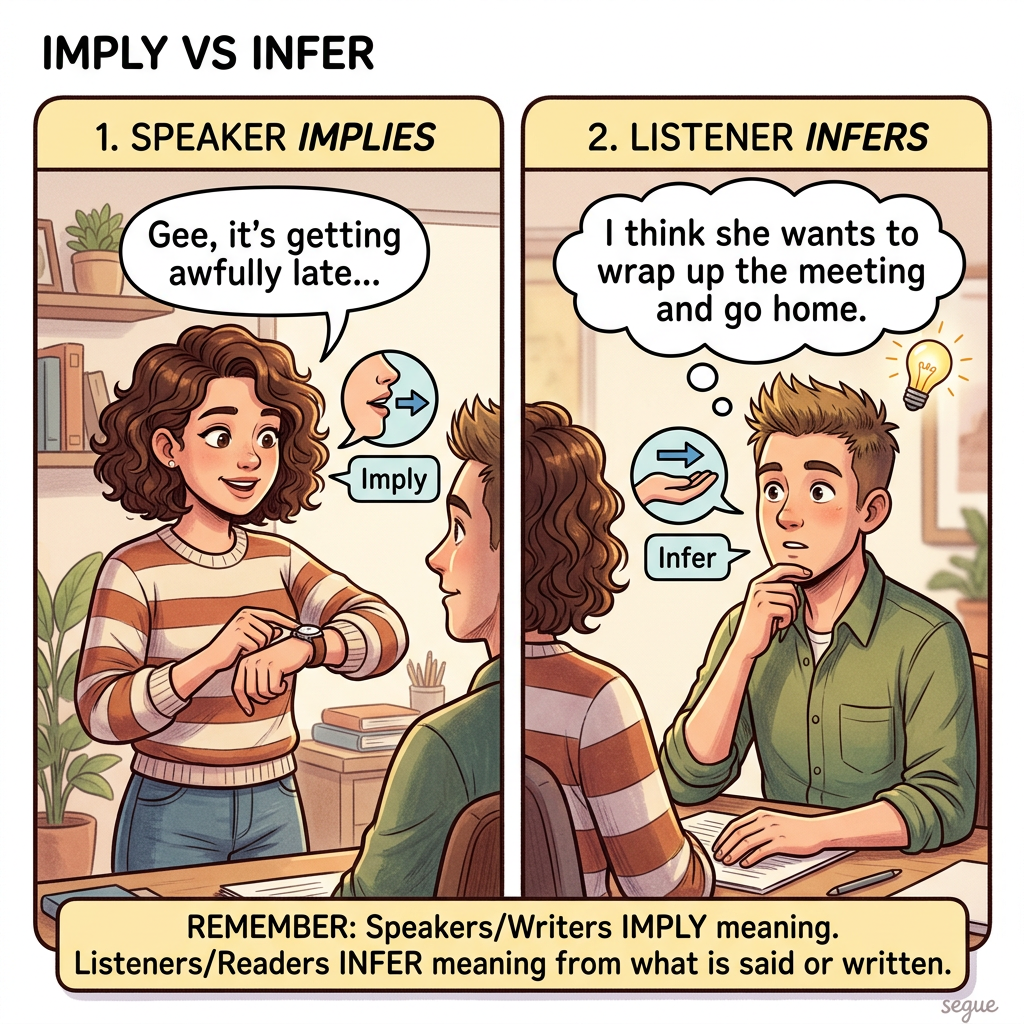
imply vs. infer
/ɪmˈplaɪ ˌvɜːrsəs ɪnˈfɜːr/
speakers/writers imply; listeners/readers infer
imply vs. infer in a sentence
“She implied I was wrong. I inferred from her tone that she was upset.”
Origin of imply vs. infer
Latin implicare (to enfold) vs. inferre (to bring in)
Related Words
compliment vs. complement
compliment is praise; complement is something that completes
disinterested vs. uninterested
disinterested means impartial; uninterested means not interested
compose vs. comprise
parts compose the whole; the whole comprises its parts
continual vs. continuous
continual means recurring with breaks; continuous means without interruption
affect vs. effect
affect is usually a verb (to influence); effect is usually a noun (the result)
lie vs. lay
lie means to recline (no object); lay means to place something (requires object)