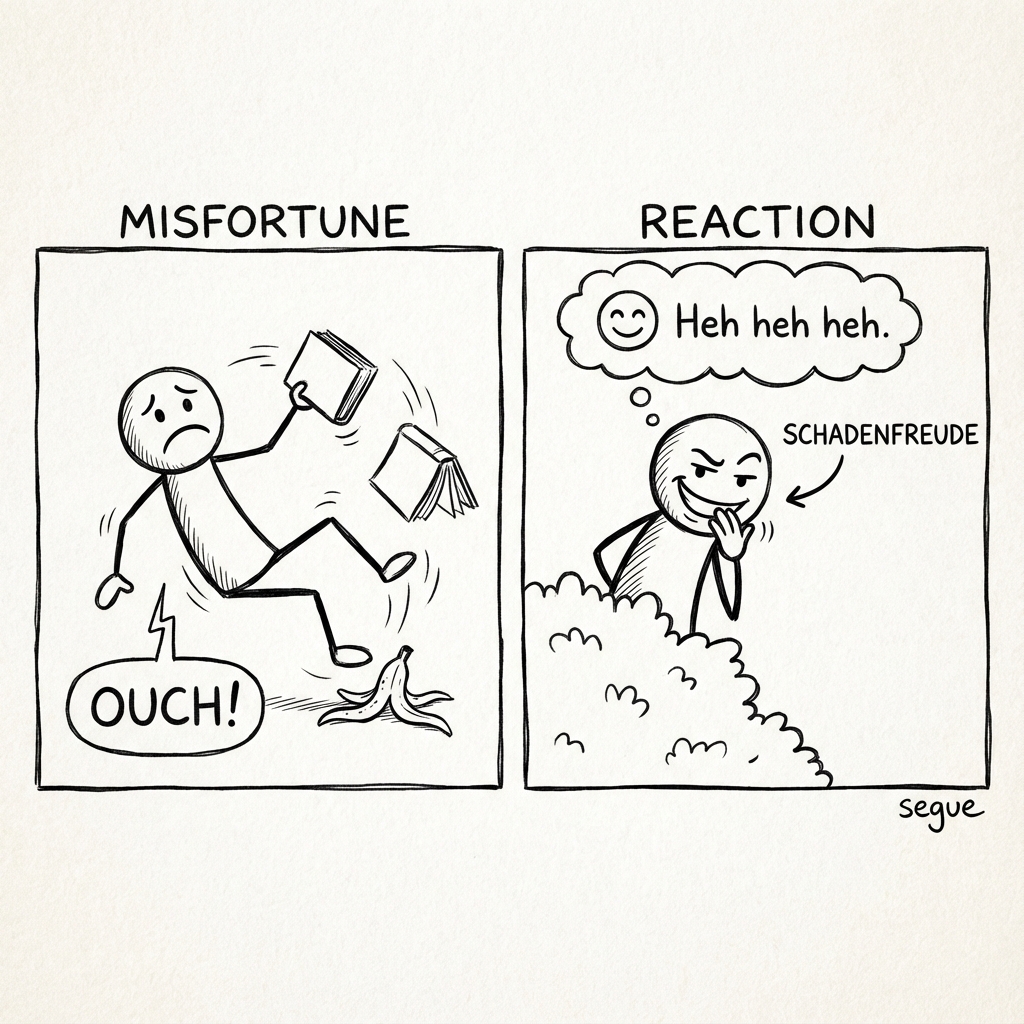
schadenfreude
/ˈʃɑːdənˌfrɔɪdə/
pleasure derived from another's misfortune
schadenfreude in a sentence
“He felt a twinge of schadenfreude when his rival failed.”
Origin of schadenfreude
German Schaden damage, harm + Freude joy
What does schadenfreude really mean?
Schadenfreude is the guilty pleasure of watching someone else stumble — sharper when the someone is a rival, smug, or previously untouchable. English never developed its own word for this feeling, which is precisely why the German import stuck: it names something everyone recognizes and few admit.
The story behind schadenfreude
German, from Schaden (harm, damage) and Freude (joy). English borrowed it in the mid-19th century. Psychologists have since mapped its triggers — envy, rivalry, and a sense of deserved comeuppance — and brain-imaging studies show reward circuitry activating when an envied person fails.
How to use schadenfreude
Use it with a knowing, slightly ironic register: "a wave of schadenfreude swept Twitter when the startup imploded." It works best for collective or observed glee, not personal cruelty — the word names the feeling, not an action.
Related Words
pathos
a quality that evokes pity or sadness
ambivalence
having mixed feelings or contradictory ideas
equanimity
mental calmness and composure in difficult situations
catharsis
the release of strong emotions through art or actions
nostalgia
sentimental longing for the past
saudade
a deep emotional state of melancholic longing for something absent