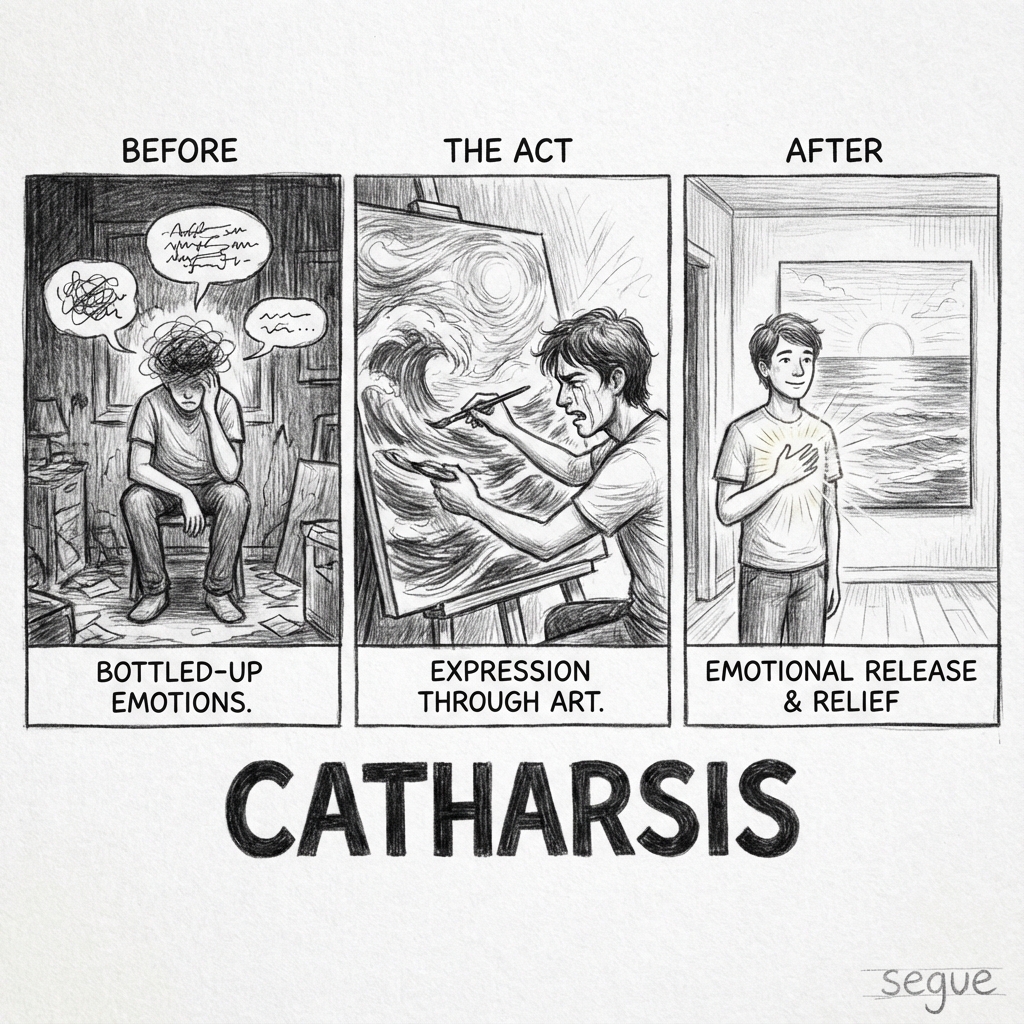
catharsis
/kəˈθɑɹsəs/
emotional release or purification through art
catharsis in a sentence
“The tragedy provided catharsis for the audience.”
Origin of catharsis
Greek katharsis purification, cleansing from kathairein to purify from katharos pure
What does catharsis really mean?
Catharsis is emotional release through experience — the cleansing that follows a good cry at a film, a furious workout, or finally saying the unsaid thing. The feeling is of pressure discharged: emotions fully felt, then spent.
The story behind catharsis
Greek katharsis, "purification" or "cleansing." Aristotle made it a cornerstone of his Poetics: tragedy works by arousing pity and fear in the audience and then purging them. Two millennia later, Freud and Breuer borrowed the word for their "cathartic method," the talking cure that became psychoanalysis.
How to use catharsis
Use it for experiences that discharge built-up emotion: "writing the letter was a catharsis." The adjective is cathartic, which is now the more common form in everyday speech — "strangely cathartic" being the signature collocation.