Loading collection...
📝
Sentence Structures Vocabulary
Types of sentences and their effects
8 words
All 8 Words
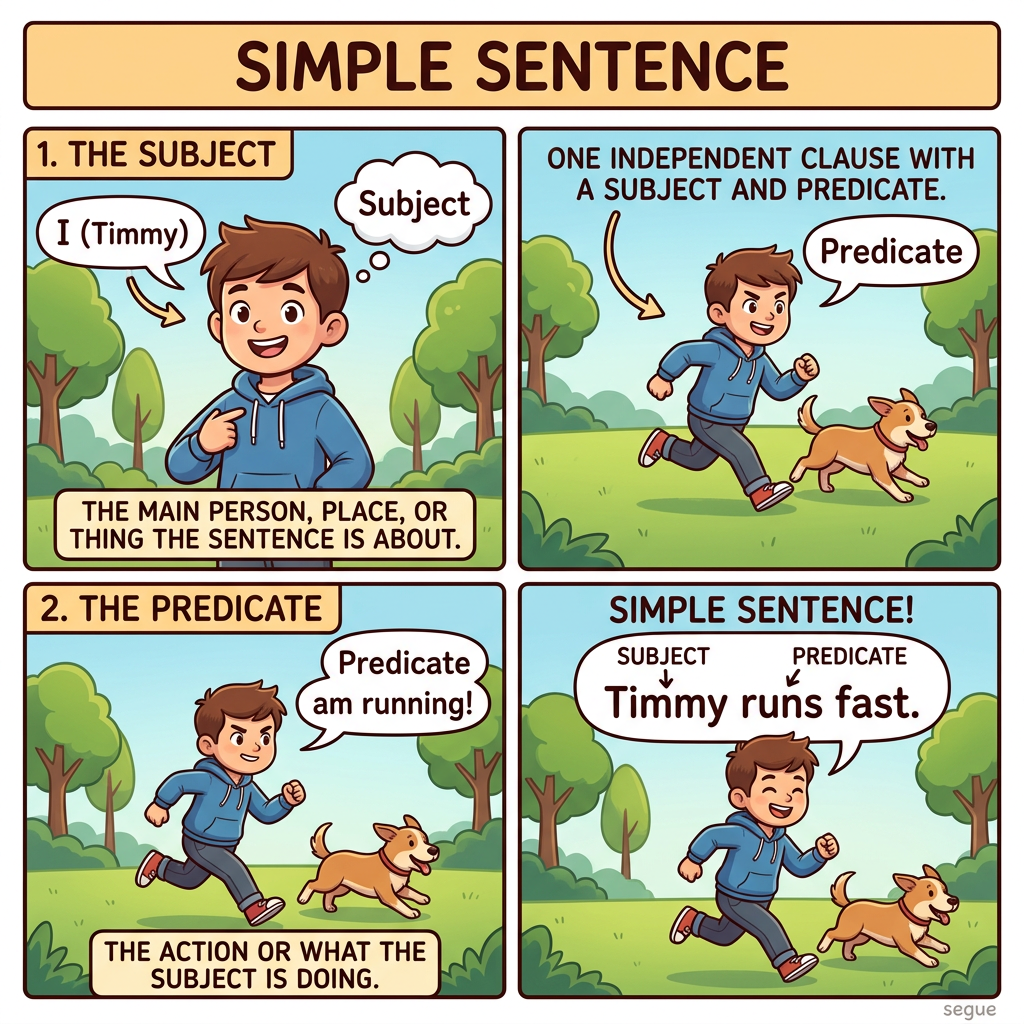
simple sentence
/ˌsɪmpəl ˈsentəns/one independent clause with subject and predicate
“She ran. Direct. Powerful. Often underused.”
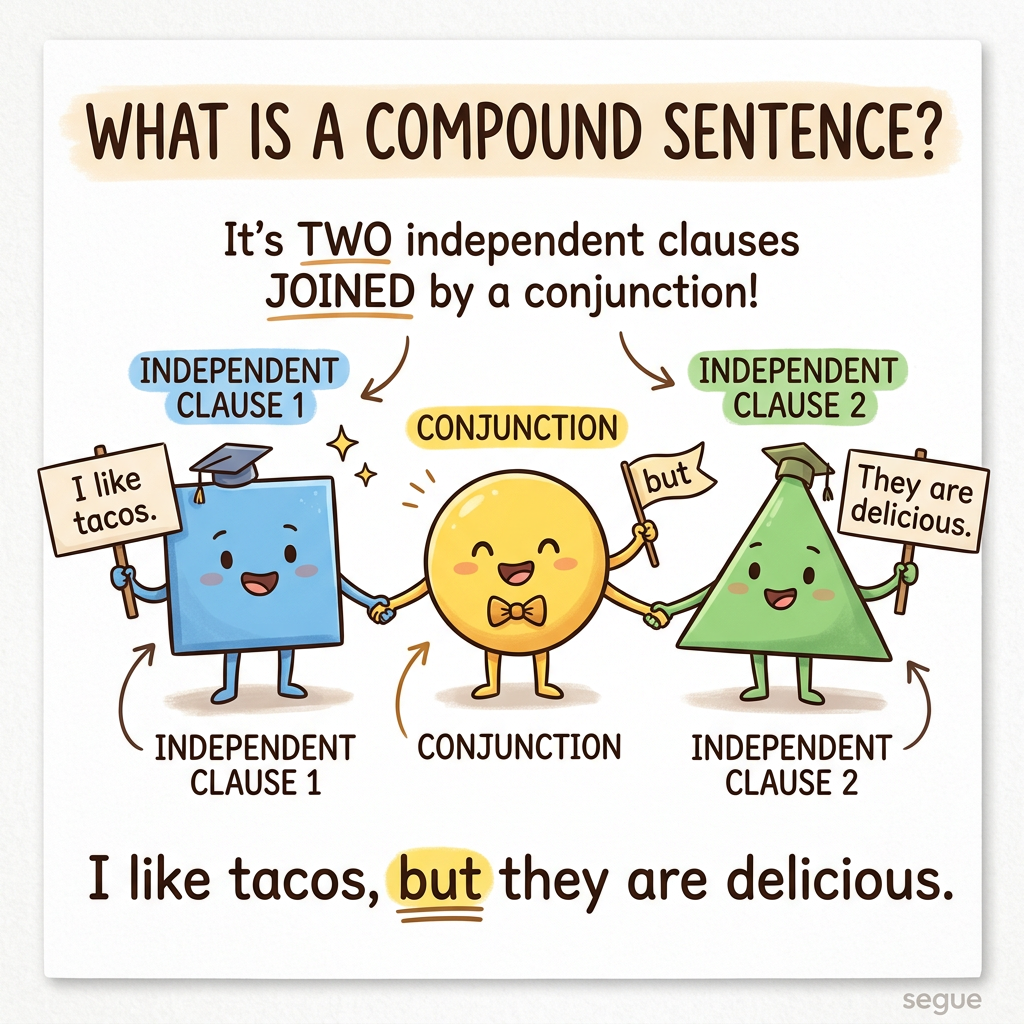
compound sentence
/ˌkɒmpaʊnd ˈsentəns/two independent clauses joined by a conjunction
“She ran, and he followed. Equal weight to both ideas.”
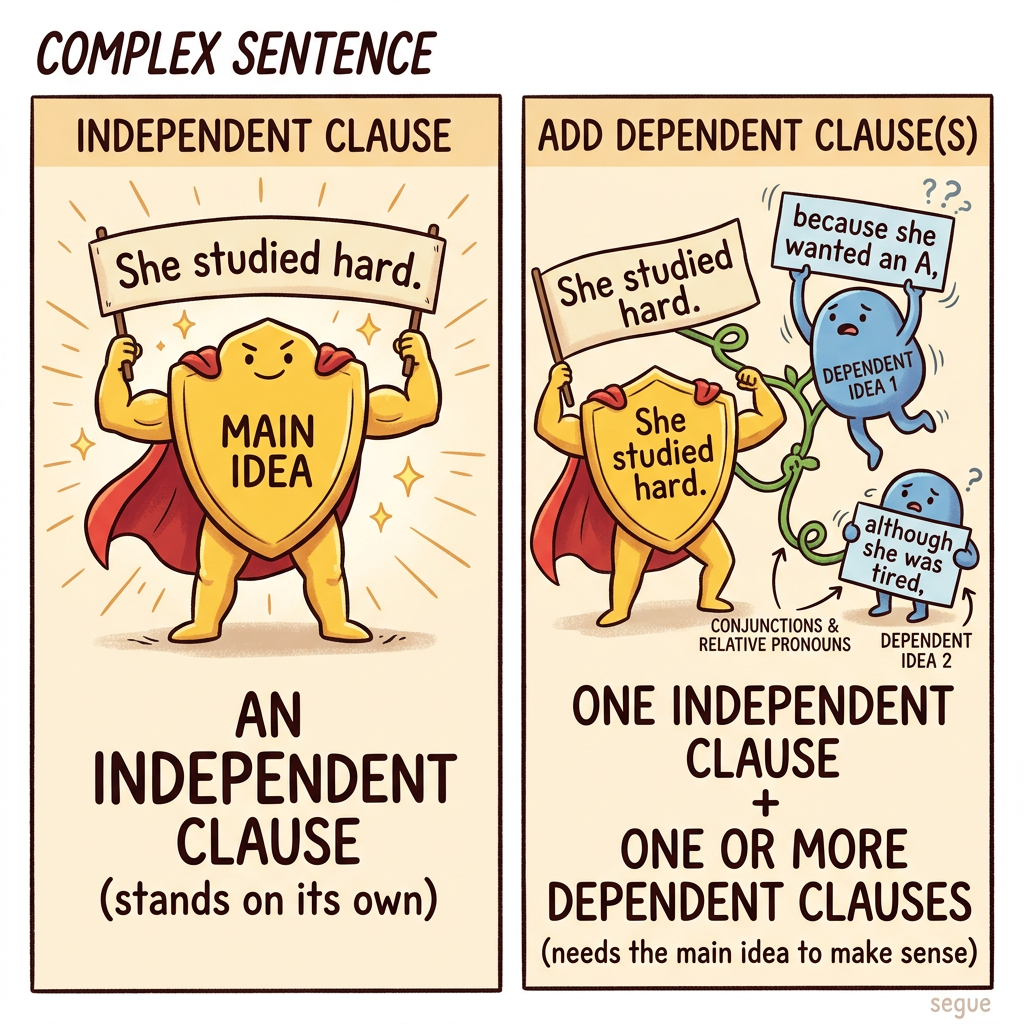
complex sentence
/ˌkɒmpleks ˈsentəns/one independent clause with one or more dependent clauses
“Although she ran, she couldn't escape. Subordination creates hierarchy.”
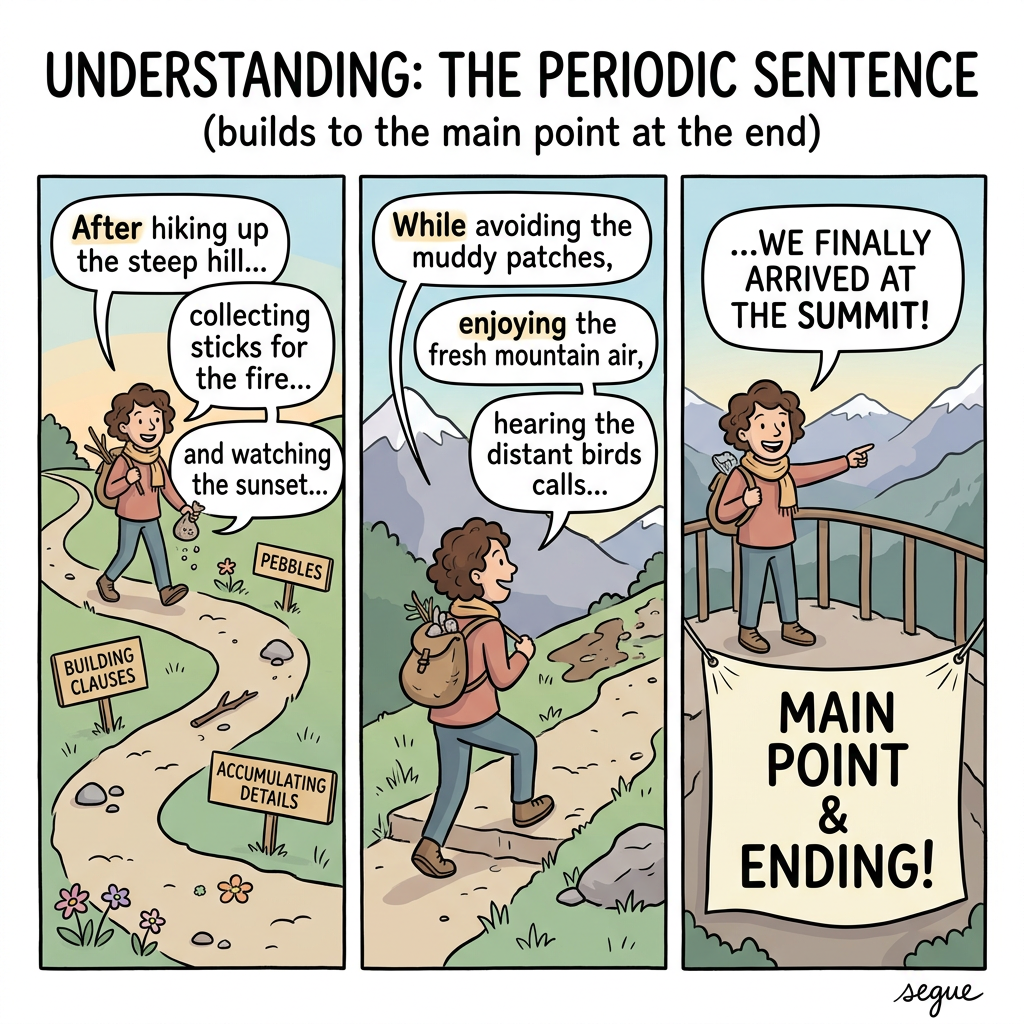
periodic sentence
/ˌpɪəriˌɒdɪk ˈsentəns/builds to the main point at the end
“Despite the rain, the cold, and his exhaustion, he finished the race.”
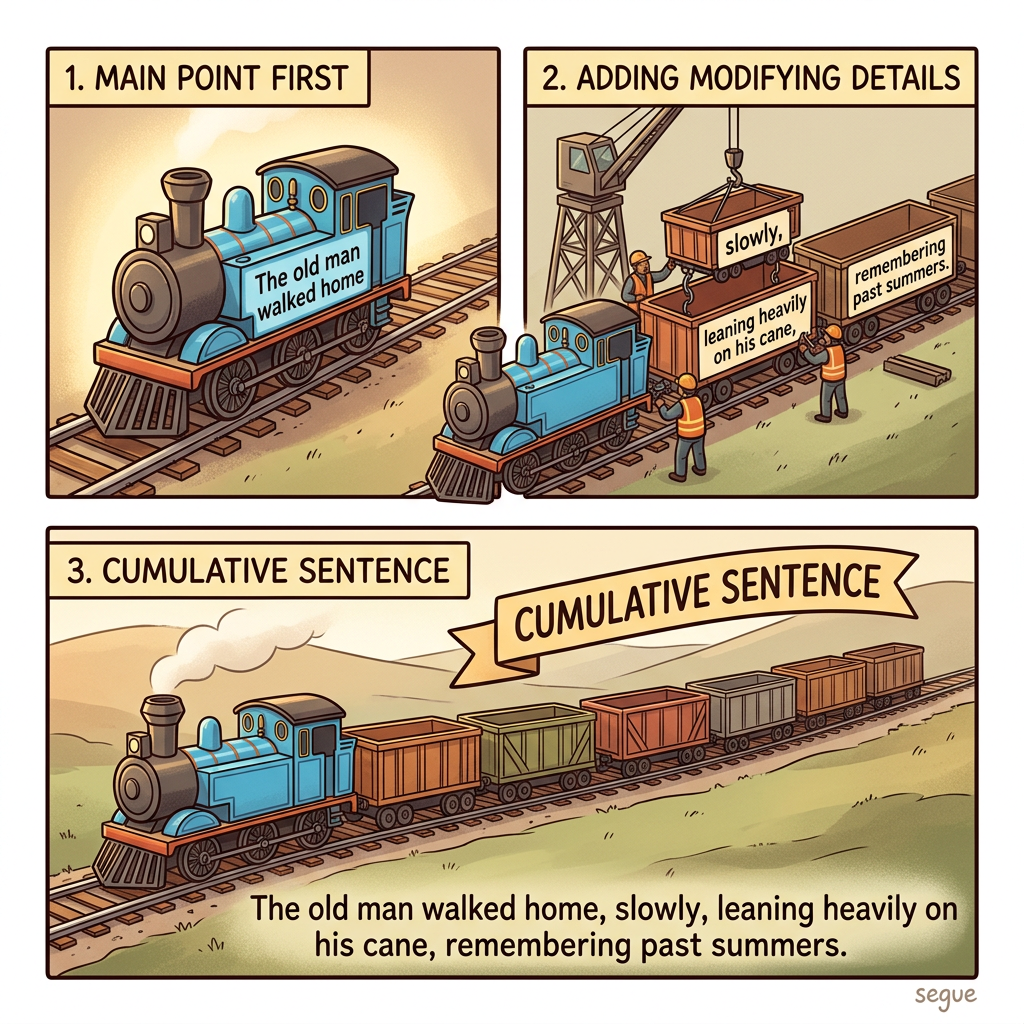
cumulative sentence
/ˌkjuːmjʊlətɪv ˈsentəns/states the main point first, then adds modifying details
“He finished the race, legs burning, lungs screaming, heart pounding.”
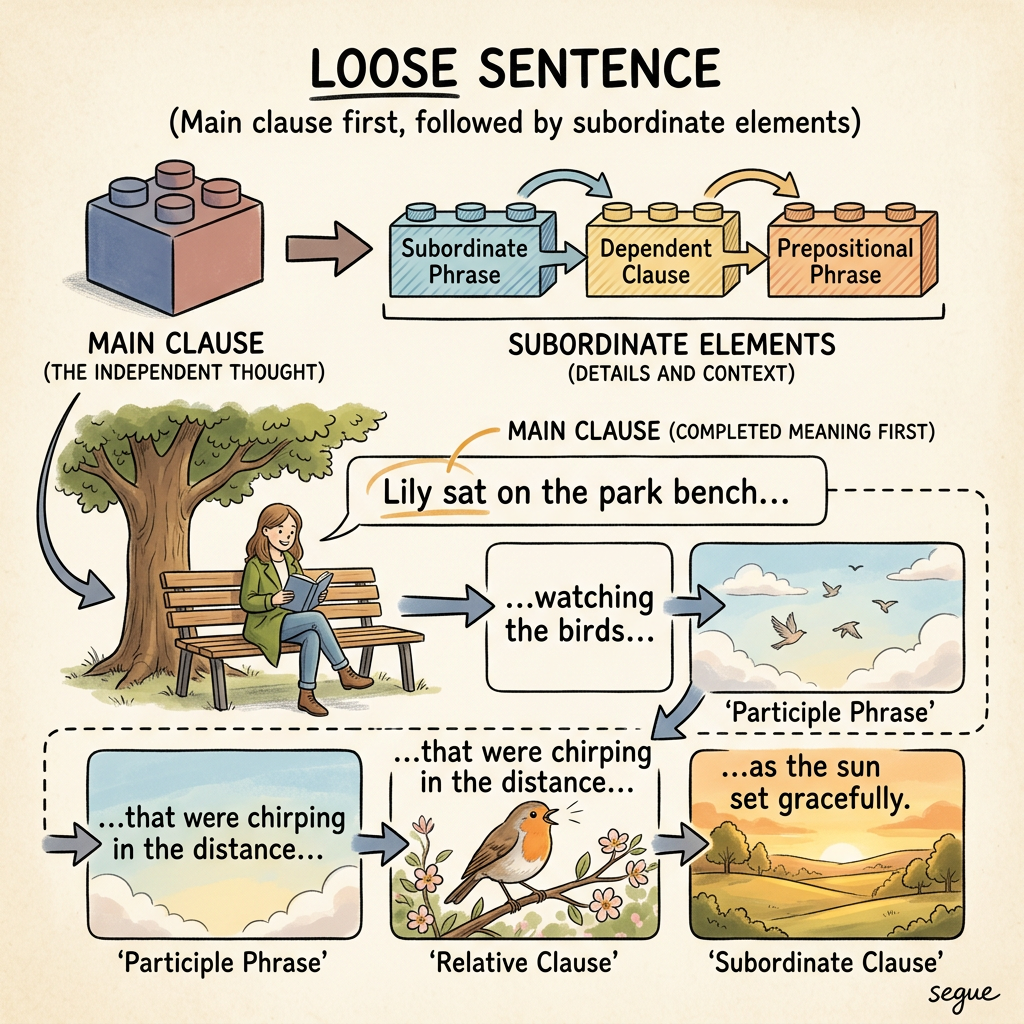
loose sentence
/ˌluːs ˈsentəns/main clause first, followed by subordinate elements
“She won the prize, which surprised everyone, especially her critics.”
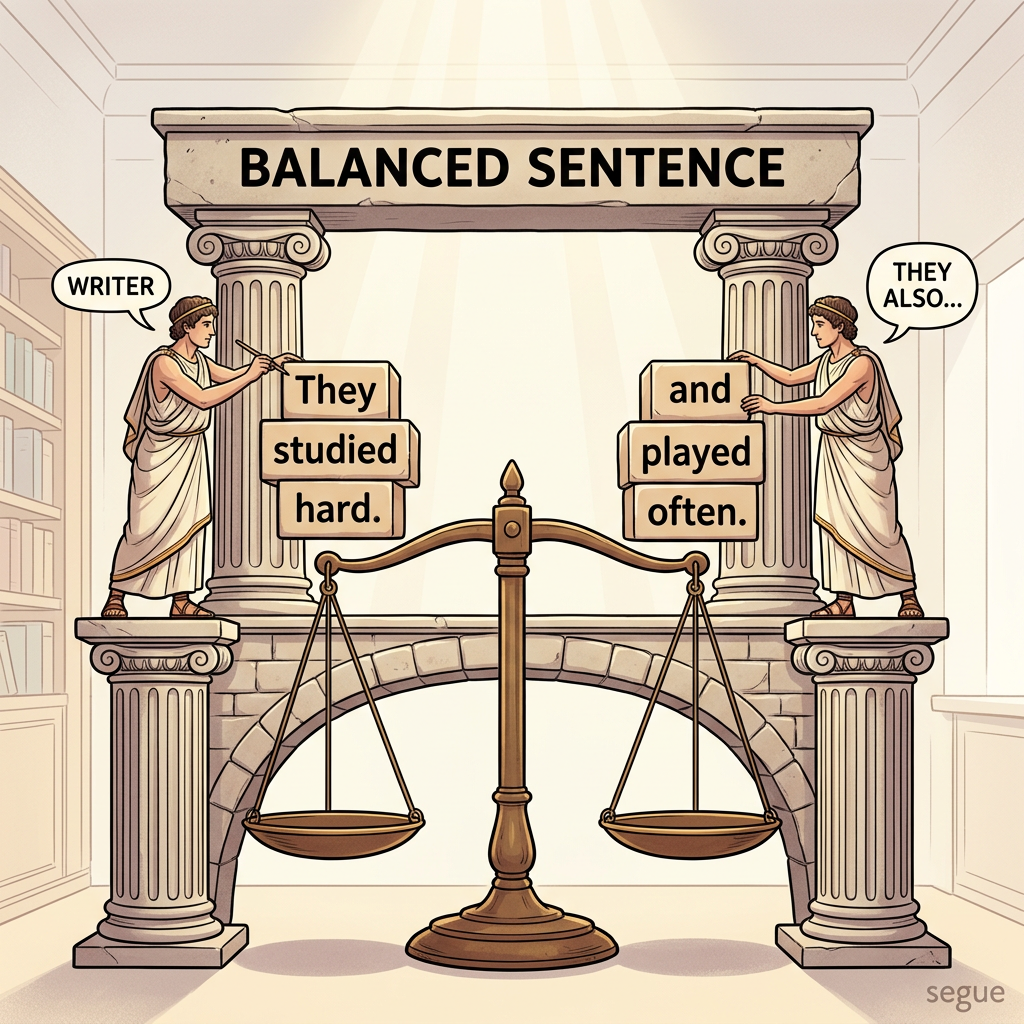
balanced sentence
/ˌbælənst ˈsentəns/parallel structures of equal weight
“Easy to read, hard to write. Ask not what your country can do for you...”
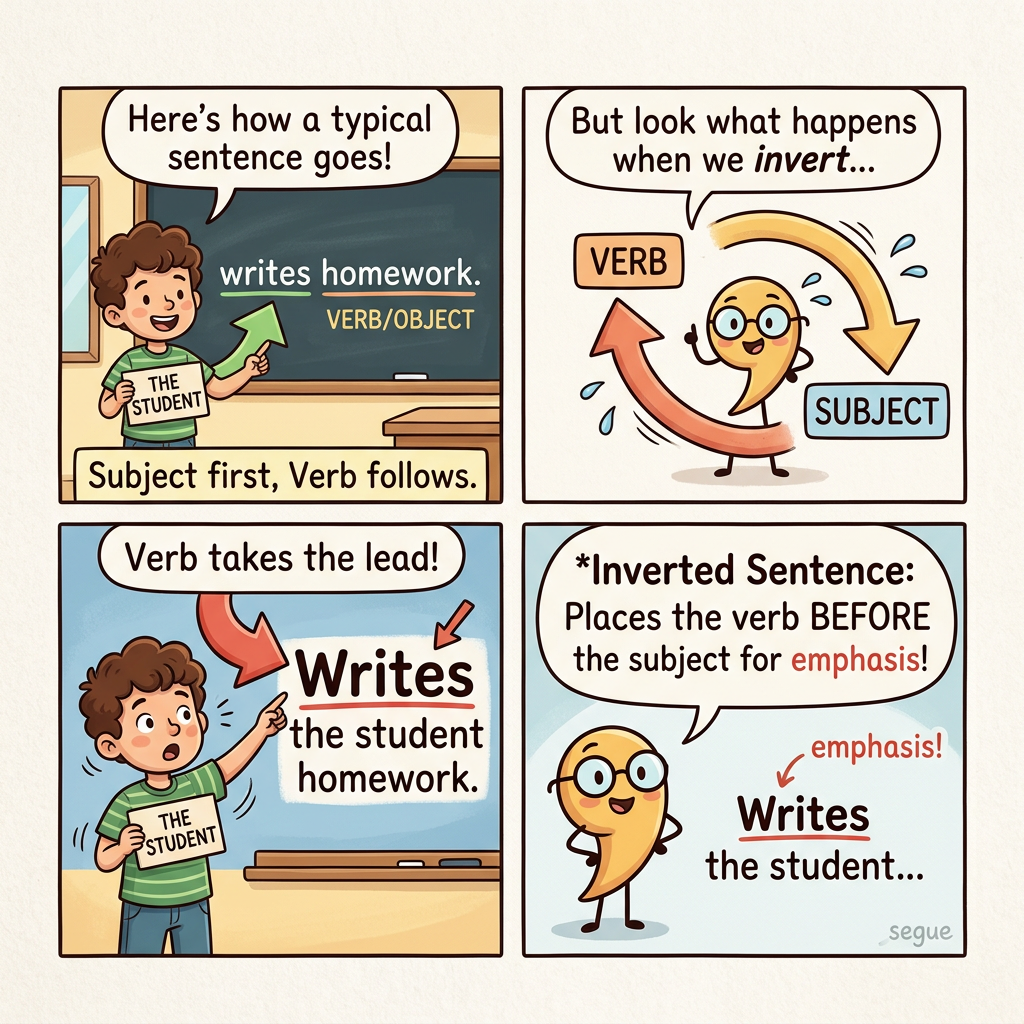
inverted sentence
/ɪnˌvɜːrtɪd ˈsentəns/places the verb before the subject for emphasis
“Never have I seen such courage. Gone are the days of simple solutions.”
More from The Writer's Craft
Explore other vocabulary categories in this collection.