Loading collection...
🔧
Revision & Editing Vocabulary
The vocabulary of rewriting
8 words
All 8 Words
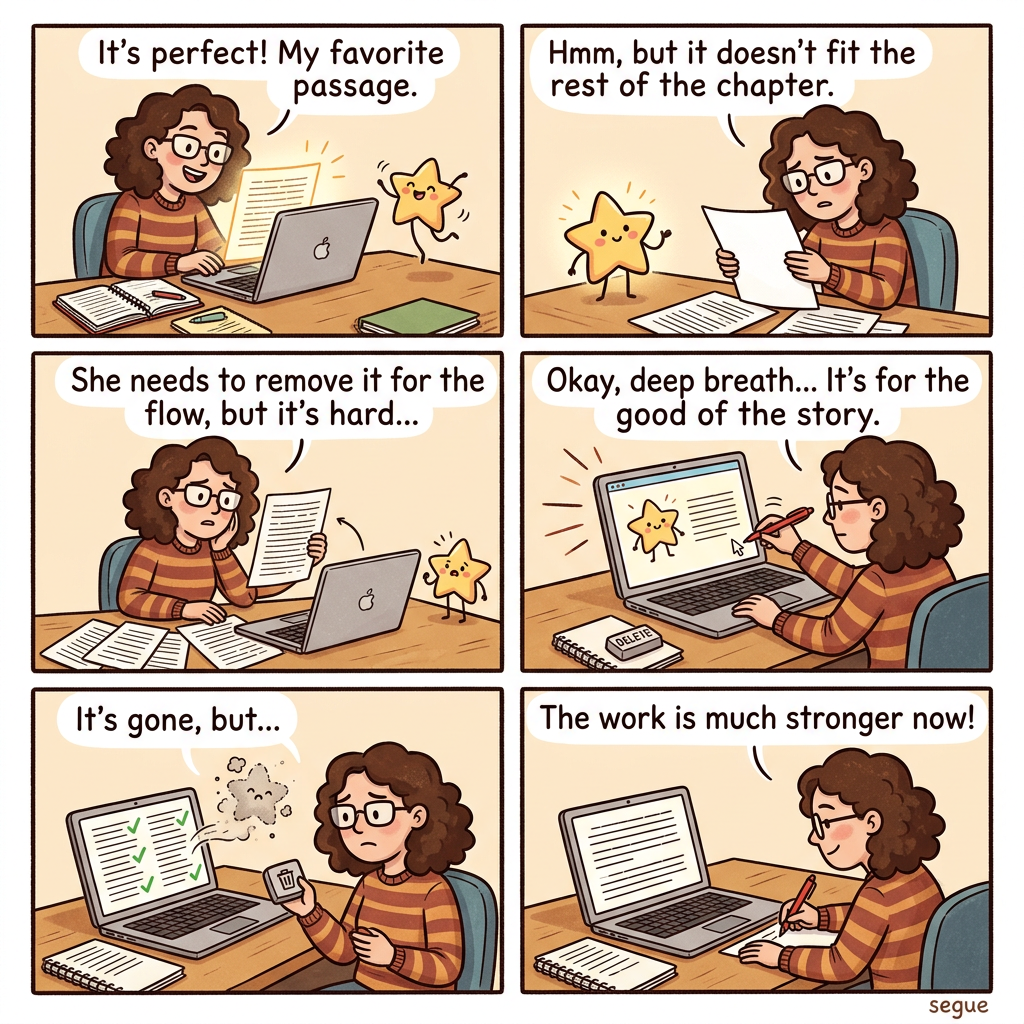
kill your darlings
/ˌkɪl jɔːr ˈdɑːrlɪŋz/be willing to cut even your favorite passages if they don't serve the work
“That beautiful sentence? If it doesn't fit, delete it.”
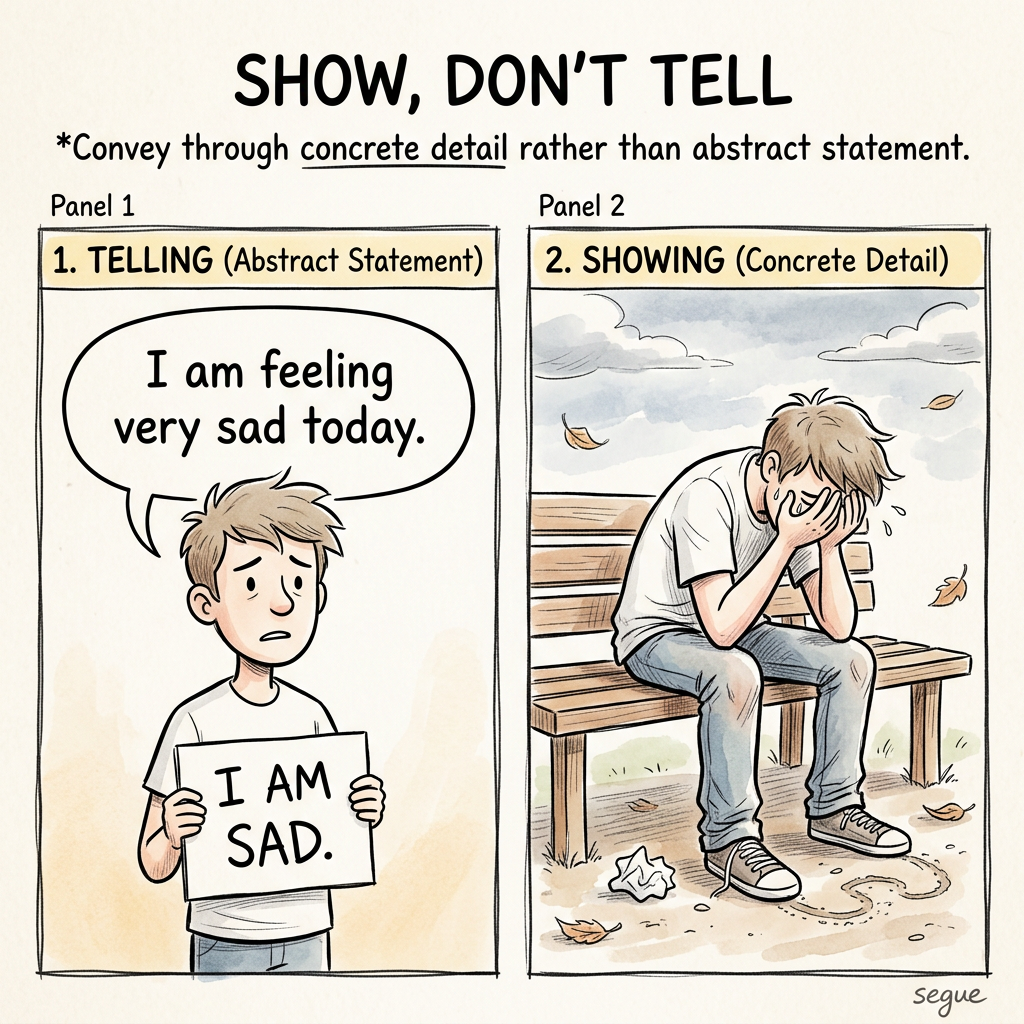
show, don't tell
/ˌʃoʊ ˌdoʊnt ˈtel/convey through concrete detail rather than abstract statement
“Not 'she was sad' but 'her hands trembled as she set down the photograph.'”
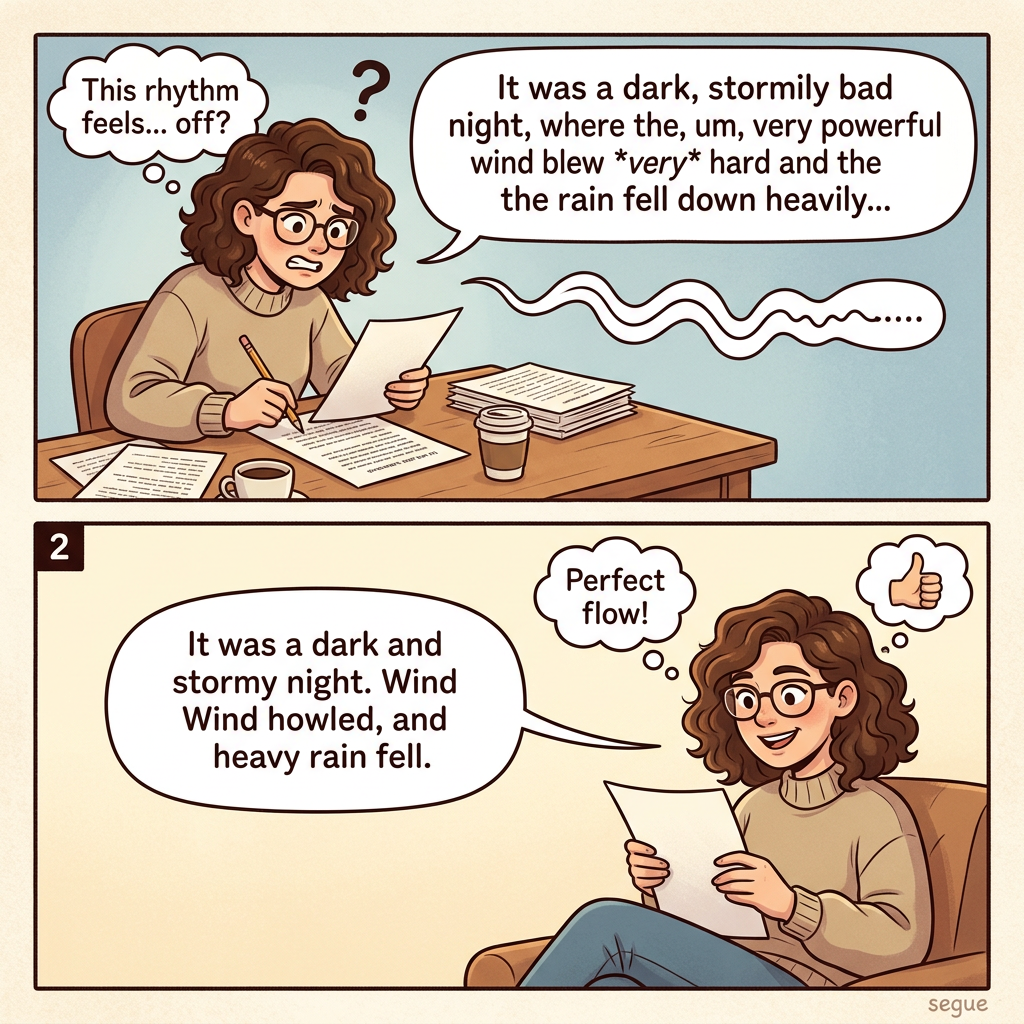
read aloud
/ˌriːd əˈlaʊd/testing prose by speaking it to catch awkward rhythms
“If you stumble reading it aloud, readers will stumble reading silently.”
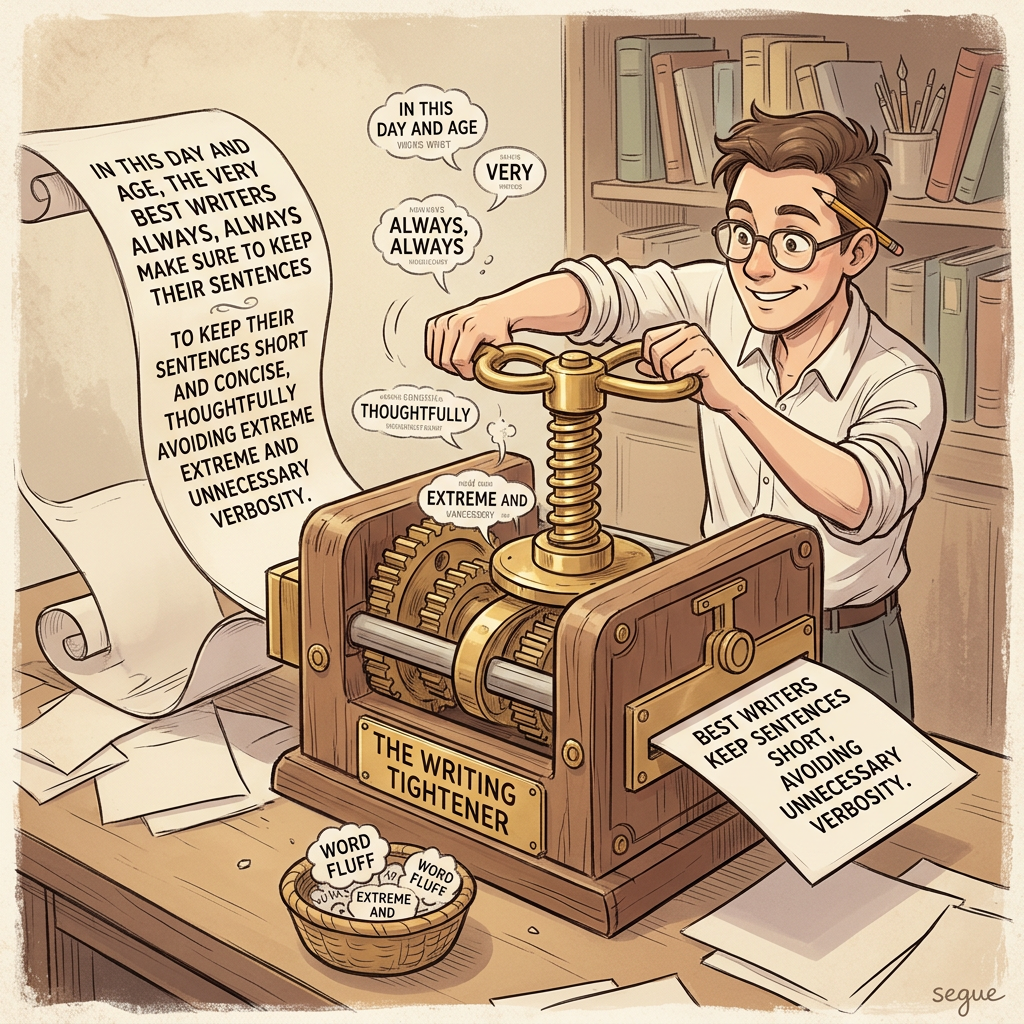
tighten
/ˈtaɪtən/remove unnecessary words while preserving meaning
“First draft: 100 words. Tightened: 60 words. Same meaning, more power.”

expand
/ɪkˈspænd/add detail, examples, or explanation where needed
“This point needs expansion—show me what you mean.”
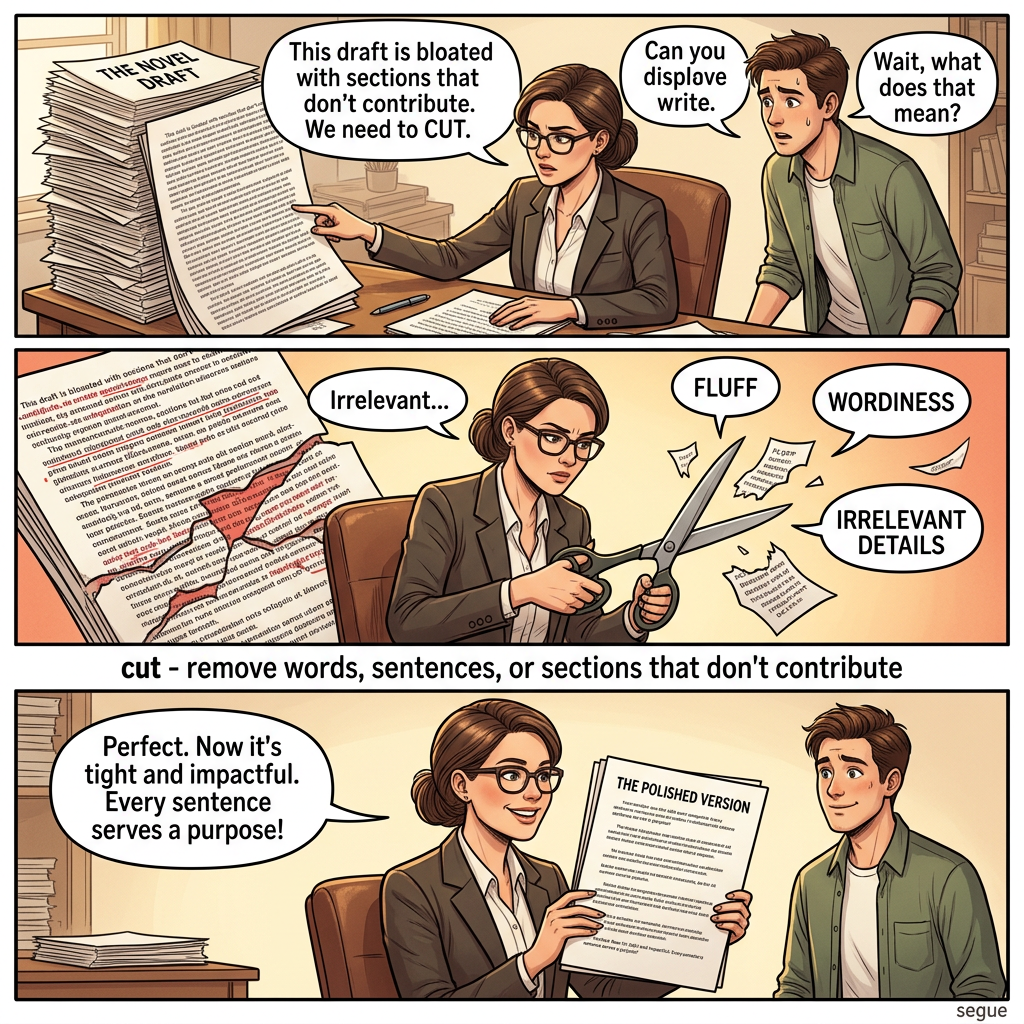
cut
/ˈkət/remove words, sentences, or sections that don't contribute
“When in doubt, cut it out.”
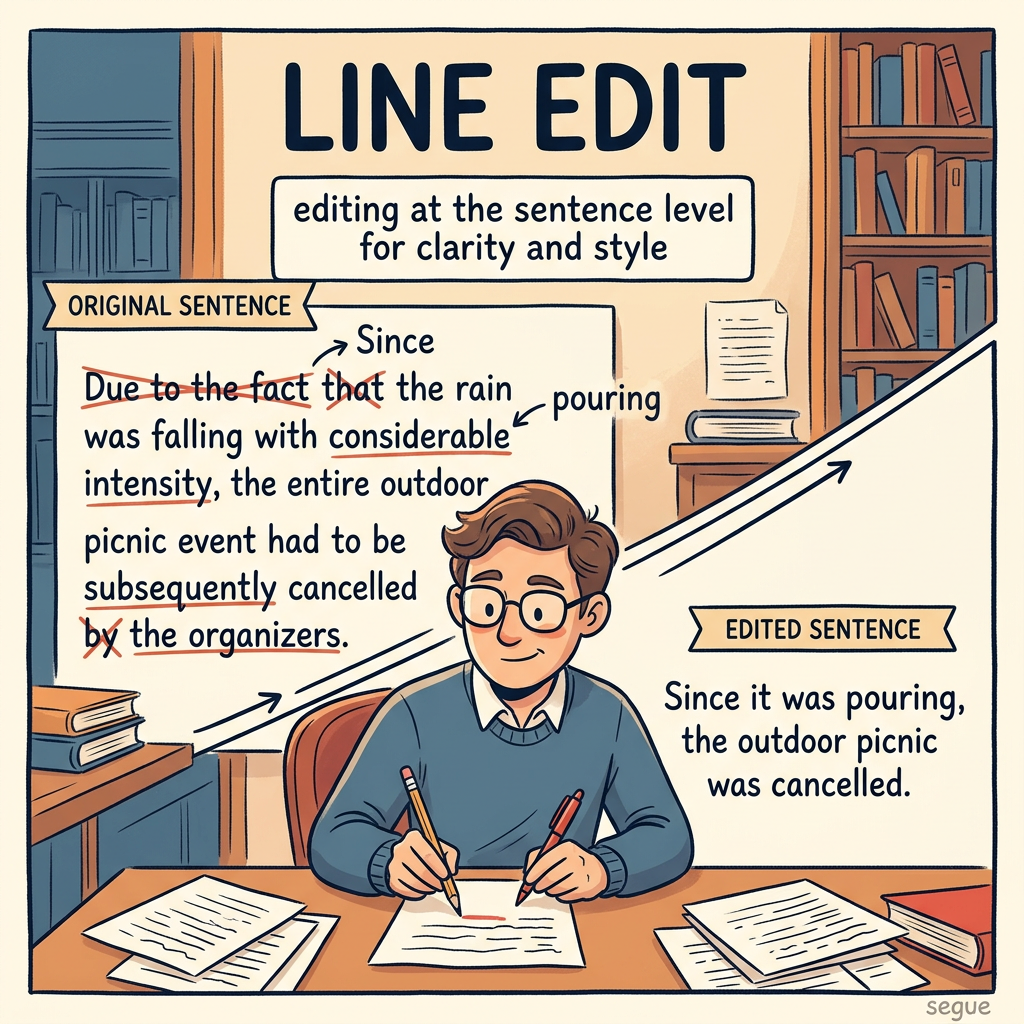
line edit
/ˈlaɪn ˌedɪt/editing at the sentence level for clarity and style
“Examining each sentence for wordiness, ambiguity, awkwardness.”
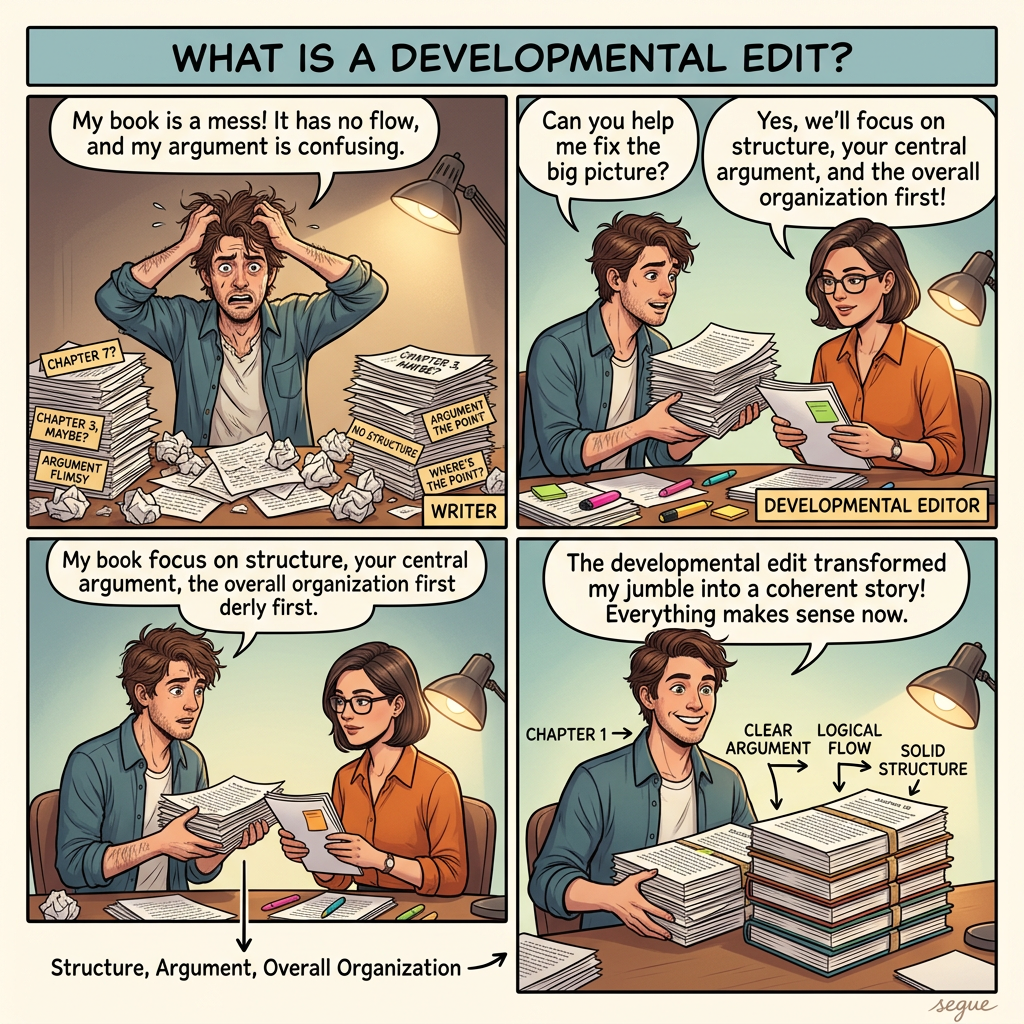
developmental edit
/dɪˌveləpˈmentəl ˈedɪt/editing for structure, argument, and overall organization
“Does the piece make sense as a whole? Are sections in the right order?”
More from The Writer's Craft
Explore other vocabulary categories in this collection.