20 Rhetorical Devices With ExamplesWhat each pattern makes the reader notice
Every sentence directs attention. Rhetorical devices give names to the choices that decide what a reader compares, hears twice, pictures clearly, or carries into the next paragraph.
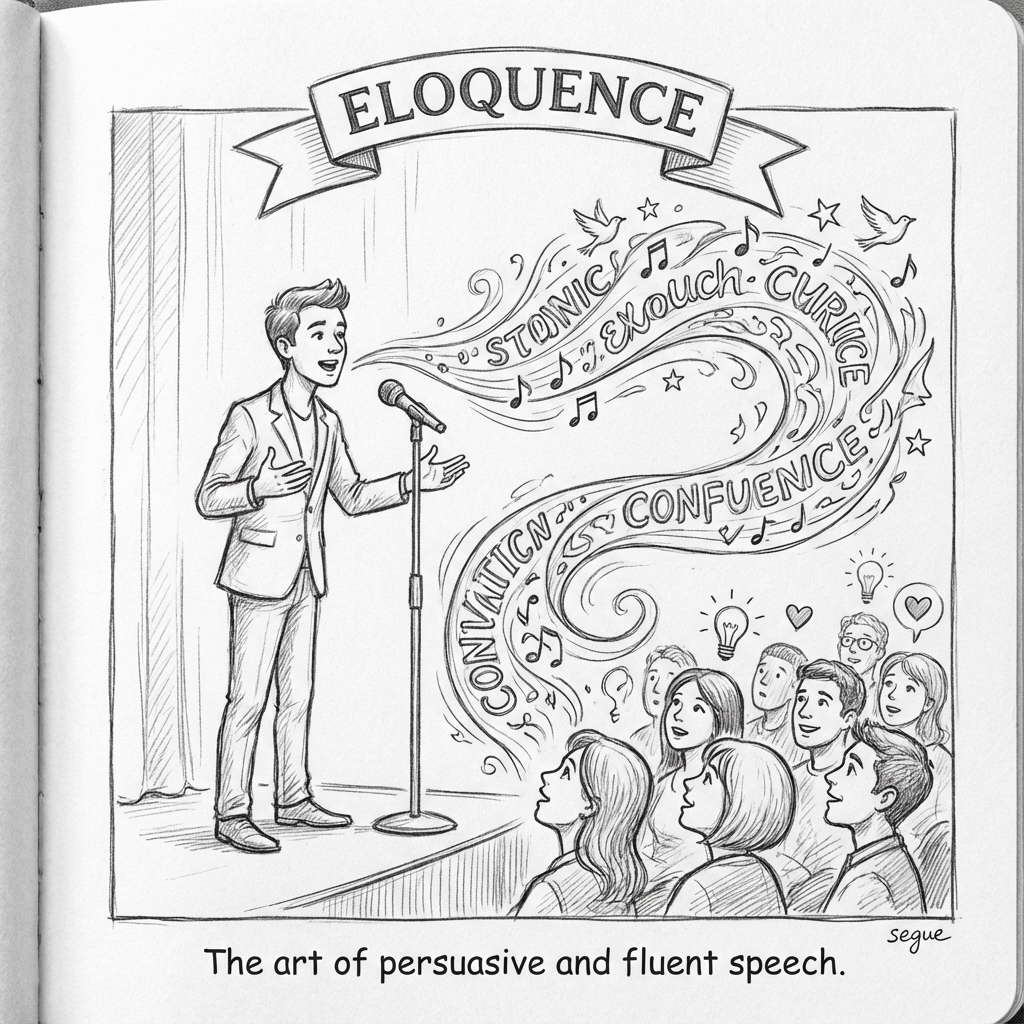
A device is not polish applied after the thinking. Form is already making an argument: antithesis says two things belong in a pair, anaphora gives several clauses one governing idea, and metaphor lends one subject another's furniture. The same choices can expose a distinction or make weak evidence sound finished.
So the practical question is not “Which device can I add?” It is “Where should the attention go?” The notes below describe the pressure each pattern applies. Read the example aloud, inspect what it emphasizes, and cut the technique when it points away from the idea.
anaphora
repeating a word or phrase at the beginning of successive clauses
Example: We will test the premise. We will test the numbers. We will test the result.
Effect: The repeated opening makes the sequence cumulative and keeps its governing idea audible.
epistrophe
repeating a word or phrase at the end of successive clauses
Example: The brief came from the client, changed with the client, and was approved by the client.
Effect: The recurring ending shifts emphasis toward the final words of each clause.
antithesis
juxtaposing contrasting ideas, often in parallel grammatical form
Example: The prototype was quick to build but slow to understand.
Effect: Balance lets the reader compare the opposed qualities in a single pass.
chiasmus
reversing ideas or grammatical structures across successive phrases
Example: The team worked to live; before long, its life was the work.
Effect: The A-B/B-A turn exposes a reversal without requiring the same words twice.
antimetabole
repeating words in reverse order
Example: Teams build processes; processes build teams.
Effect: Exact verbal reversal makes a reciprocal claim compact and conspicuous.
metaphor
describing one thing as another
Example: The backlog is a waiting room with no receptionist.
Effect: The comparison imports a setting, a mood, and a diagnosis into one sentence.
simile
making an explicit comparison, often with like or as
Example: Without an owner, the request moved through the company like unaddressed mail.
Effect: The explicit comparison helps a reader picture an unfamiliar process.
analogy
explaining one thing by comparing it to another
Example: A rate limit is like a venue's capacity: admitting everyone at once can make the service unusable for everyone.
Effect: A developed comparison can transfer a useful relationship, but only as far as the cases genuinely match.
litotes
deliberate understatement, especially by denying the opposite
Example: A six-hour production outage was no small inconvenience.
Effect: The restraint can sharpen irony or let a severe fact land without melodrama.
paradox
an apparently contradictory statement that may reveal a defensible insight
Example: The fastest way to finish was to stop starting new work.
Effect: The surface contradiction asks the reader to resolve the underlying distinction.
oxymoron
combining contradictory terms
Example: The migration ended in an orderly panic.
Effect: The compressed contradiction captures a mixed or unstable condition.
alliteration
repeating initial consonant sounds
Example: Small safeguards stop silent failures.
Effect: Sound repetition binds the phrase; too much of it can make serious prose feel promotional.
assonance
repeating similar vowel sounds in nearby stressed syllables
Example: Low roads rolled toward home.
Effect: The echo works below the level of rhyme, giving the line a quieter cohesion.
onomatopoeia
using words that imitate sounds
Example: The latch clicked; the old radiator hissed.
Effect: The sound-bearing verbs place the reader inside the physical moment.
synecdoche
representing a whole by one of its parts, or a part by the whole
Example: The kitchen needs another pair of hands before dinner service.
Effect: The named part makes a larger group concrete, sometimes at the cost of reducing people to a function.
metonymy
using a related thing to represent an idea
Example: The White House issued a statement.
Effect: Association supplies efficient shorthand: the building stands for the administration speaking through it.
personification
giving human qualities to non-human things
Example: By Thursday, the deadline was knocking on every calendar.
Effect: Agency turns an abstraction into a participant in the scene.
hyperbole
deliberate exaggeration
Example: That status meeting lasted a geological age.
Effect: The impossible scale communicates felt duration, not a literal measurement.
tricolon
arranging three parallel elements together
Example: Cut the scope, ship the fix, watch the metrics.
Effect: Three balanced units create a complete-feeling progression without a long list.
asyndeton
omitting conjunctions between clauses or items in a series
Example: The alert fired, the queue stalled, the checkout failed.
Effect: Removing the conjunctions accelerates the sequence and makes each beat arrive abruptly.
Definitions follow Silva Rhetoricae at Brigham Young University. Its distinction is especially useful here: chiasmus reverses ideas or grammatical structure, while antimetabole repeats the same words in reverse order.
Better writing is alignment
Twenty devices will not improve prose by accumulation. Better writing is the alignment of form and thought: syntax, sound, and comparison direct attention toward the distinction that matters. Revise one sentence with the device and once without it. Keep the version whose meaning is harder to miss, even when that version is plainer.
Practice the choice, not the ornament
Study each pattern as vocabulary, then test it by revising a sentence and reading both versions aloud. The contrast teaches more than the label alone.
Study rhetorical devices