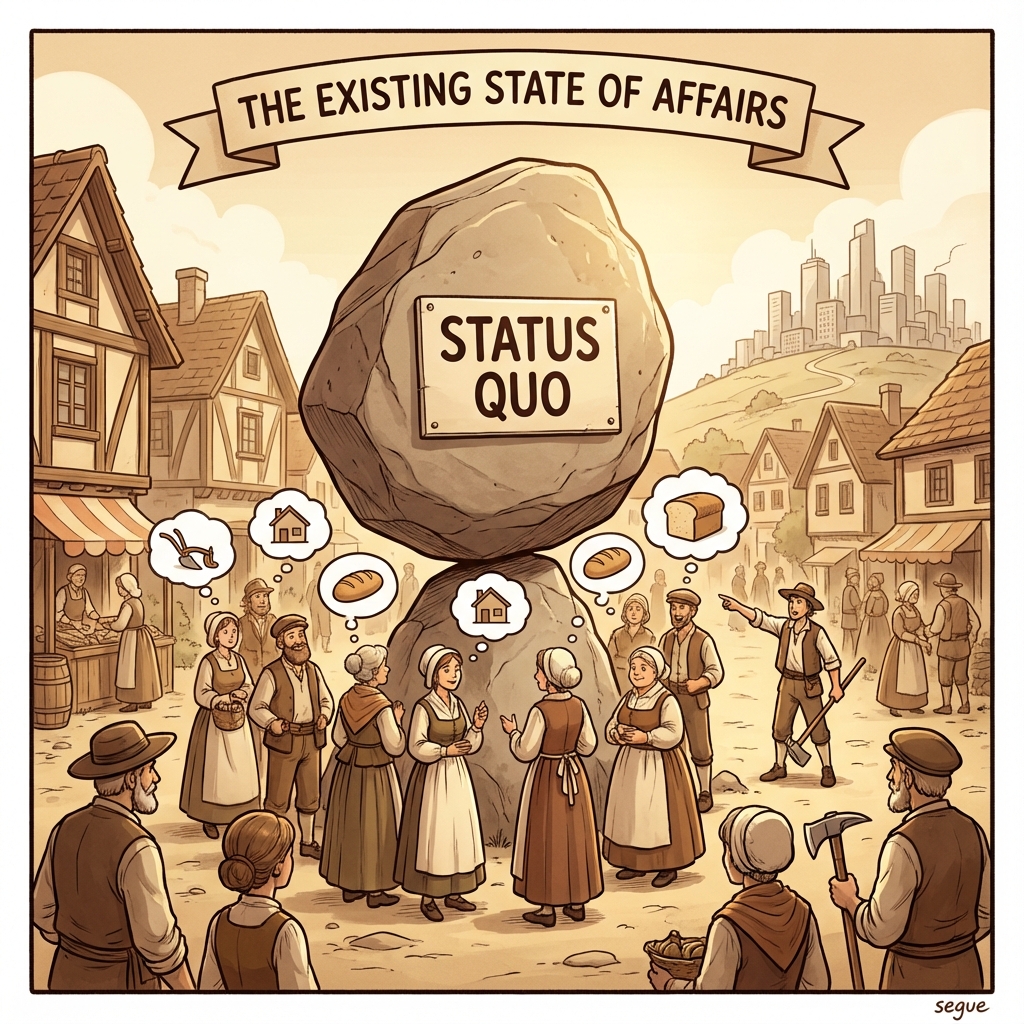
status quo
/ˌsteɪtəs ˈkwoʊ/
the existing state of affairs
status quo in a sentence
“The new policy threatens to disrupt the status quo.”
Origin of status quo
Latin: status state/condition + quo in which (ablative); from status quo ante (the state in which before)
What does status quo really mean?
The status quo is the way things currently are — with a built-in hint that inertia, not merit, is what keeps them that way. The phrase is rarely neutral: defenders "preserve" it, critics "challenge" it, and almost nobody celebrates it.
The story behind status quo
Latin, short for in statu quo res erant ante bellum — "in the state in which things were before the war" — a diplomatic formula for restoring pre-war borders after a conflict. The clipped form entered English political and legal vocabulary in the 18th–19th centuries.
How to use status quo
Use it with the definite article: "the status quo." Standard collocations include maintain, defend, challenge, disrupt, and upend the status quo. "Status quo bias" names the documented human preference for the current state over change.
Related Words
tabula rasa
a blank slate; the mind before receiving impressions
verbatim
word for word; in exactly the same words
vice versa
the other way around; with the order reversed
inter alia
among other things
pro rata
proportional; strictly according to calculated share
ad hoc
created or done for a particular purpose as necessary