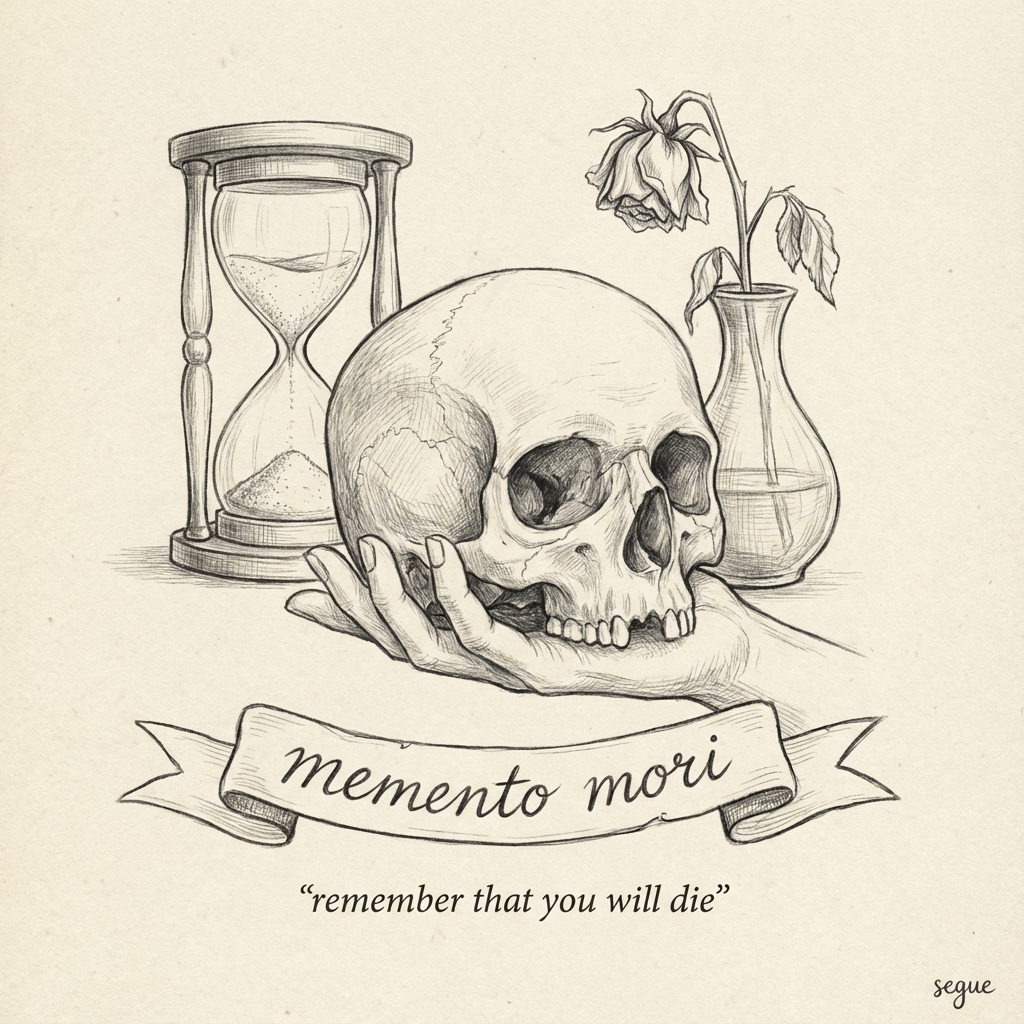
memento mori
/məˌmentoʊ ˈmɔːri/
remember that you will die; a reminder of mortality
memento mori in a sentence
“The skull on his desk served as a memento mori.”
Origin of memento mori
Latin: memento remember (imperative of meminisse) + mori to die (infinitive)
What does memento mori really mean?
Memento mori is more than a morbid reminder — it is a practice of keeping death in view so that life stays in focus. Far from being depressing, the phrase has historically worked as a call to urgency and gratitude: because time is finite, what you do with today matters.
The story behind memento mori
Latin for "remember that you must die." Tradition holds that a slave rode behind triumphant Roman generals whispering a reminder of their mortality. The idea became central to Stoic philosophy — Marcus Aurelius returned to it constantly in his Meditations — and later to Christian monastic life and the vanitas paintings of the 17th century, with their skulls, hourglasses, and wilting flowers.
How to use memento mori
Use it for objects or habits that keep mortality in view: a skull on a desk, a daily journal prompt, a calendar counting weeks. It appears in writing about Stoicism, productivity, and art history, and works as both noun ("the painting is a memento mori") and standalone maxim.
Related Words
modus operandi
a method of operating or functioning; way of working
non sequitur
a conclusion that does not logically follow from the premise
per capita
for each person; per head
per se
by itself; intrinsically; as such
persona non grata
an unwelcome or unacceptable person
post mortem
an examination after death; analysis after an event