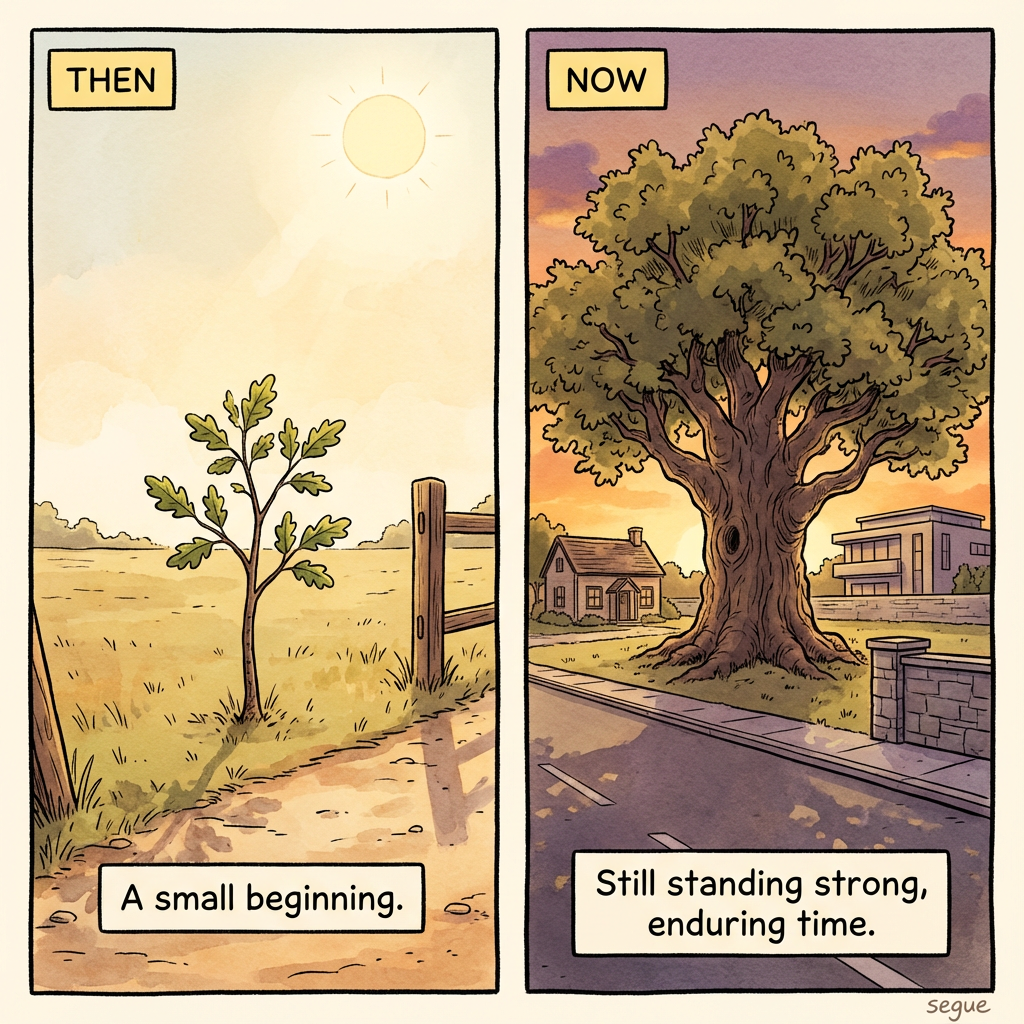
enduring
/ɛnˈdjʊɹɪŋ/
lasting over a period of time; durable
enduring in a sentence
“Their enduring friendship survived decades of separation.”
Origin of enduring
Latin indurare to make hard (in- in + durus hard)
What does enduring really mean?
Enduring means lasting — but with a quiet claim built in: the thing has been tested and held. An enduring friendship has survived distance and disagreement; an enduring image refuses to fade; an enduring peace has outlasted the reasons for war. That is what separates it from near-synonyms: durable is for objects, permanent is a promise about the future, while enduring is a verdict about the past — it has already lasted, and that is the proof it will.
The story behind enduring
From Latin indurare, "to make hard" (in- + durus, "hard"), which reached English through Old French endurer. The verb endure originally meant to harden, then to withstand or suffer, and the participle enduring settled into its modern sense: what withstands time simply lasts. The hard Latin root durus runs through a whole family of persistence words — durable, duration, duress, obdurate.
How to use enduring
Use it before abstract nouns that deserve the compliment: an enduring legacy, appeal, mystery, love. It is faintly formal and always flattering — calling something enduring implies it earned its persistence, where "long-lasting" is merely descriptive. Don't confuse it with endearing (inspiring affection): an endearing habit charms you now; an enduring habit is still there in twenty years.