déjà vu
/ˌdeɪʒɑː ˈvuː/
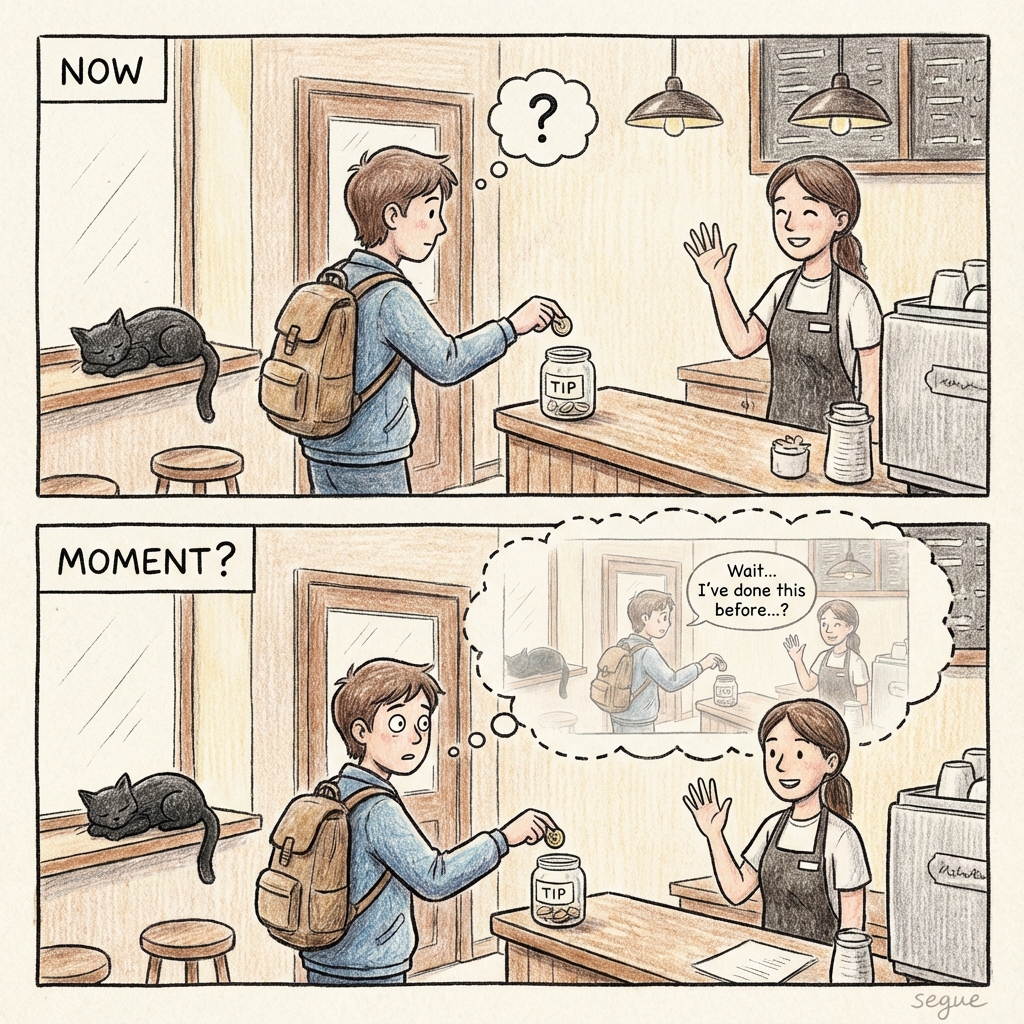
the feeling of having experienced something before
déjà vu in a sentence
“Walking into the room gave me an eerie sense of déjà vu.”
Origin of déjà vu
French: déjà already + vu seen (past participle of voir to see); literally already seen
What does déjà vu really mean?
Déjà vu is the uncanny certainty that the present moment has happened before — familiar in feeling, impossible to place. It is fleeting, common (most people report it), and harmless, which makes its strangeness all the more interesting.
The story behind déjà vu
French for "already seen." The philosopher Émile Boirac named the phenomenon in the 1870s. Neuroscience treats it as a memory-system hiccup: the brain's familiarity signal fires without an actual retrieved memory to justify it, producing recognition with no source.
How to use déjà vu
Use it literally for the sensation ("a jolt of déjà vu") or figuratively for history repeating: "the layoffs gave investors déjà vu of 2008." Keep the accents in writing — déjà vu — and note it functions as a noun.
Related Words
double entendre
a word or phrase with two meanings, one usually risqué
en masse
all together; as a group
en route
on the way; during the journey
enfant terrible
a person who behaves unconventionally or controversially
esprit de corps
a feeling of pride and mutual loyalty within a group
fait accompli
something already done and irreversible