Loading collection...
🔗
Set Theory & Logic Vocabulary
Foundational concepts of mathematical reasoning
10 words
All 10 Words
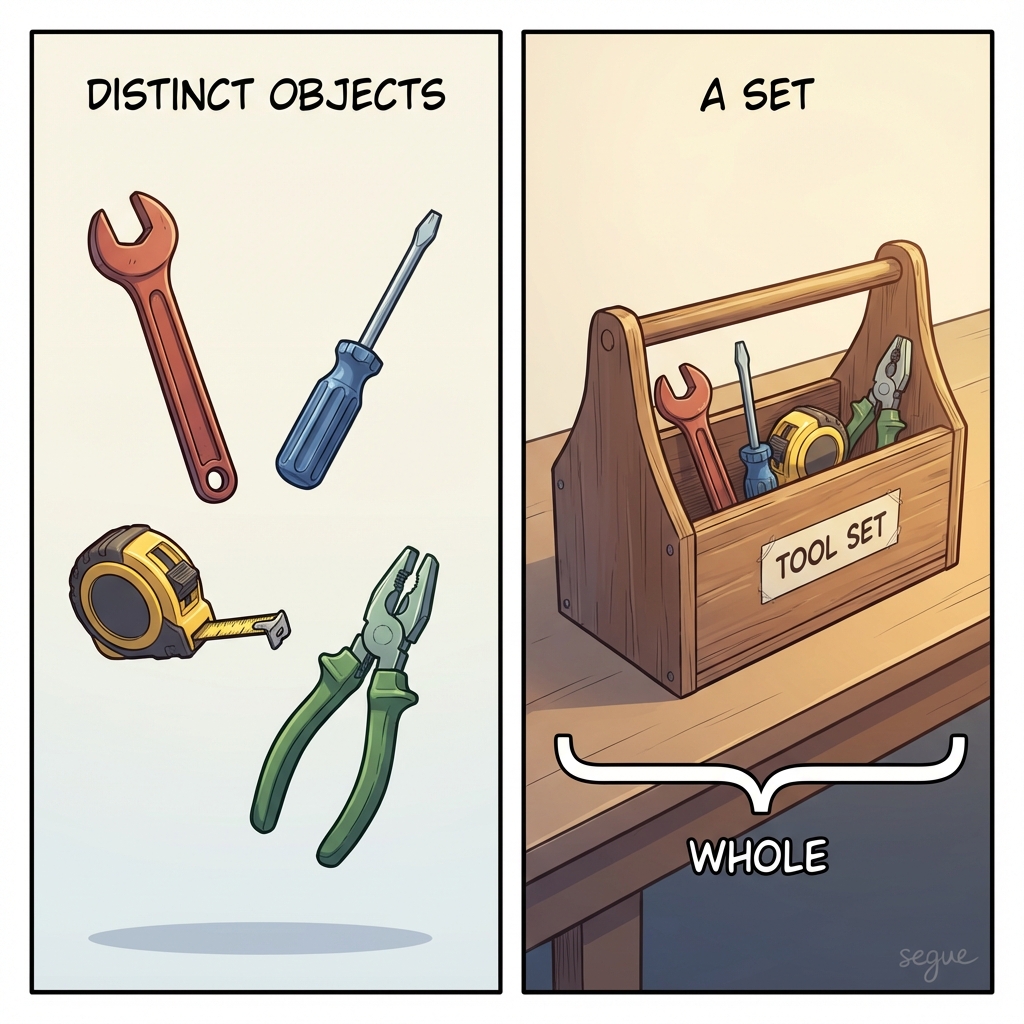
set
/ˈsɛt/a collection of distinct objects considered as a whole
“The set of prime numbers less than 10 is {2, 3, 5, 7}.”
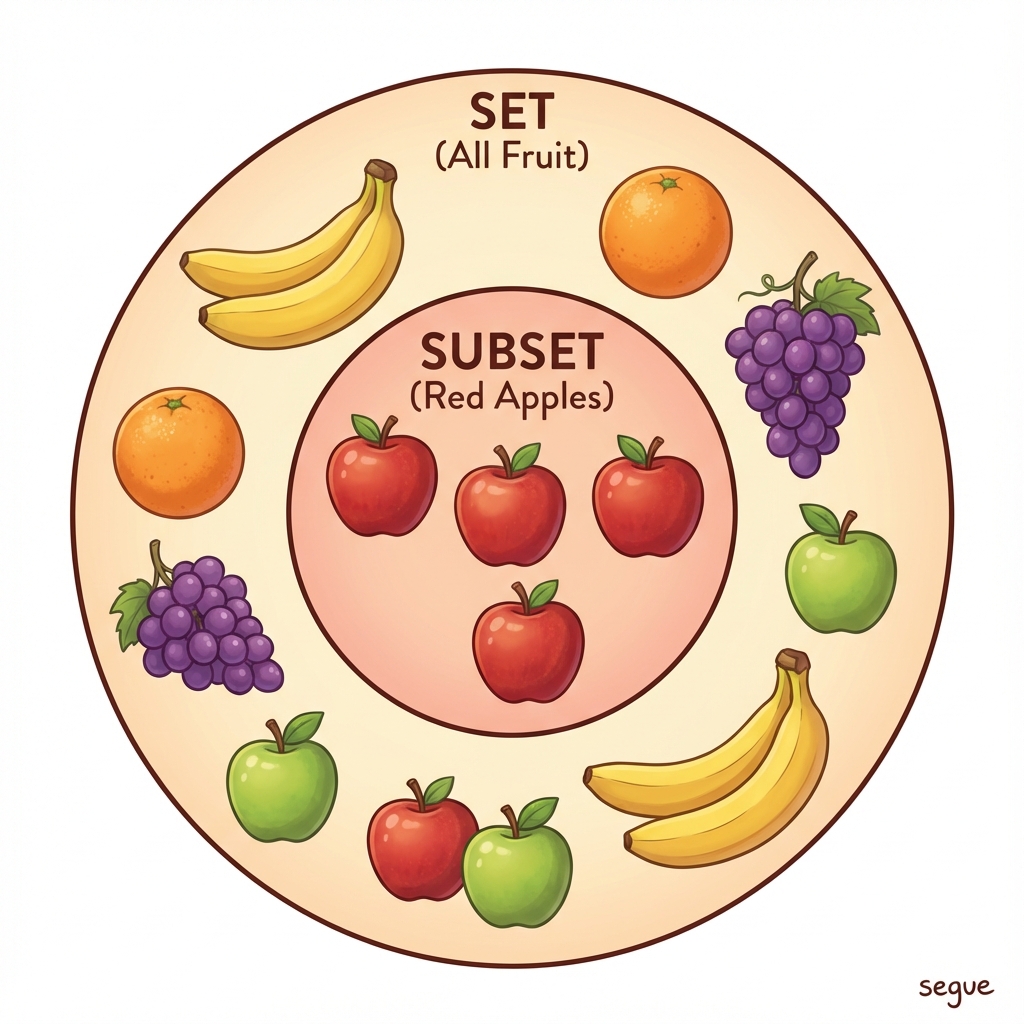
subset
/ˈsəbˌsɛt/a set whose elements are all contained in another set
“The even numbers are a subset of the integers.”
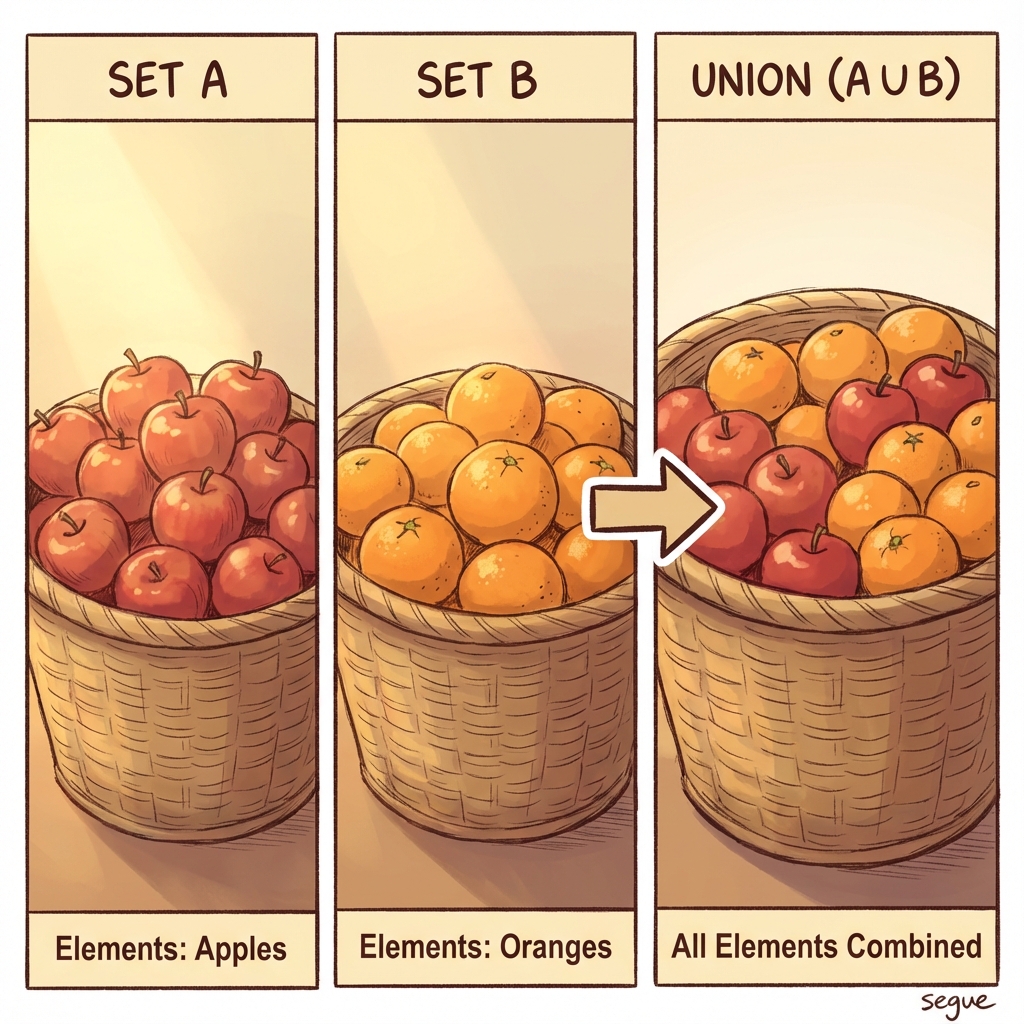
union
/ˈjunjən/the set containing all elements from two or more sets
“The union of {1,2} and {2,3} is {1,2,3}.”
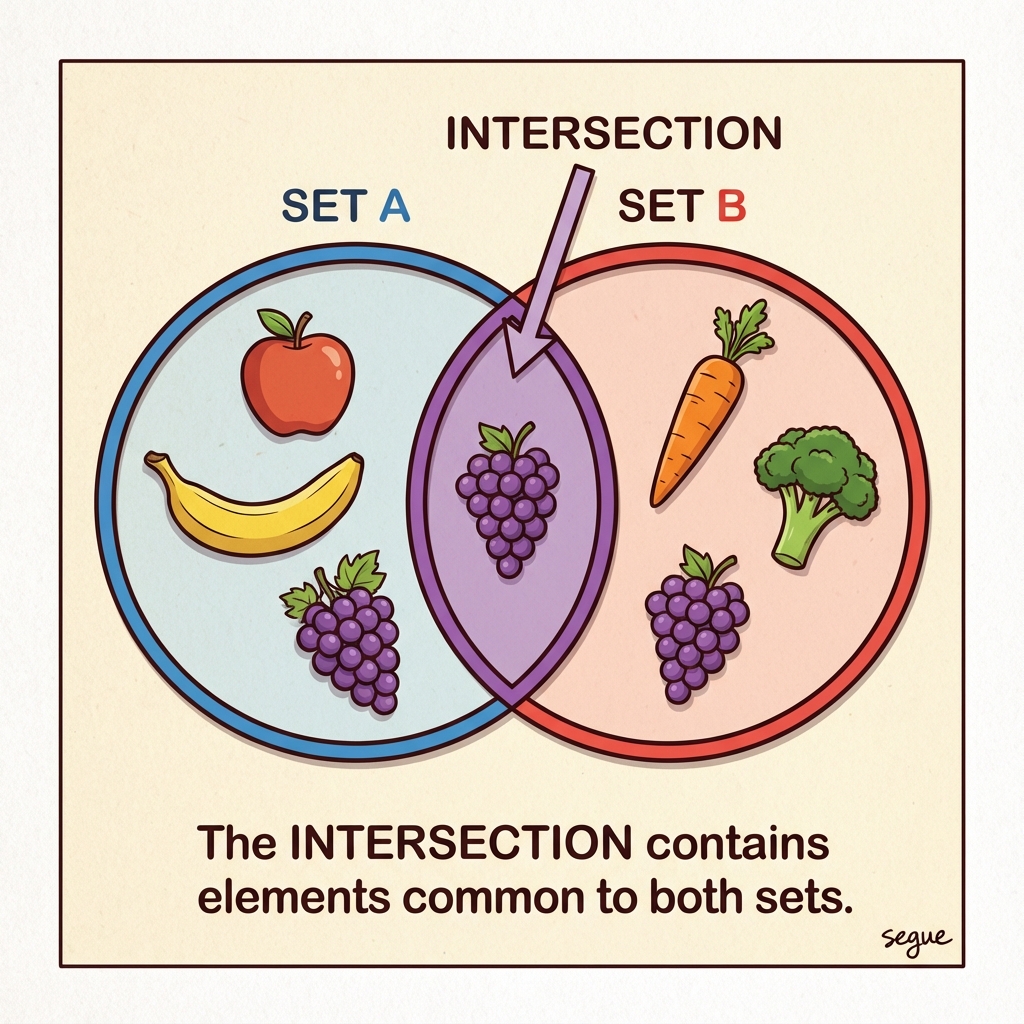
intersection
/ˌɪntɝˈsɛkʃən/the set of elements common to two or more sets
“The intersection of {1,2,3} and {2,3,4} is {2,3}.”
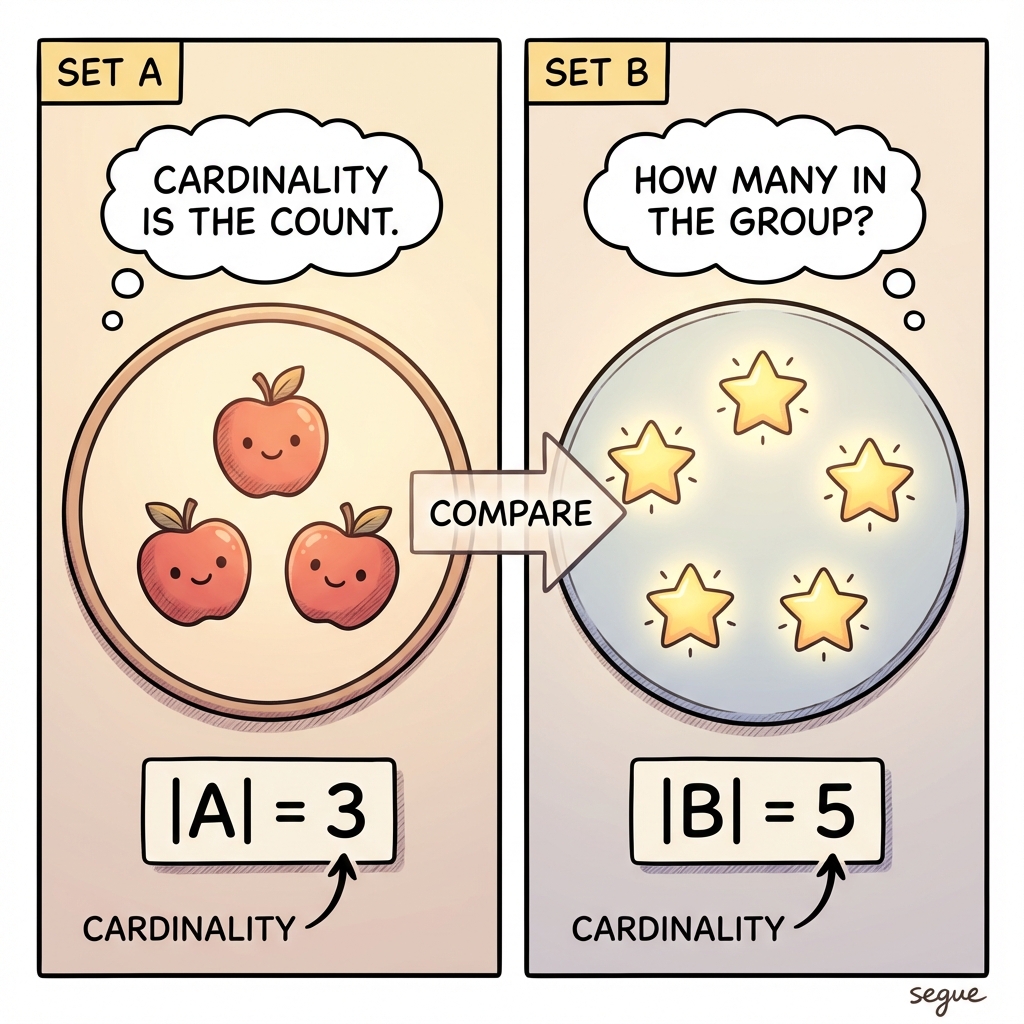
cardinality
/ˌkɑːrdɪˈnælɪti/the number of elements in a set
“The cardinality of {a, b, c} is 3.”
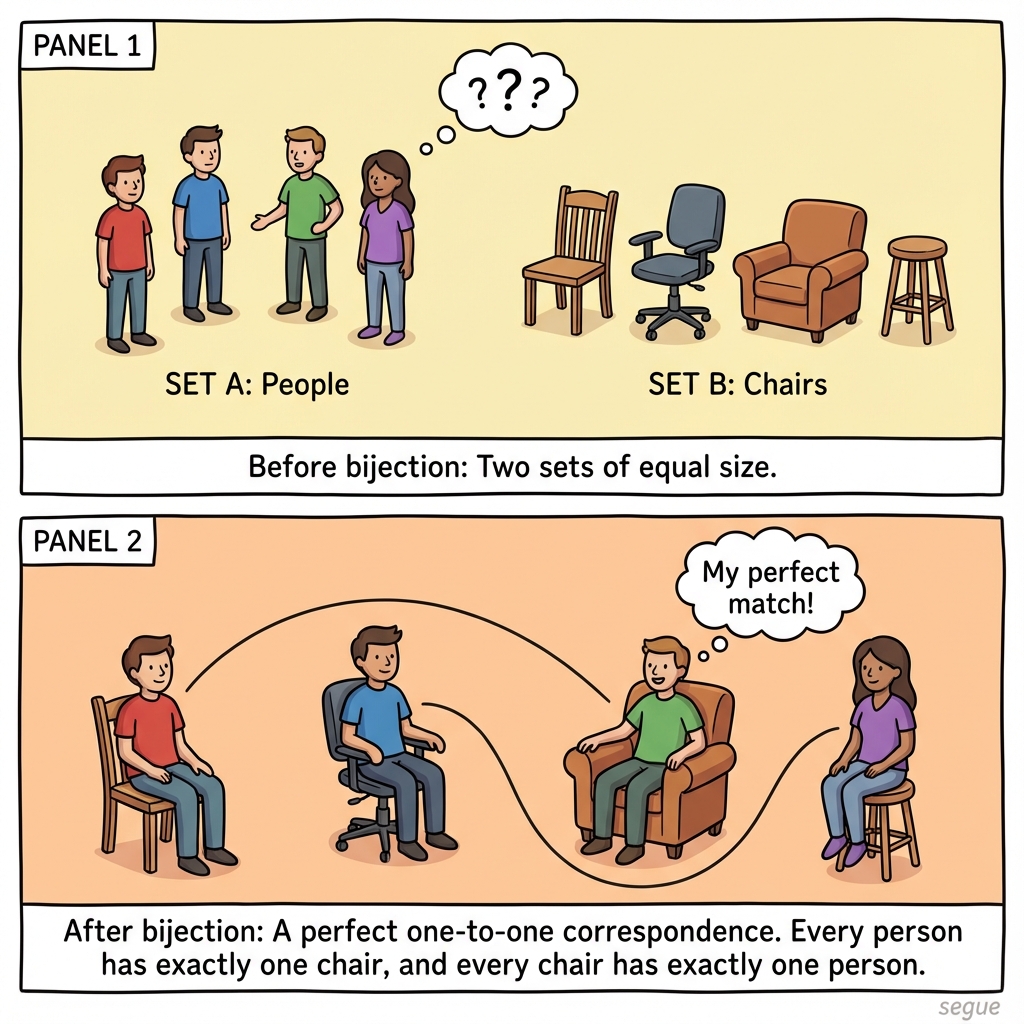
bijection
/baɪˈdʒekʃən/a one-to-one correspondence between two sets
“A bijection proves two sets have equal cardinality.”
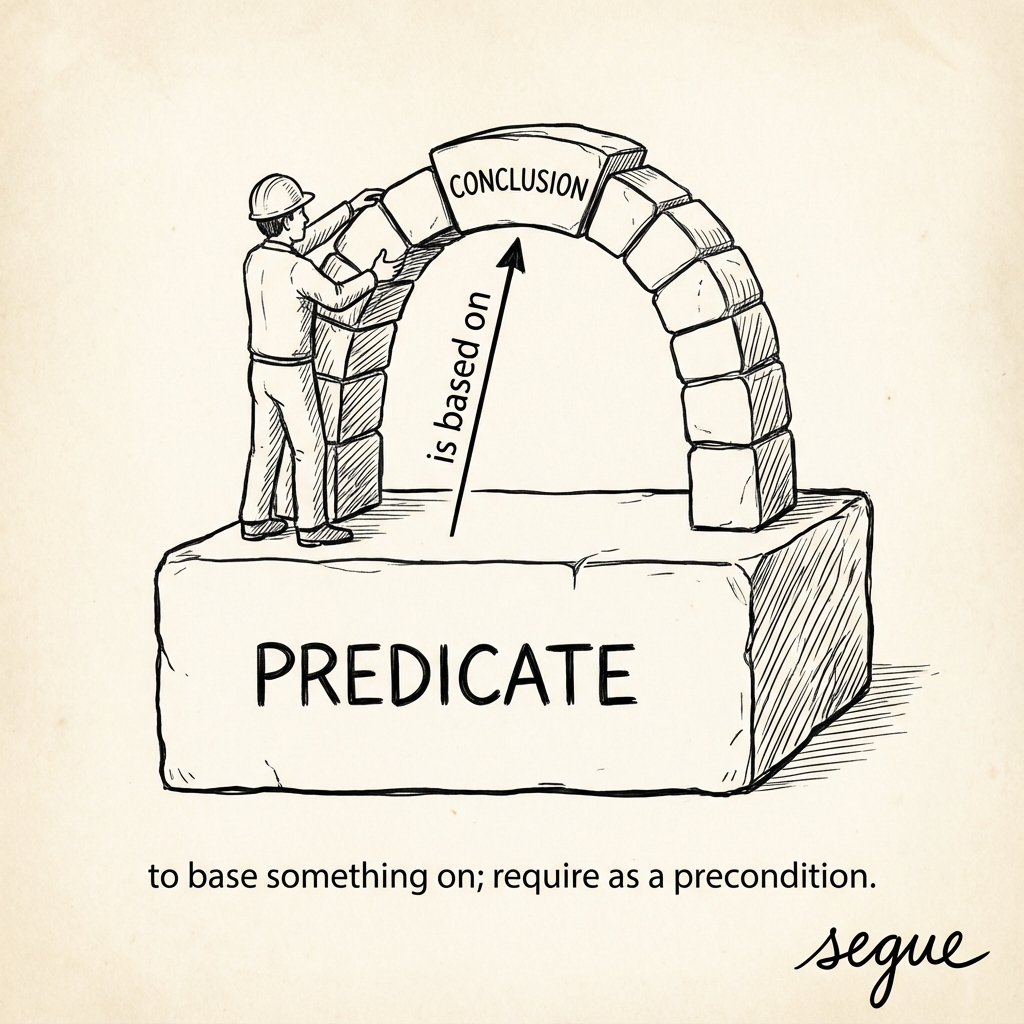
predicate
/ˈpɹɛdəˌkeɪt/a statement containing variables that becomes true or false when values are assigned
“The predicate 'x is even' is true when x = 4.”
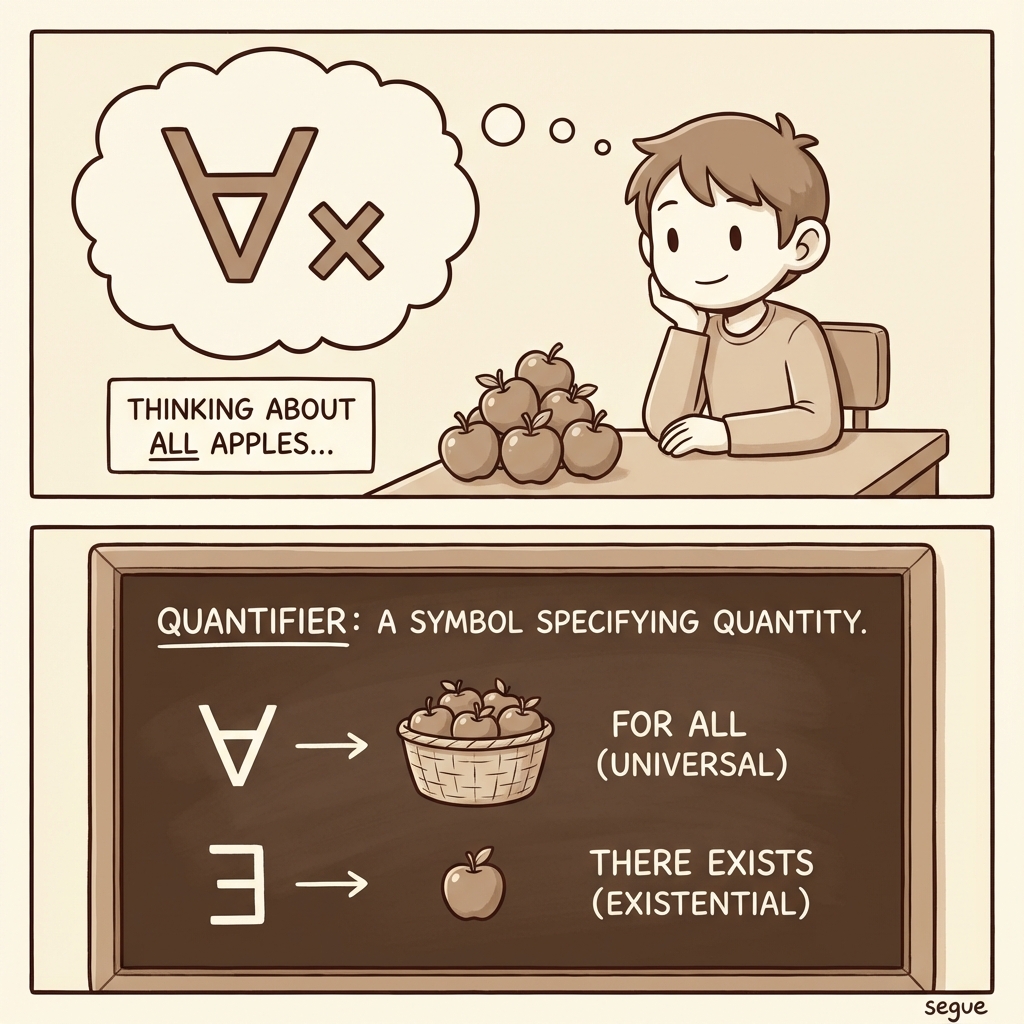
quantifier
/ˈkwɒntɪfaɪər/a symbol specifying the quantity of specimens in a domain
“The universal quantifier ∀ means 'for all'.”
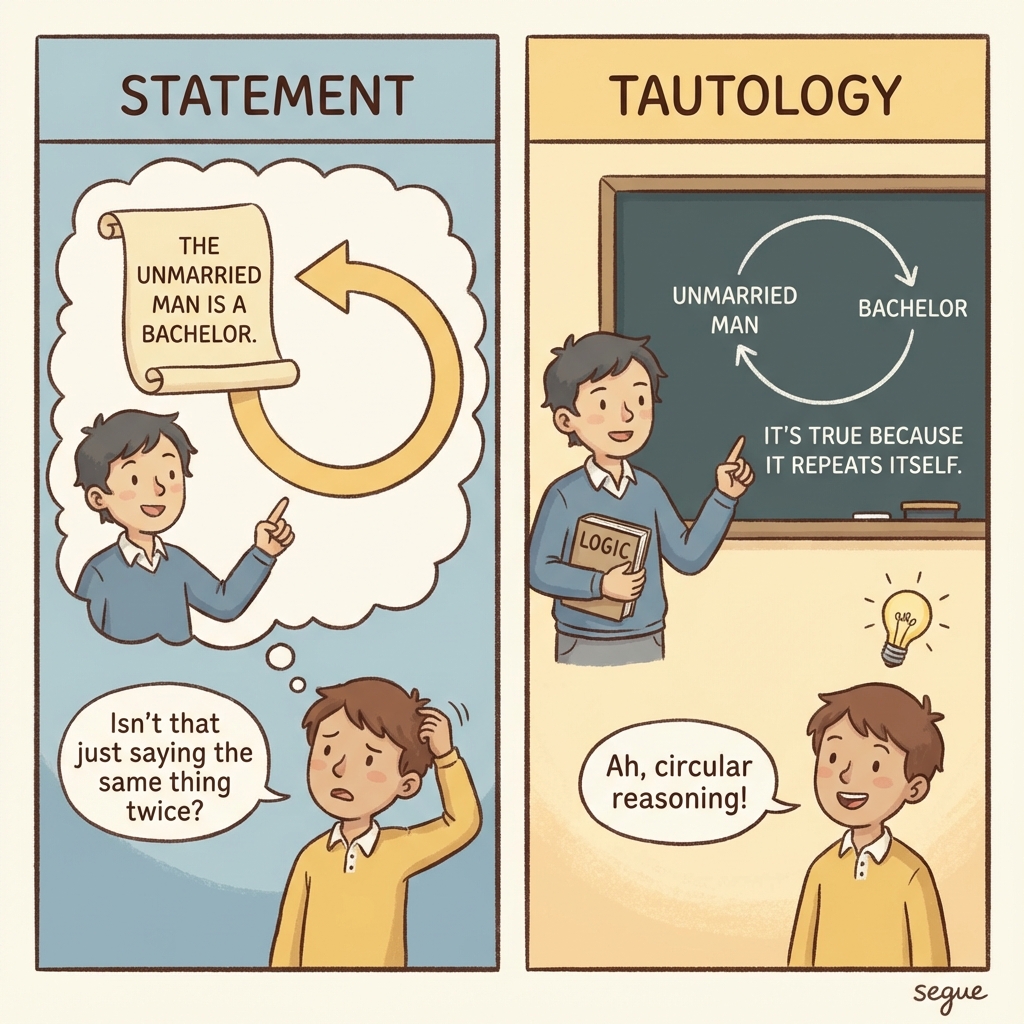
tautology
/tɔːˈtɒlədʒi/a statement that is true under all possible interpretations
“'It will rain or it will not rain' is a tautology.”
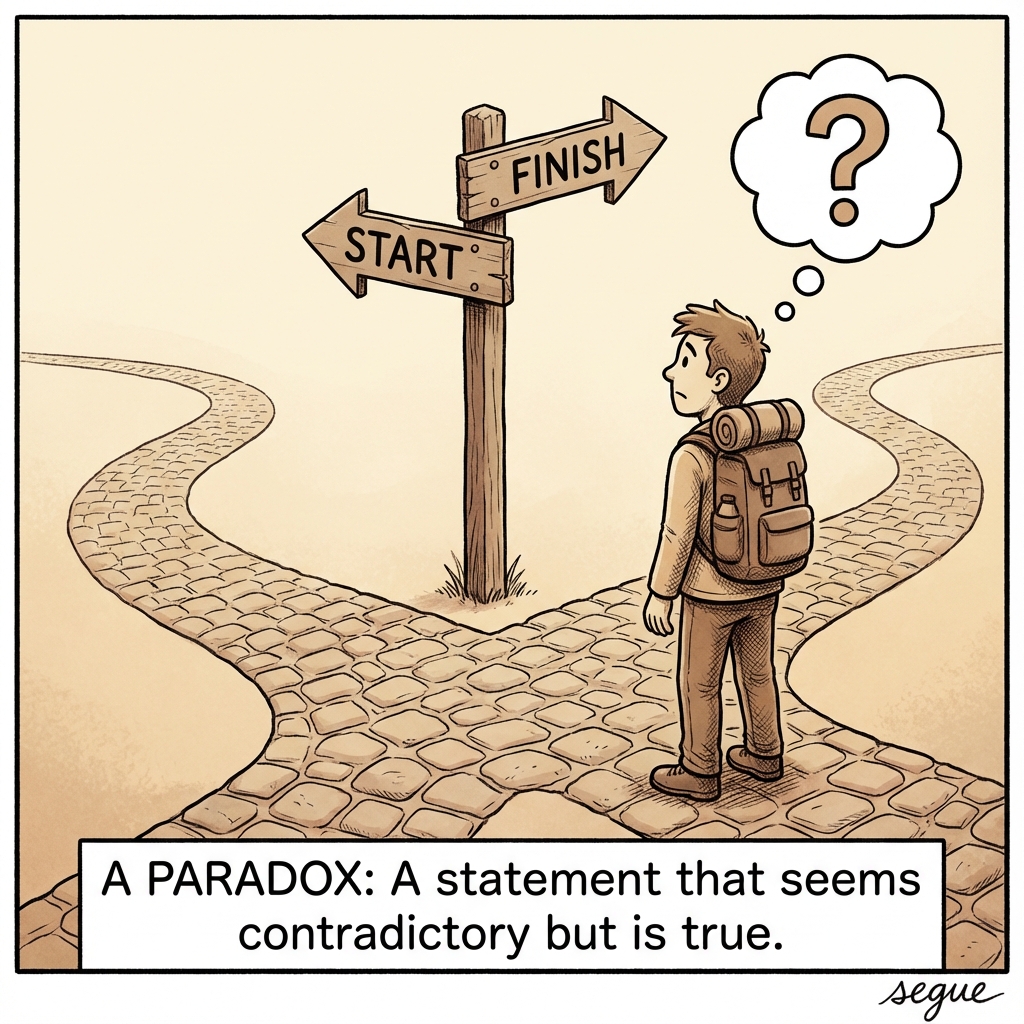
paradox
/ˈpɛɹəˌdɑks/a statement that contradicts itself or defies intuition
“Russell's paradox shook the foundations of set theory.”
More from Mathematics & Logic
Explore other vocabulary categories in this collection.