Loading collection...
🎲
Probability Fundamentals Vocabulary
Core concepts of chance and uncertainty
10 words
All 10 Words
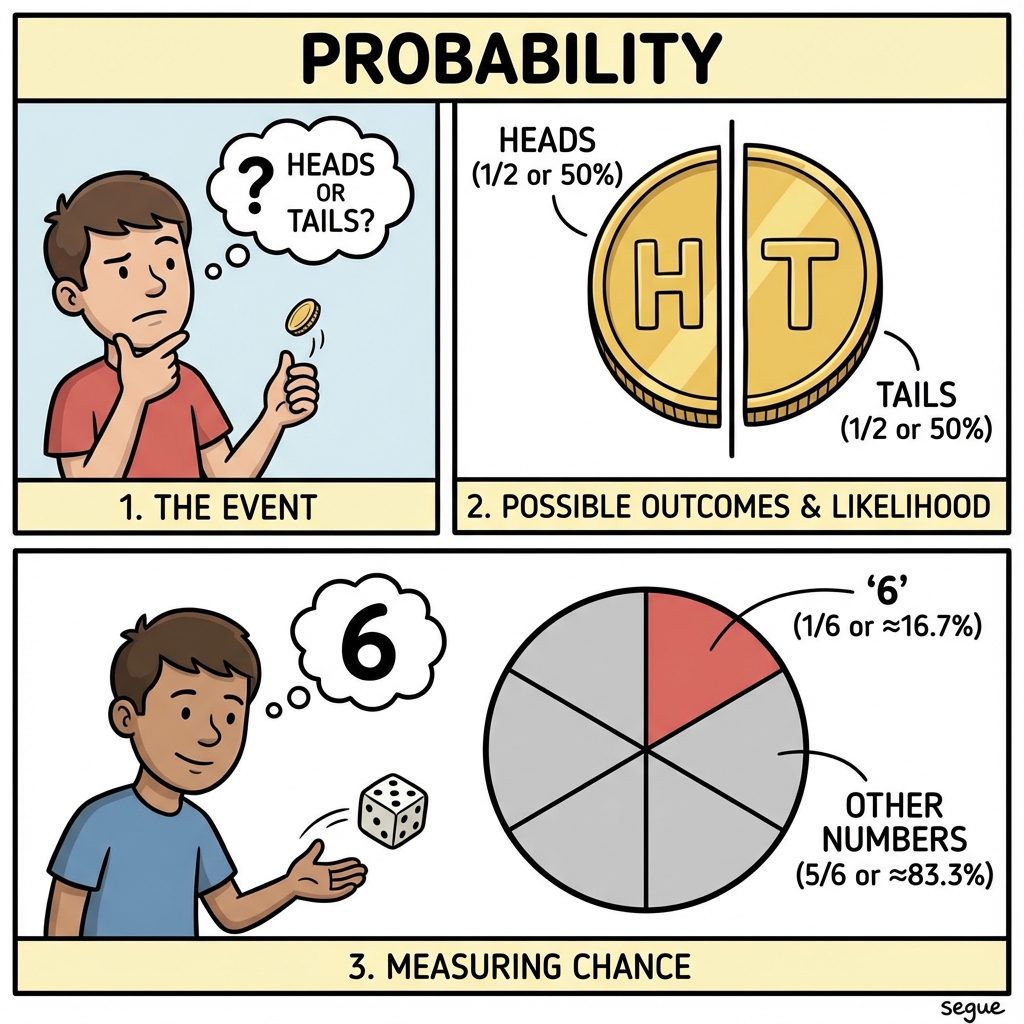
probability
/ˌpɹɑbəˈbɪɫəˌti/a measure of the likelihood that an event will occur
“The probability of rolling a six is 1/6.”
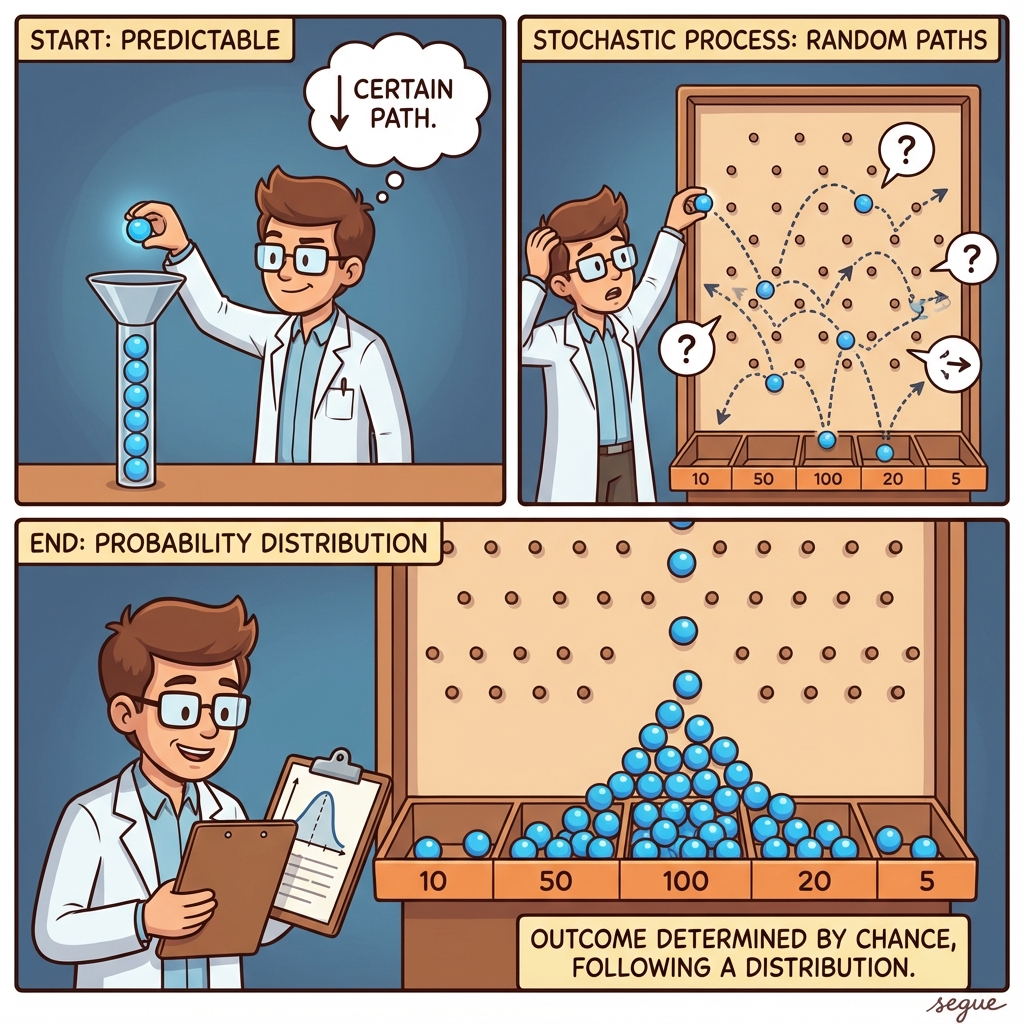
stochastic
/stoʊˈkæstɪk/randomly determined; having a random probability distribution
“Stock prices follow a stochastic process.”
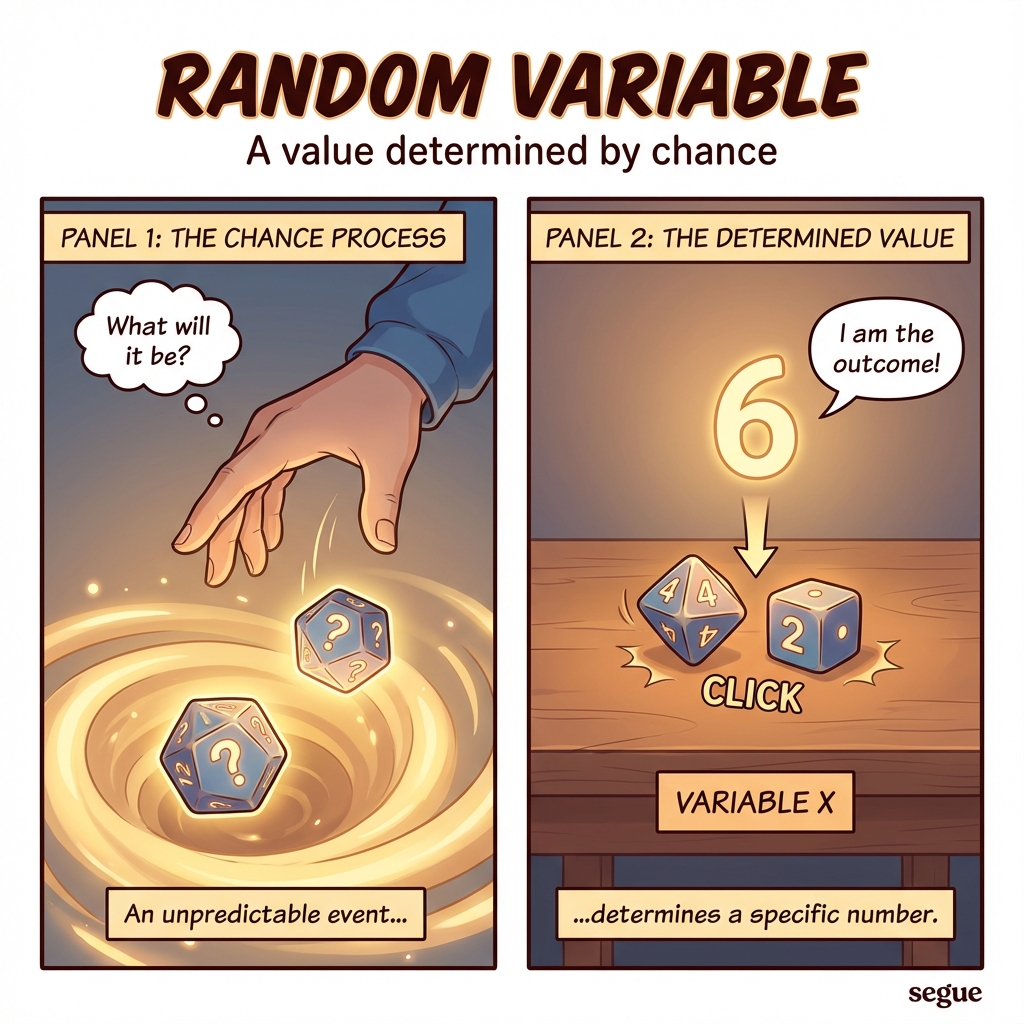
random variable
/ˌrændəm ˈveəriəbəl/a variable whose value is determined by chance
“The number of heads in 10 coin flips is a random variable.”
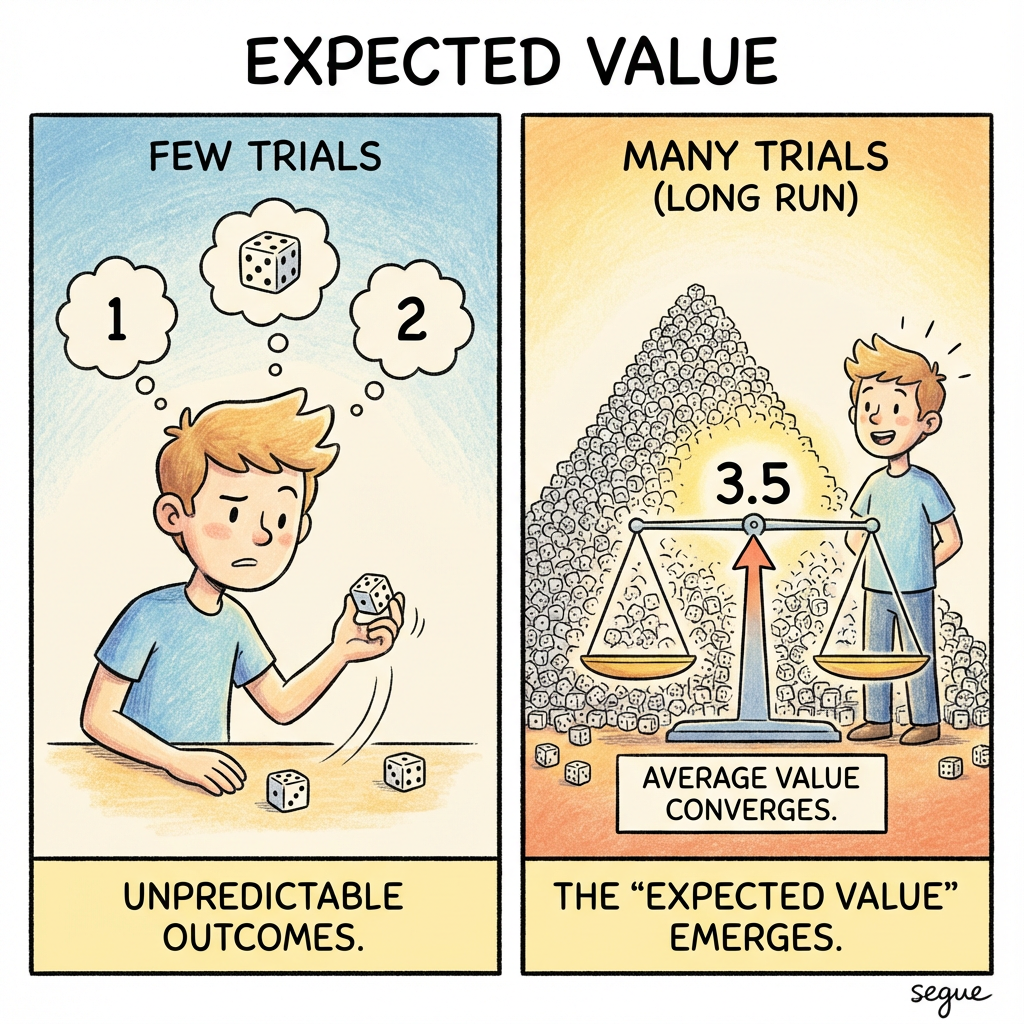
expected value
/ɪkˌspektɪd ˈvæljuː/the long-run average value of a random variable
“The expected value of a fair die roll is 3.5.”
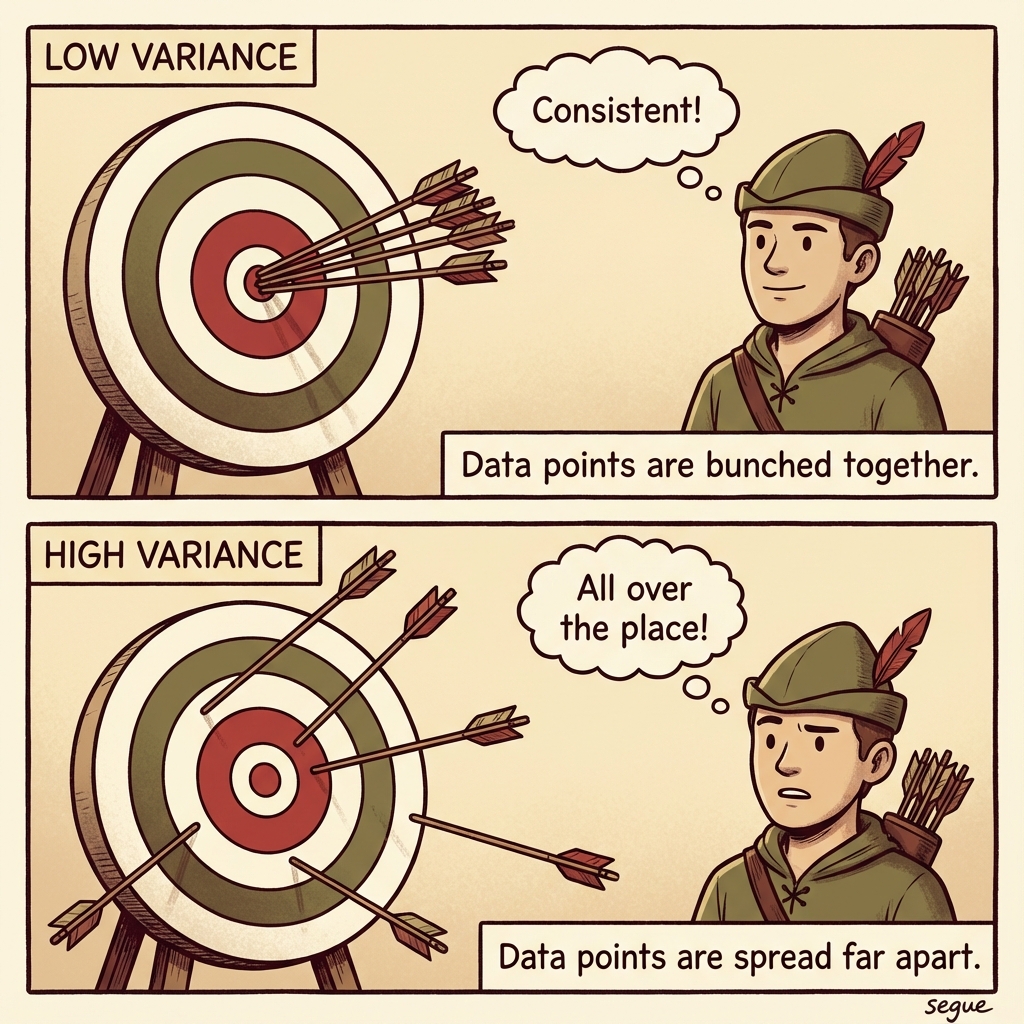
variance
/ˈvɛɹiəns/a measure of how spread out a distribution is
“High variance indicates data points are far from the mean.”
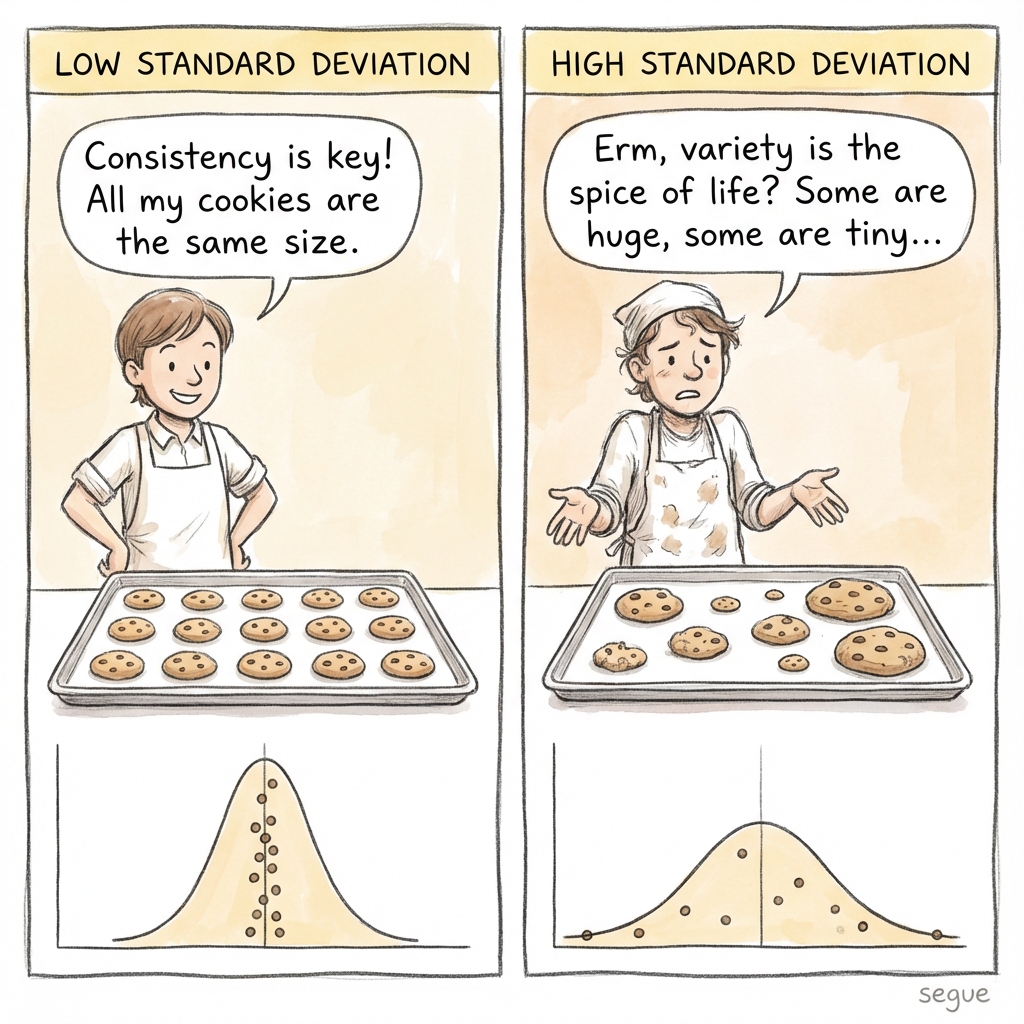
standard deviation
/ˌstændərd ˌdiːviˈeɪʃən/the square root of variance; a measure of dispersion
“Most data falls within two standard deviations of the mean.”
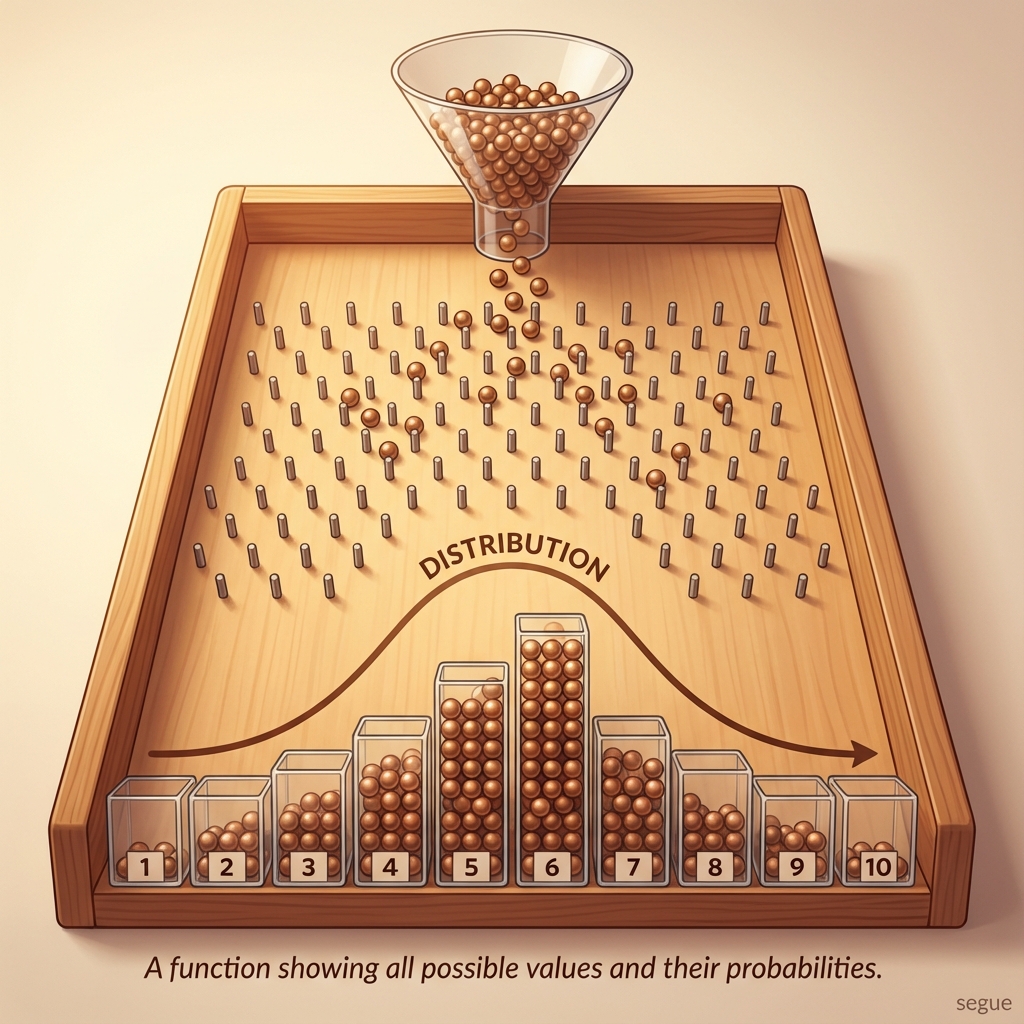
distribution
/ˌdɪstɹəbˈjuʃən/a function showing all possible values and their probabilities
“Test scores often follow a normal distribution.”
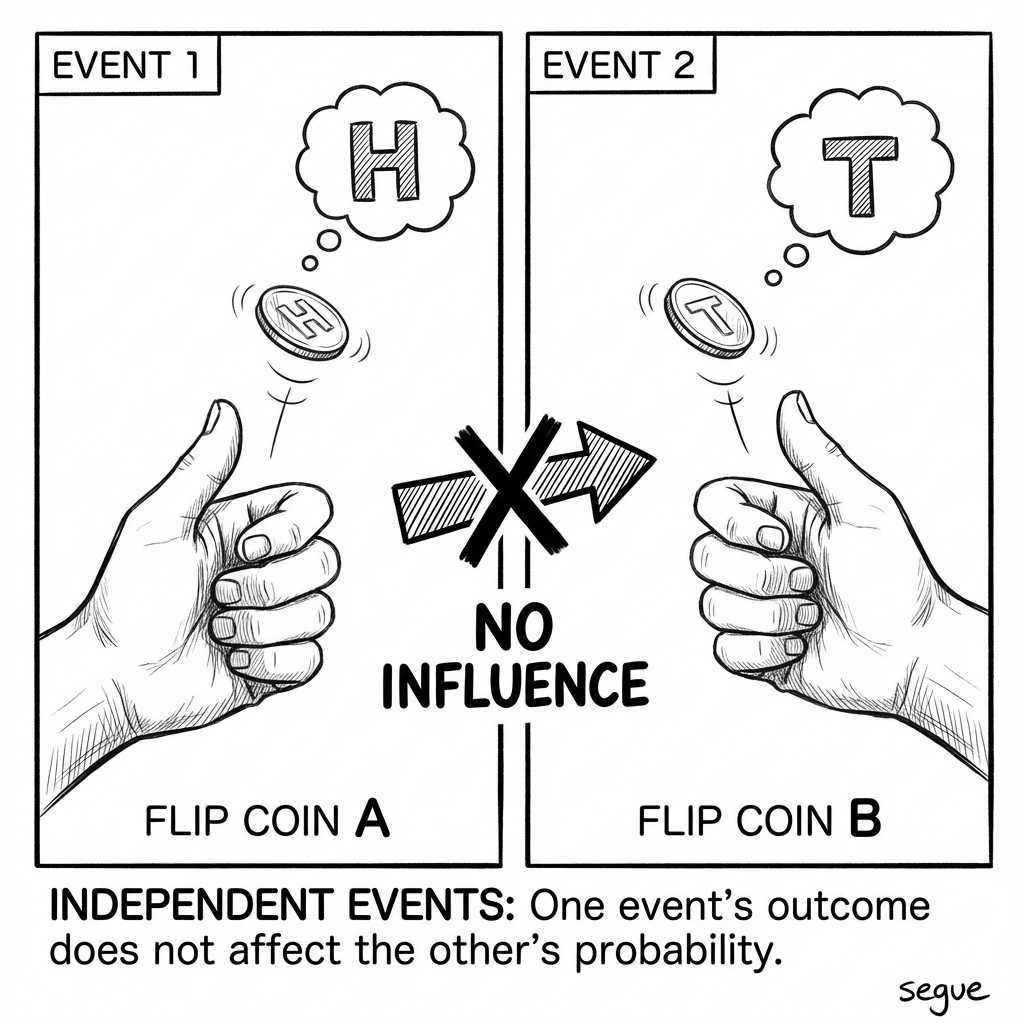
independent
/ˌɪndɪˈpɛndənt/events where one does not affect the probability of another
“Successive coin flips are independent events.”
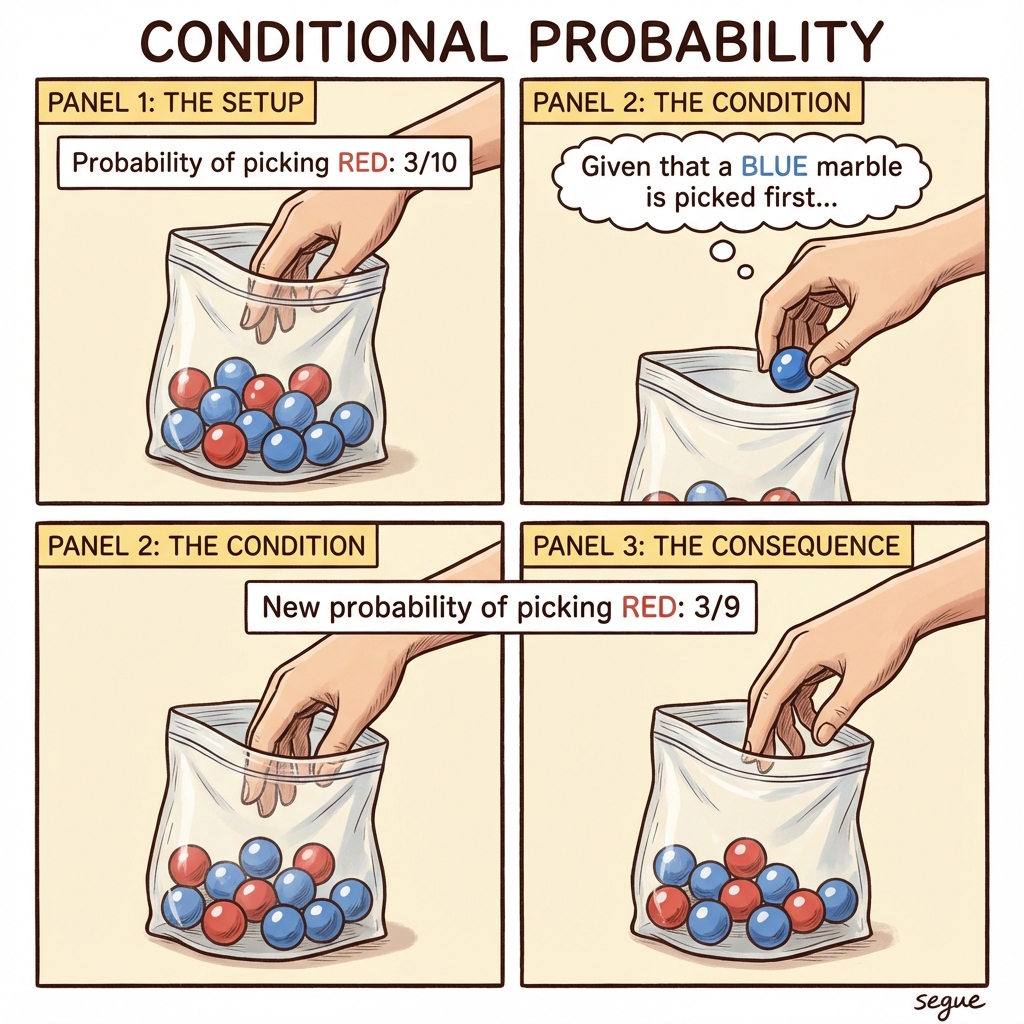
conditional probability
/kənˌdɪʃənəl ˌprɒbəˈbɪlɪti/the probability of an event given that another has occurred
“The conditional probability of rain given clouds is higher than without.”
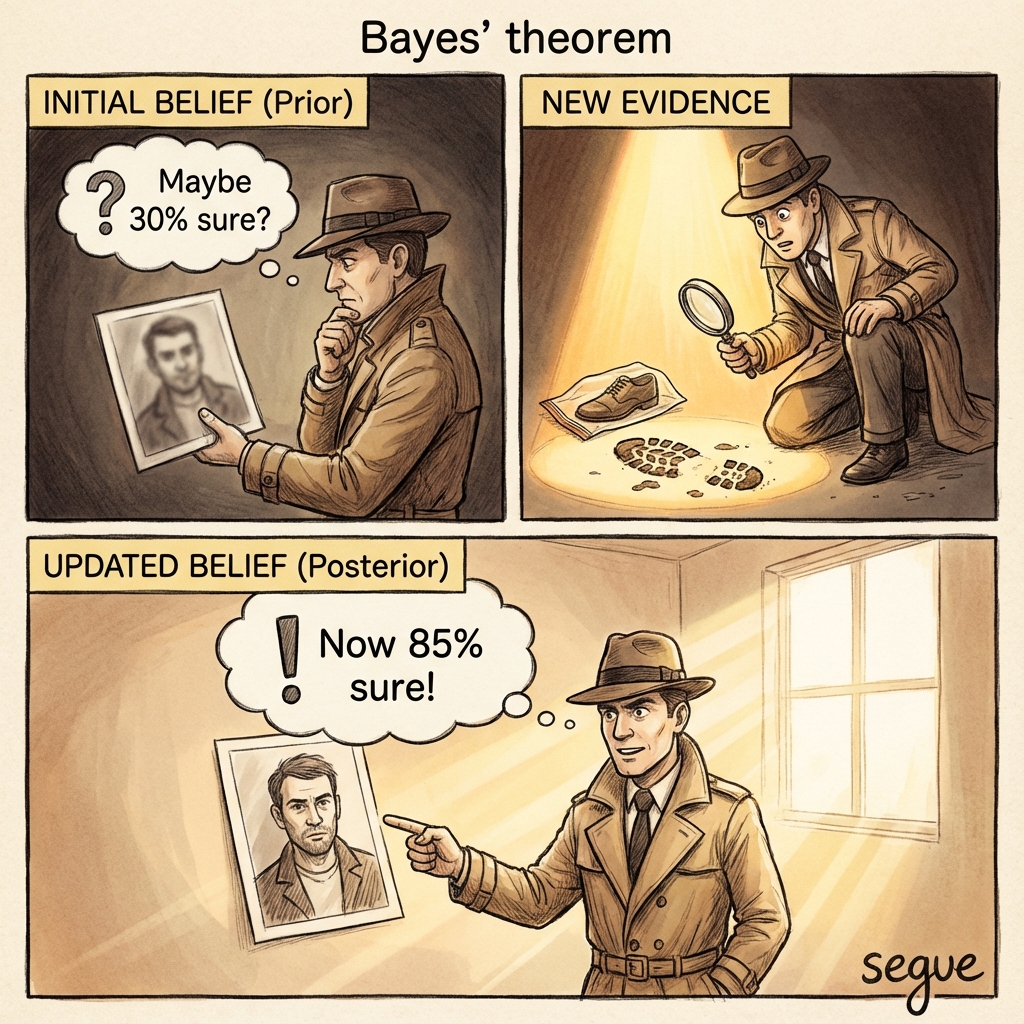
Bayes' theorem
a formula for updating probabilities based on new evidence
“Bayes' theorem helps doctors interpret diagnostic test results.”
More from Mathematics & Logic
Explore other vocabulary categories in this collection.