Loading collection...
🪞
Philosophy of Mind Vocabulary
Philosophical inquiry into consciousness, thought, and mental phenomena
12 words
All 12 Words
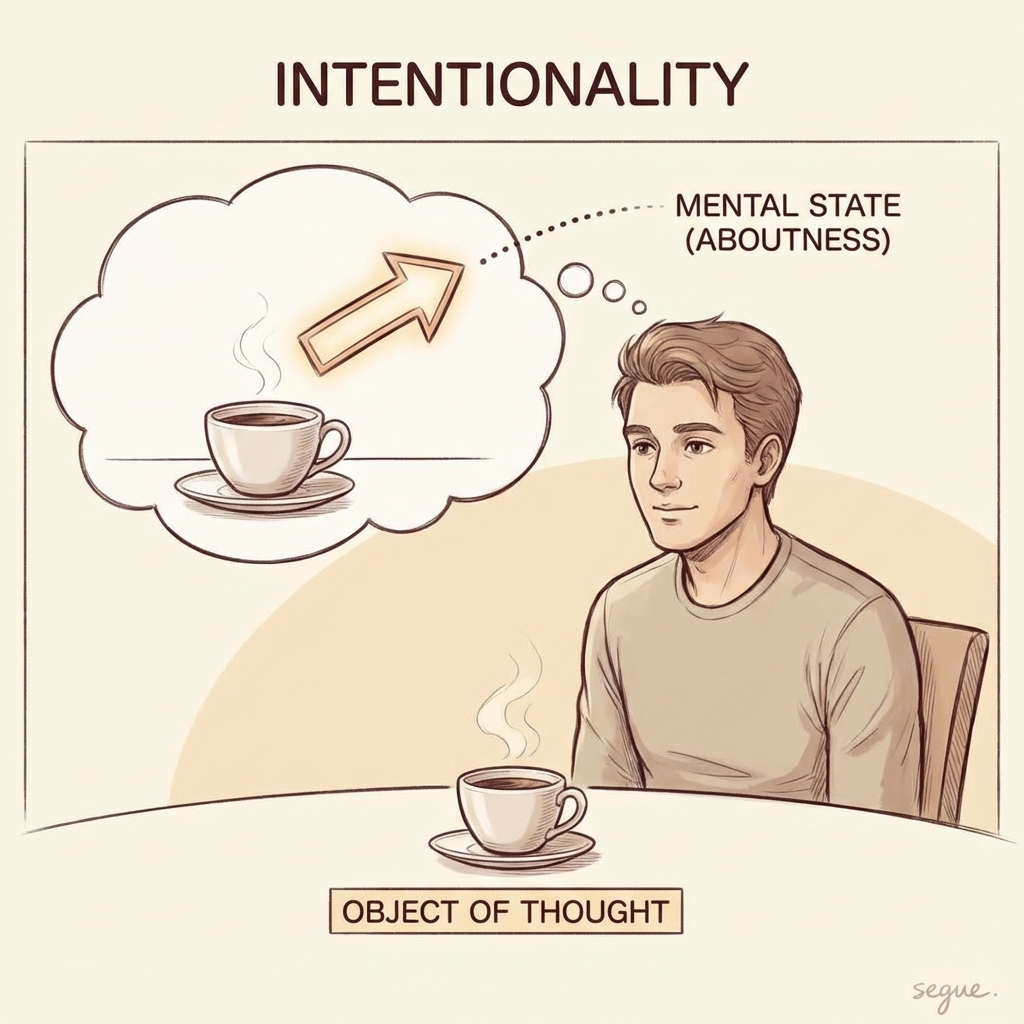
intentionality
/ɪnˌtenʃəˈnælɪti/the property of mental states being about or directed at something
“Beliefs exhibit intentionality—they are always beliefs about something.”

qualia
/ˈkwɑːliə/the subjective, conscious qualities of experience (the 'what it's like')
“The qualia of seeing red cannot be fully conveyed in words.”

representation
/ˌɹɛpɹəzɛnˈteɪʃən/a mental state that stands for or depicts something else
“Mental representations allow us to think about absent objects.”
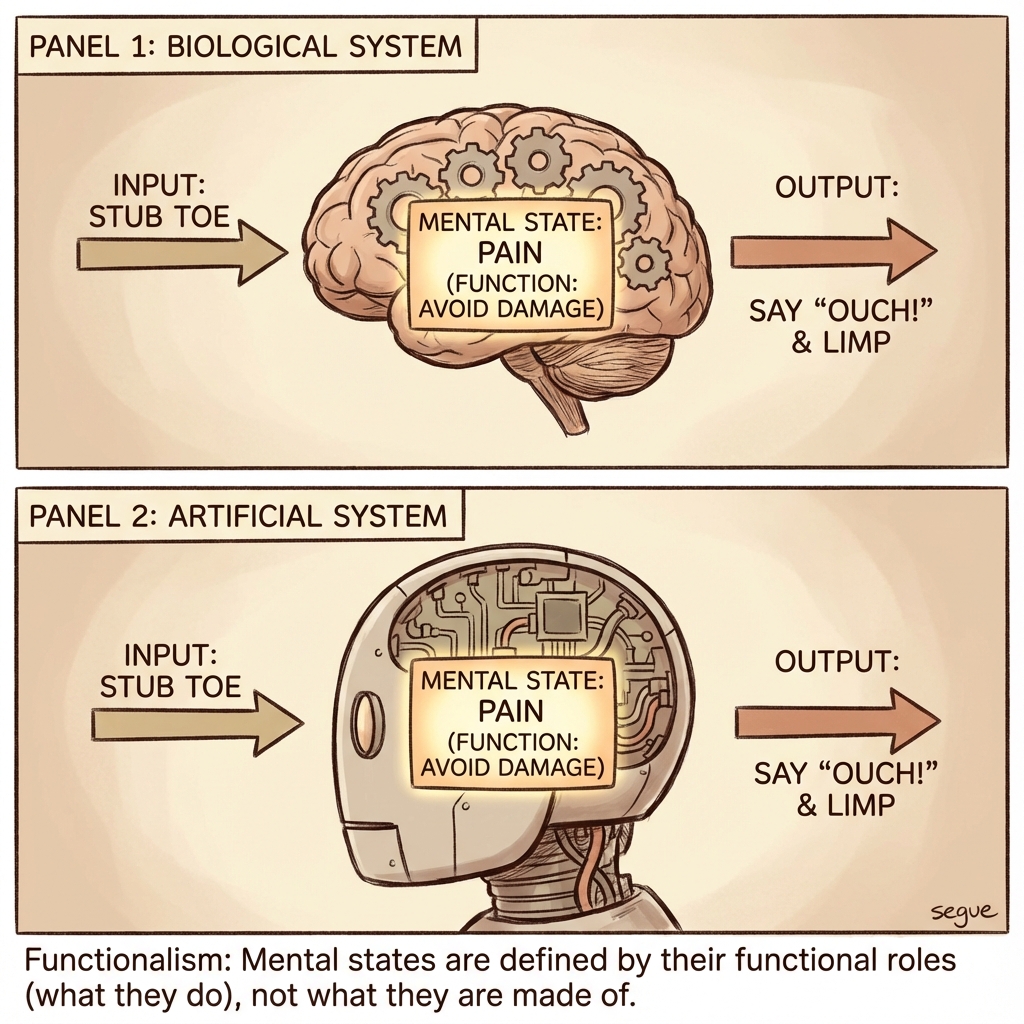
functionalism
/ˈfʌŋkʃənəlɪzəm/the view that mental states are defined by their functional roles
“Functionalism suggests minds could be implemented in different substrates.”

emergence
/ˈimɝdʒəns/complex properties arising from simpler components that lack those properties
“Consciousness may be an emergent property of neural activity.”
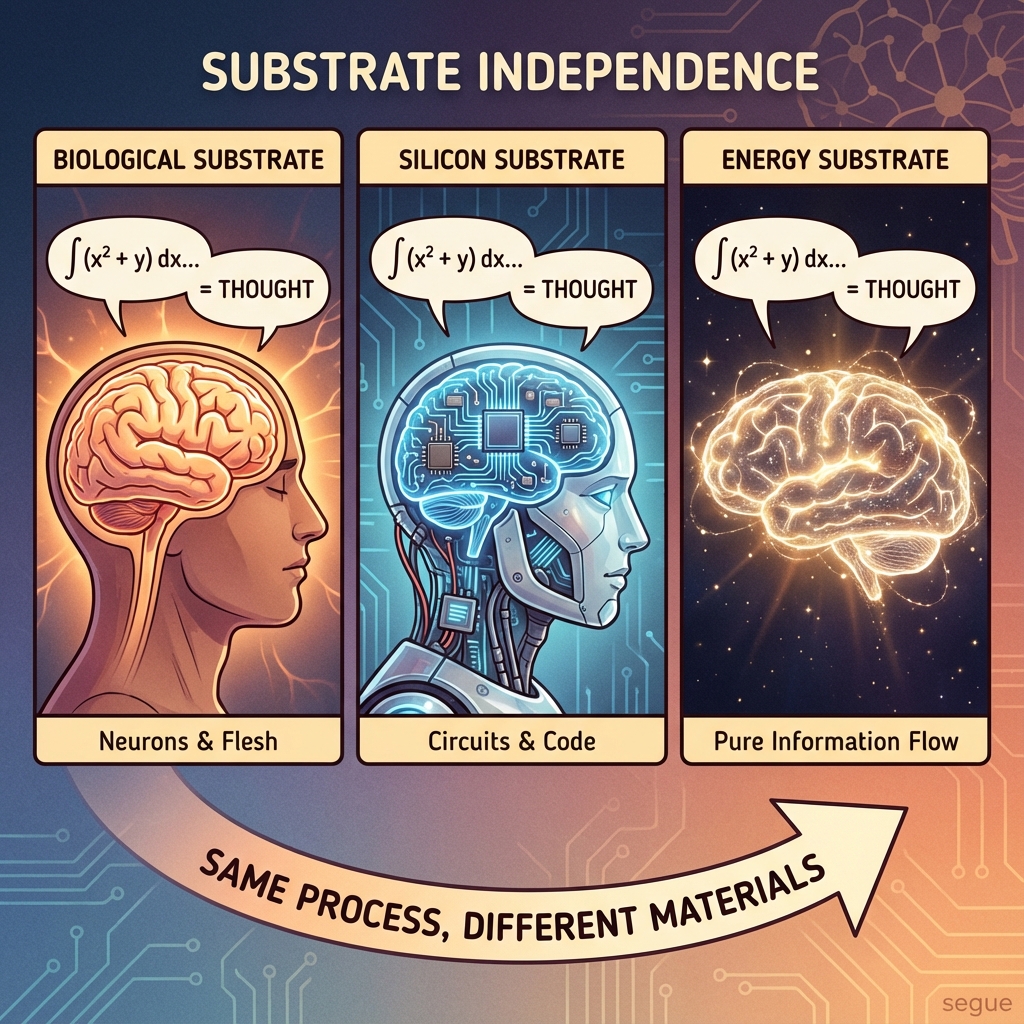
substrate independence
/ˈsʌbstreɪt ˌɪndɪˈpendəns/the idea that mental processes don't depend on specific physical material
“Substrate independence implies silicon could support consciousness.”
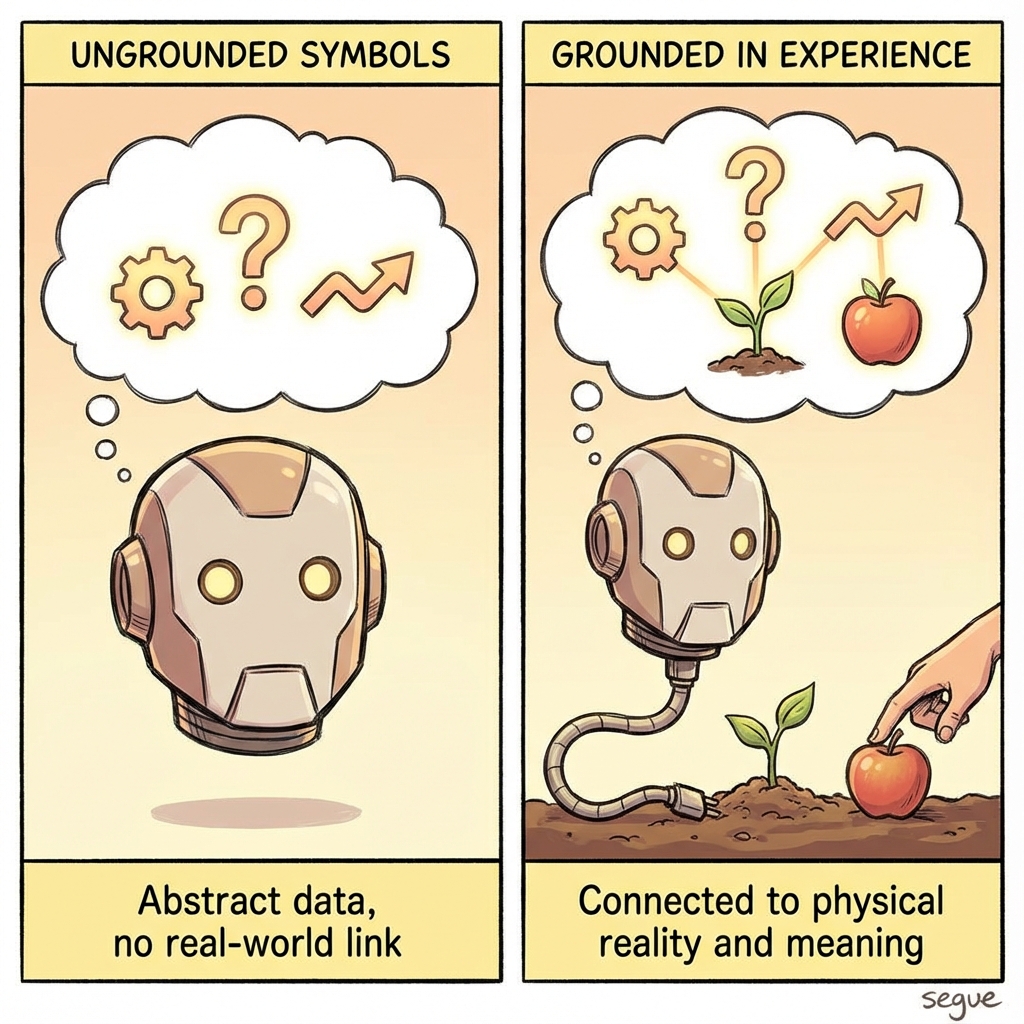
symbol grounding
/ˈsɪmbəl ˌɡraʊndɪŋ/connecting abstract symbols to real-world meaning and experience
“The symbol grounding problem asks how words acquire meaning.”
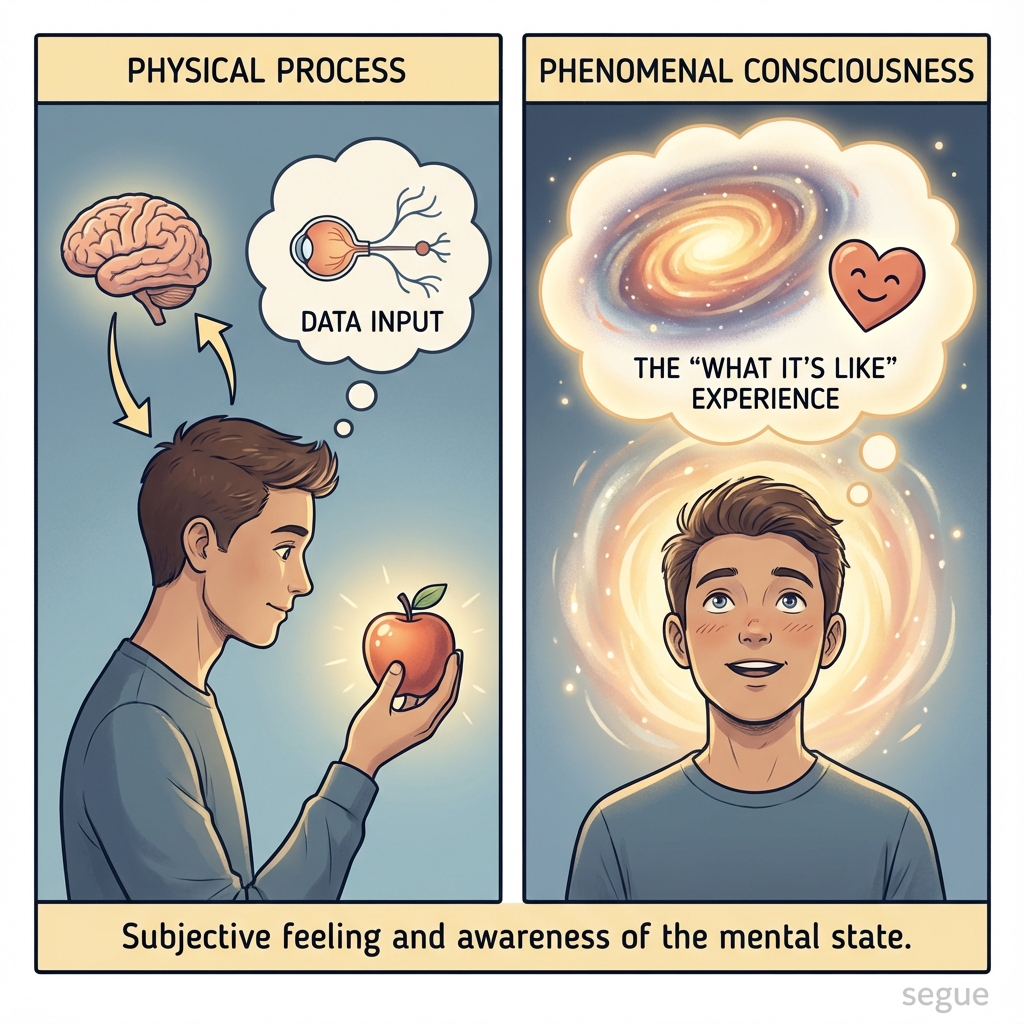
phenomenal consciousness
/fɪˌnɒmɪnəl ˈkɒnʃəsnəs/the subjective, experiential aspect of mental states
“Phenomenal consciousness is what makes experiences feel like something.”
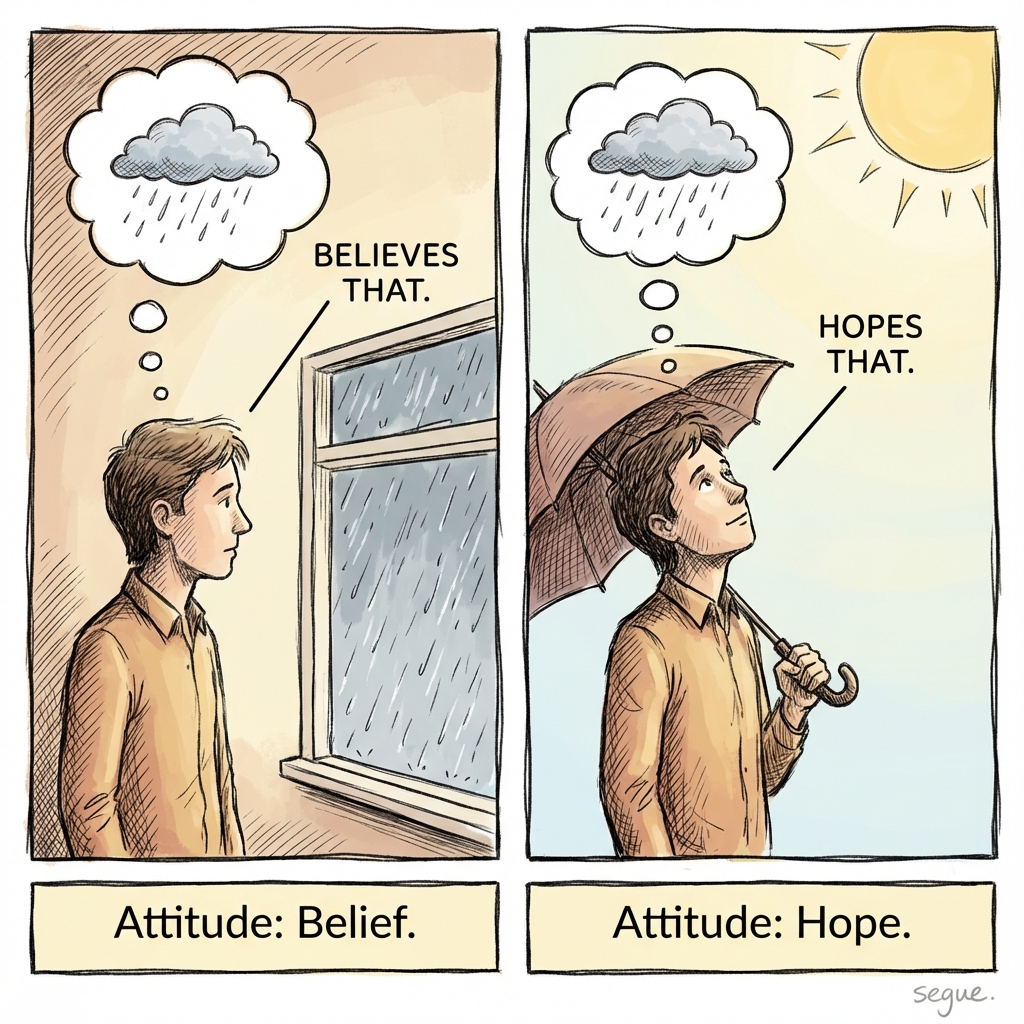
propositional attitude
/ˌprɒpəˈzɪʃənəl ˈætɪtuːd/a mental state relating a person to a proposition (believes that, hopes that)
“Propositional attitudes like belief and desire explain behavior.”
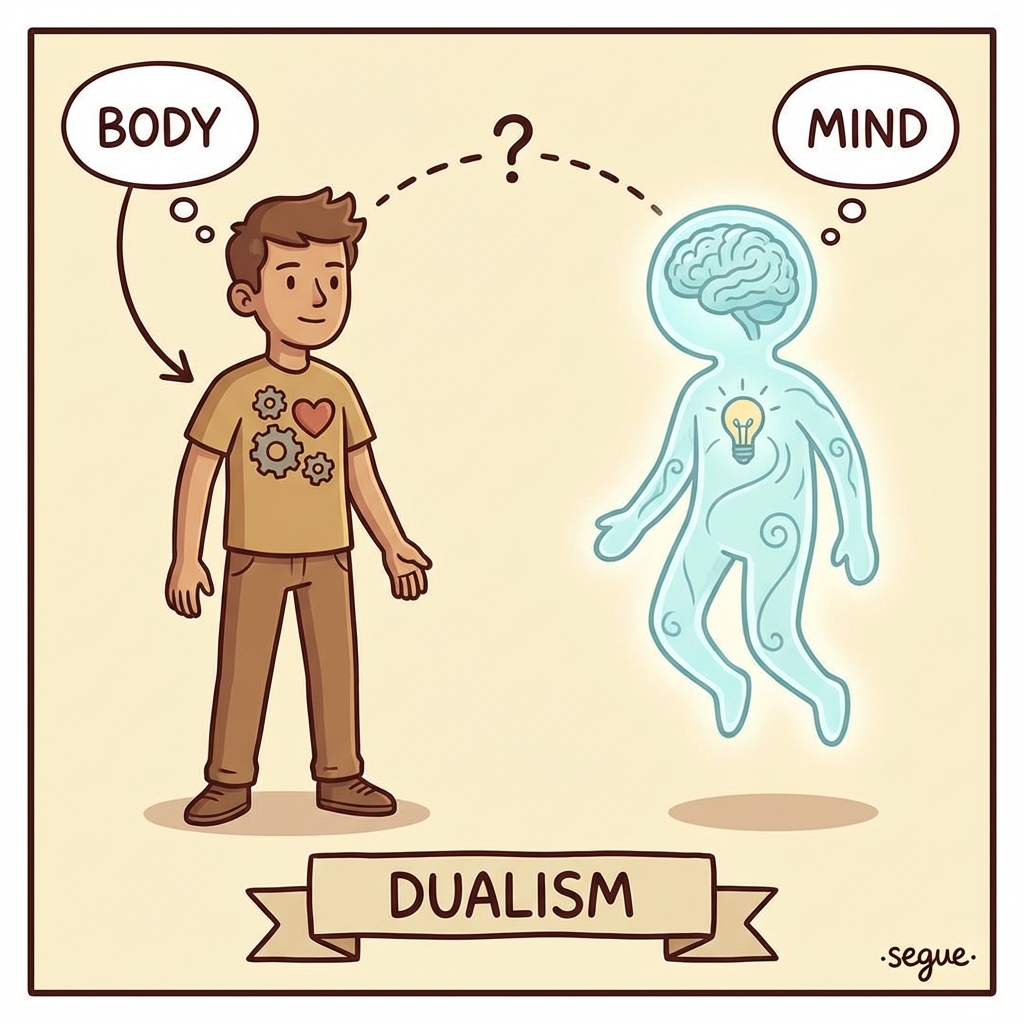
dualism
/ˈduəˌɫɪzəm/the view that mind and body are fundamentally different substances
“Cartesian dualism posits a non-physical mind interacting with the body.”
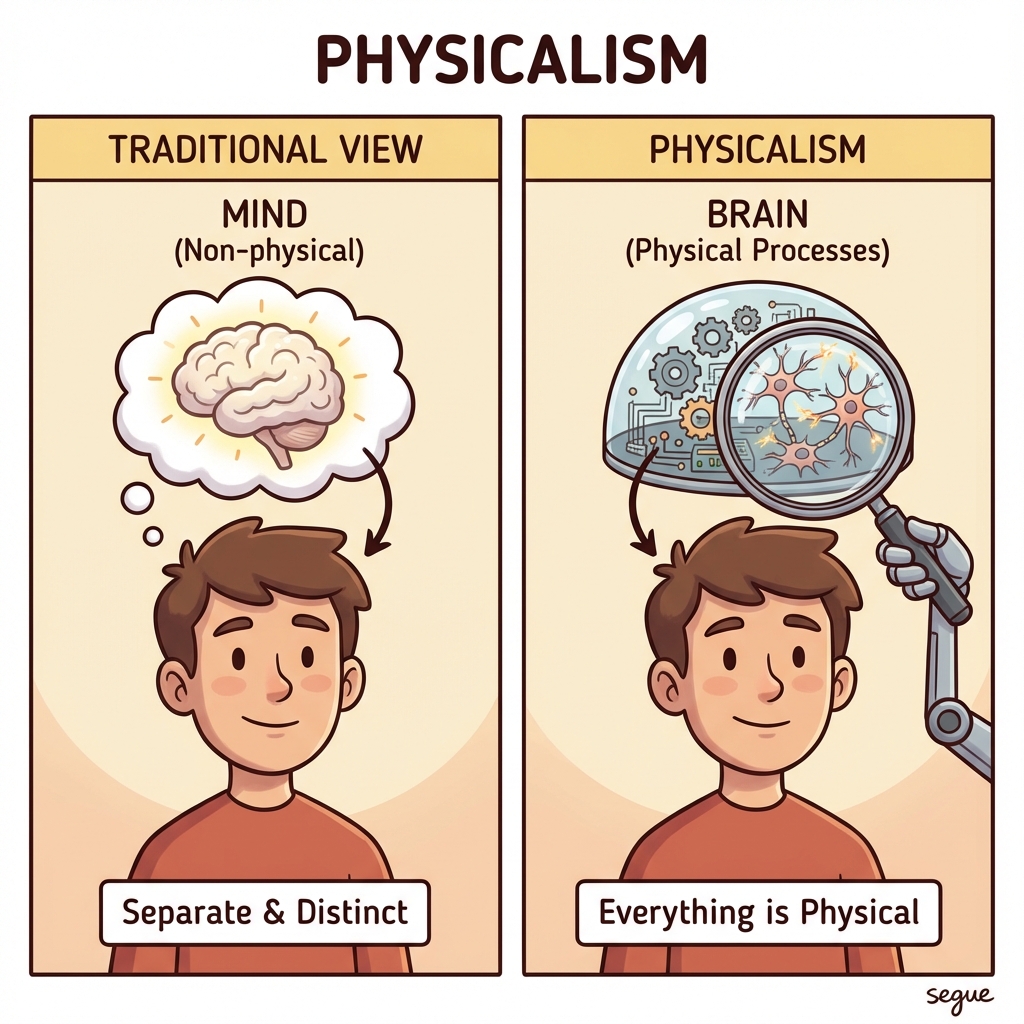
physicalism
/ˈfɪzɪkəlɪzəm/the view that everything, including mind, is ultimately physical
“Physicalism holds that mental states are brain states.”
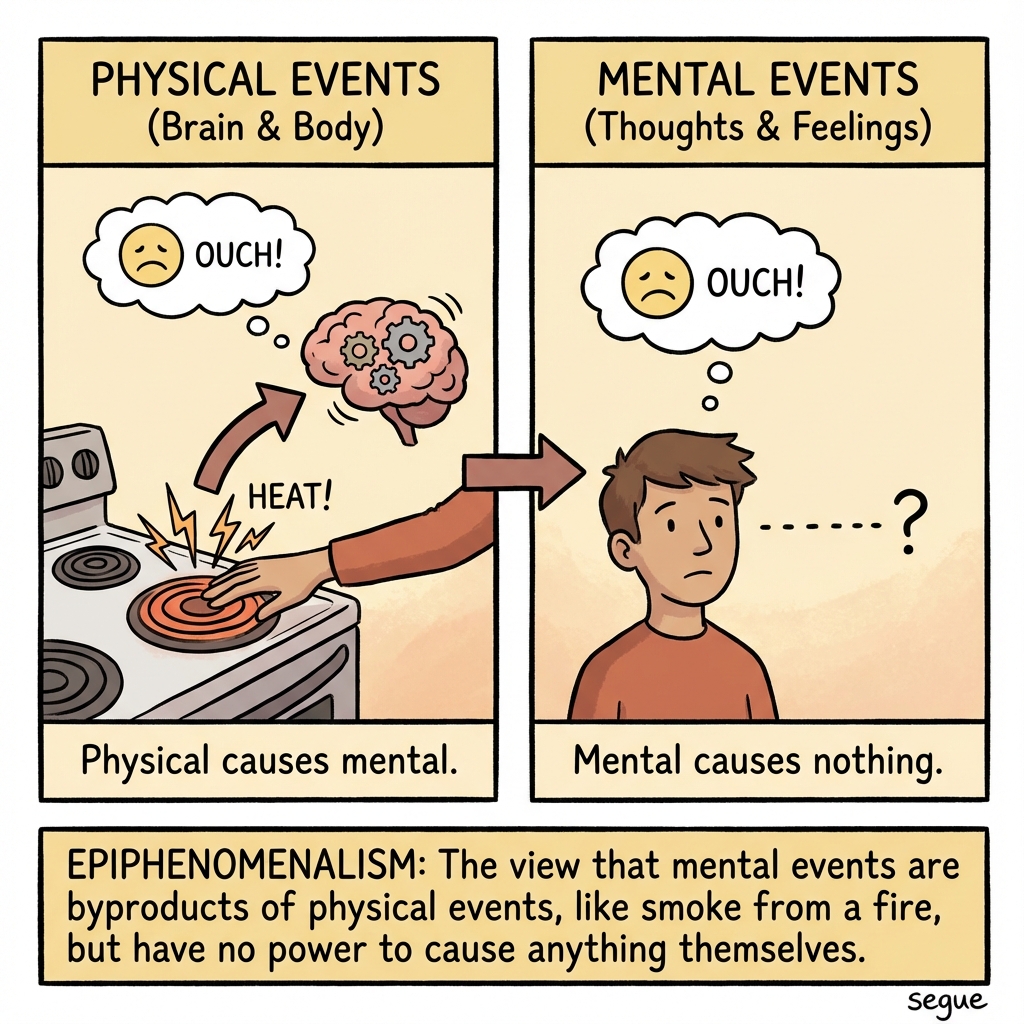
epiphenomenalism
/ˌepɪfɪˈnɒmɪnəlɪzəm/the view that mental events are caused by physical events but have no causal power
“Epiphenomenalism treats consciousness as a byproduct without influence.”
More from Technology & Systems
Explore other vocabulary categories in this collection.