Loading collection...
📏
Design Principles Vocabulary
Fundamental concepts guiding architectural design
10 words
All 10 Words
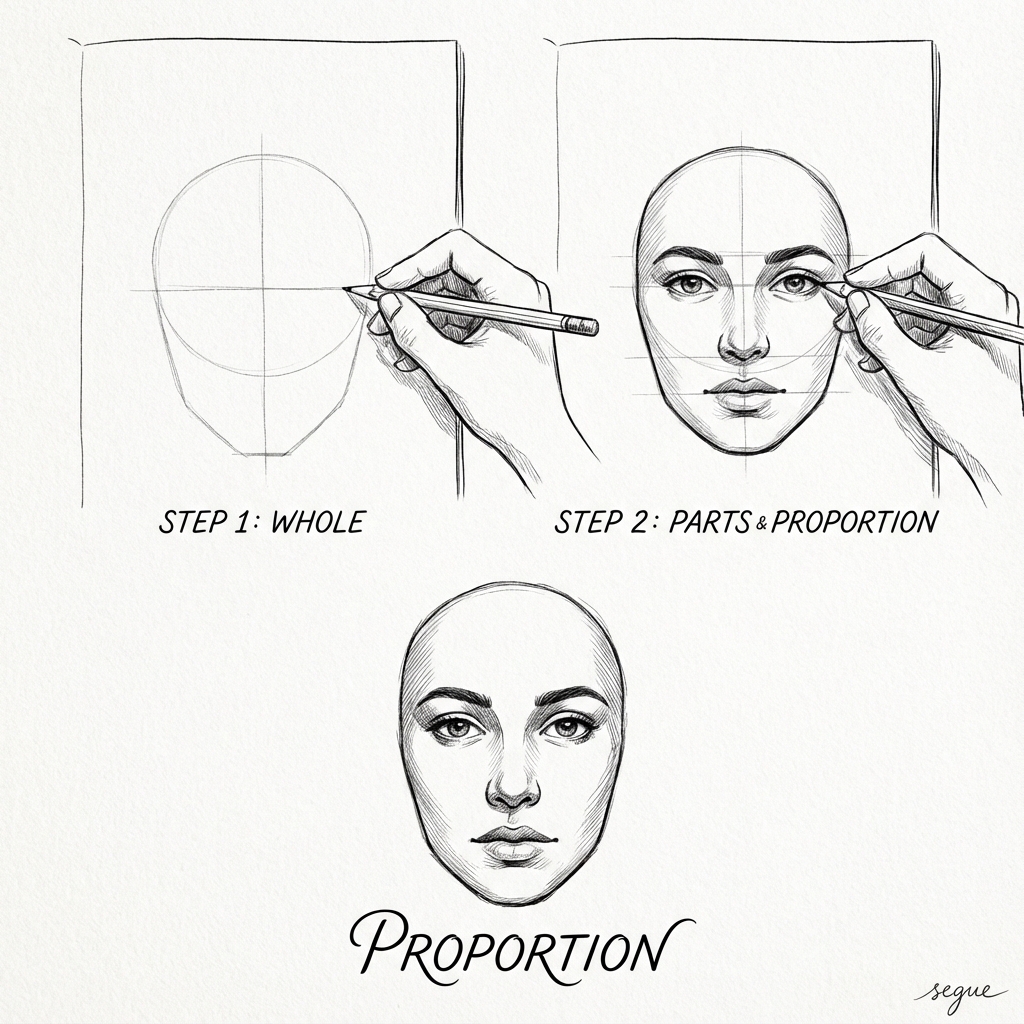
proportion
/pɹəˈpɔɹʃən/the harmonious relationship of parts to the whole
“Classical architecture follows strict rules of proportion.”
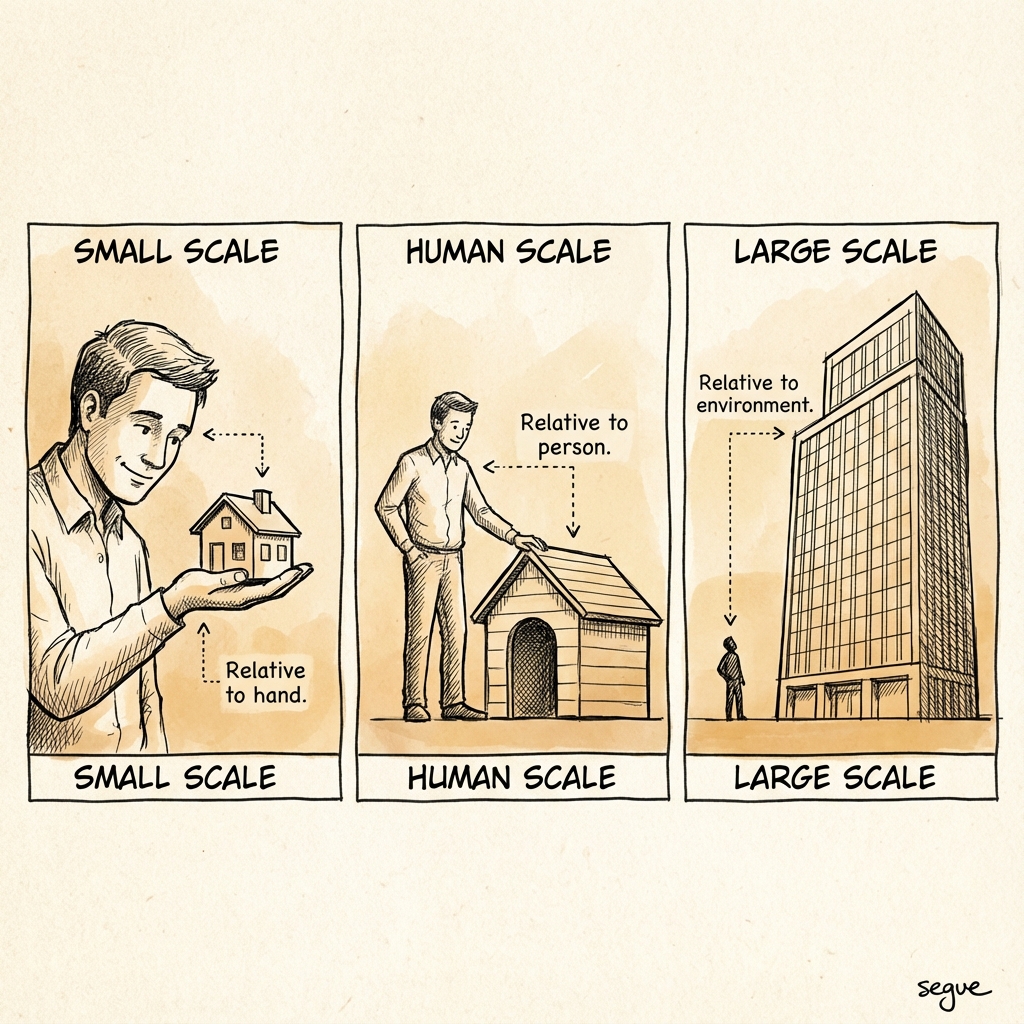
scale
/ˈskeɪɫ/the size of elements relative to humans or other elements
“The grand scale of the lobby impressed visitors.”

rhythm
/ˈɹɪðəm/repetition of elements creating visual movement
“The rhythm of windows unified the facade.”
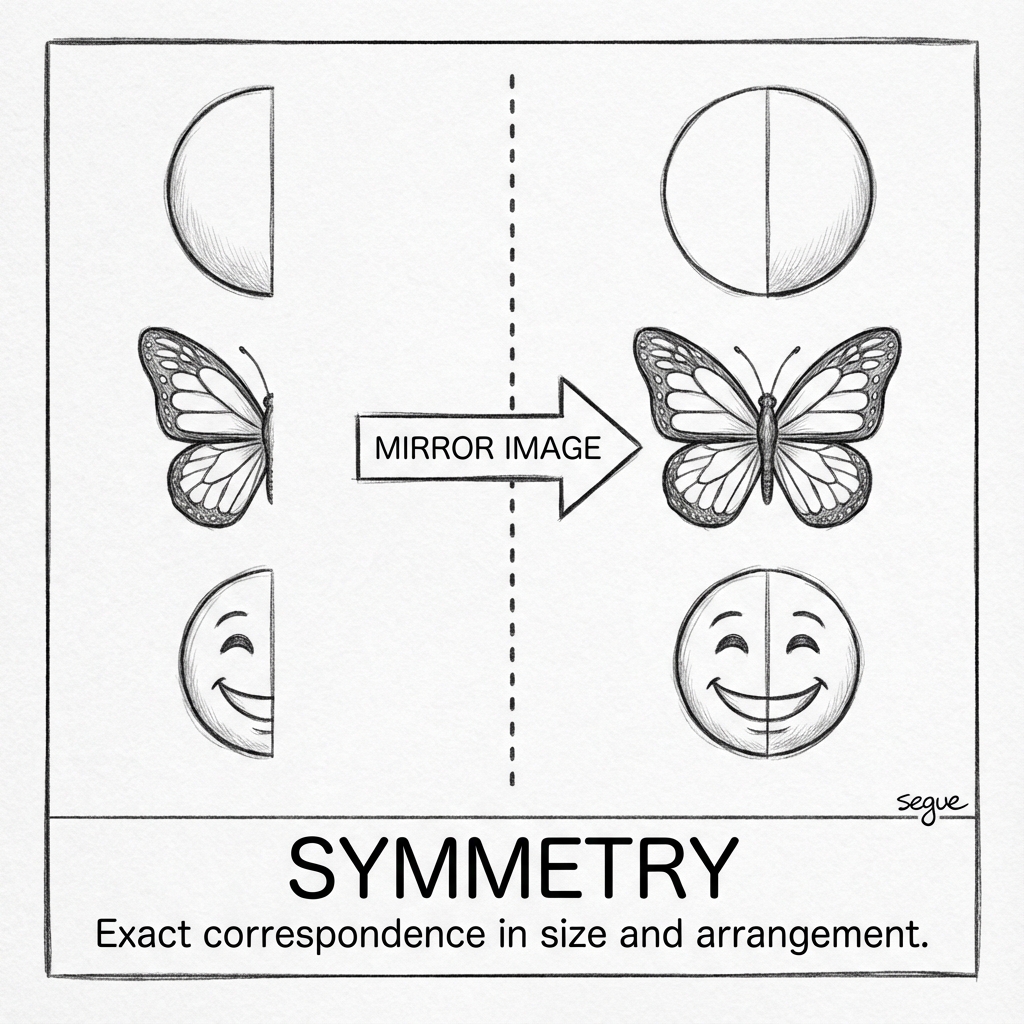
symmetry
/ˈsɪmətɹi/balanced arrangement around a central axis
“Formal gardens display perfect symmetry.”

hierarchy
/ˈhaɪˌɹɑɹki/organizing elements by importance or dominance
“Visual hierarchy guides the eye to the entrance.”
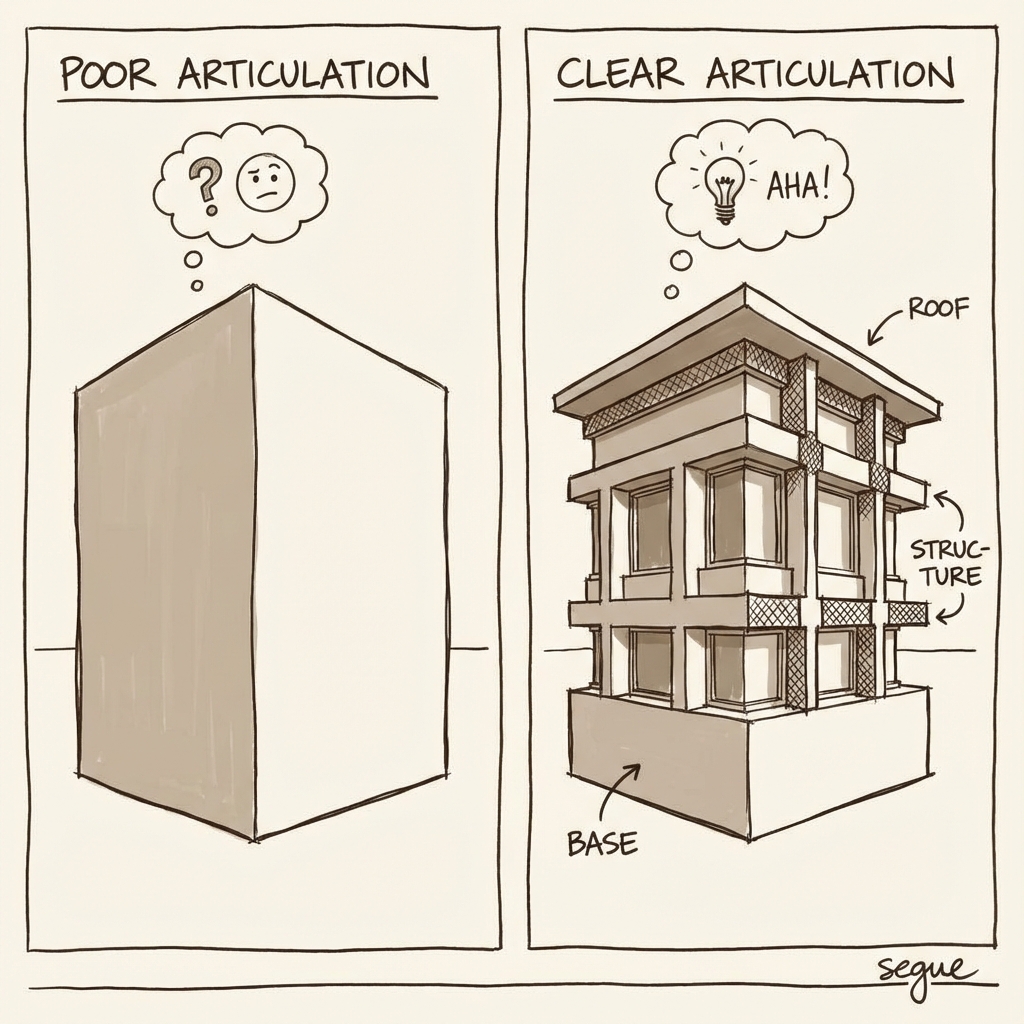
articulation
/ˌɑɹtɪkjəˈɫeɪʃən/the clear expression of a building's parts and structure
“The articulation of floors and columns was elegant.”
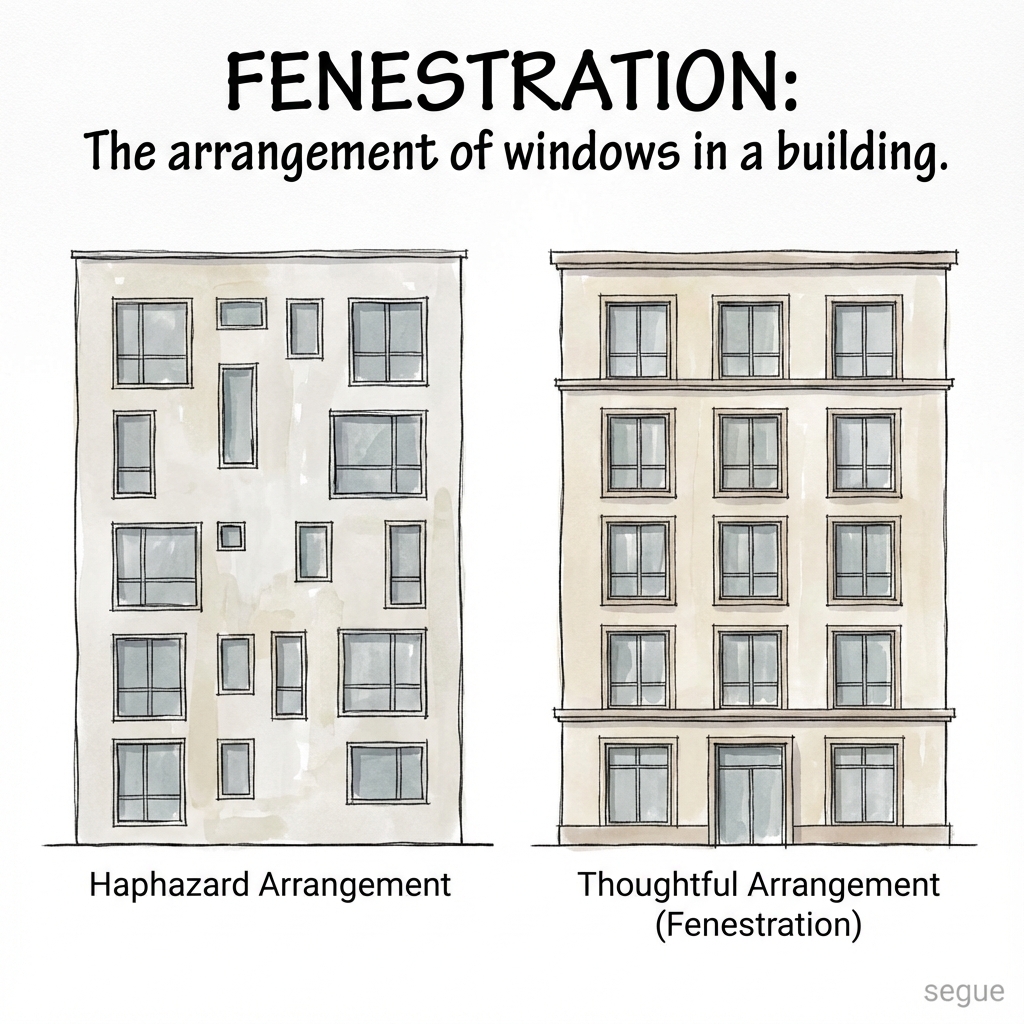
fenestration
/ˌfenɪˈstreɪʃən/the arrangement of windows in a building
“Generous fenestration flooded the room with light.”
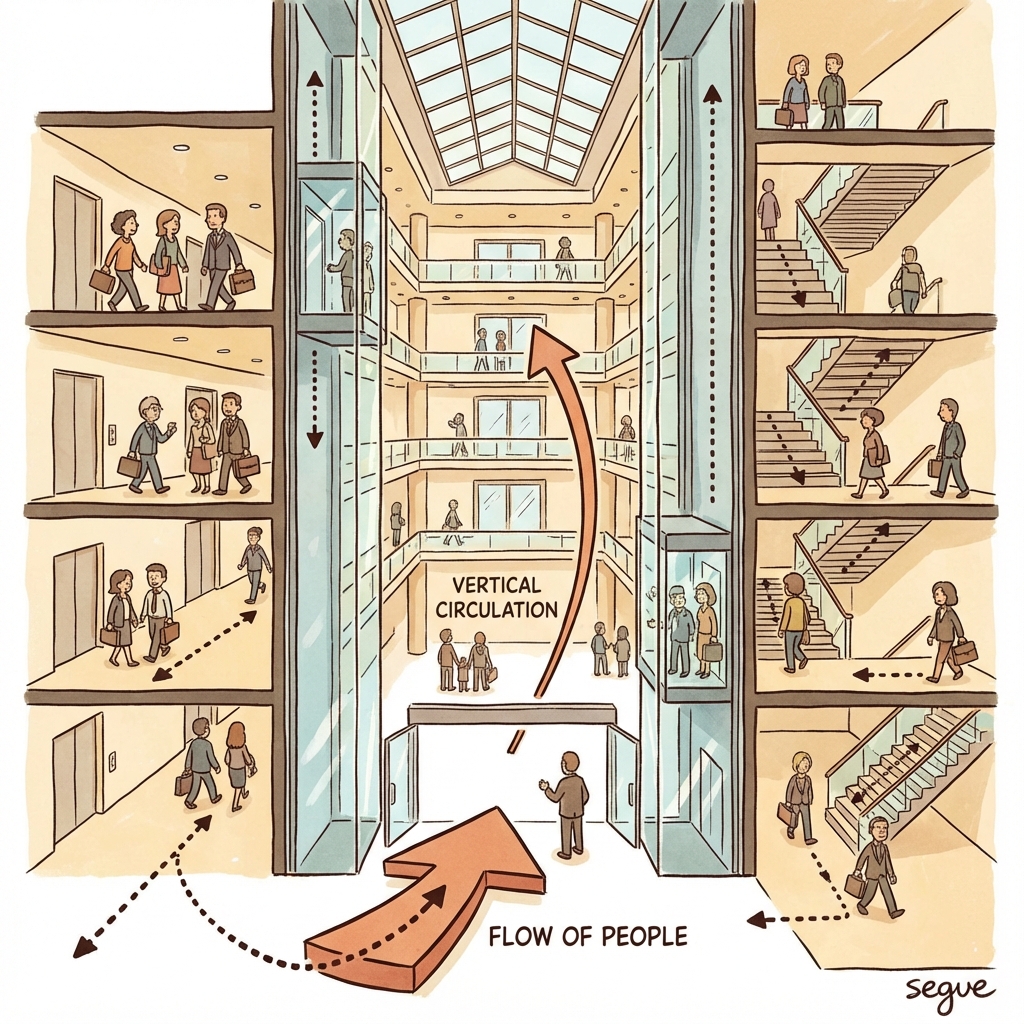
circulation
/ˈsɝkjəˌɫeɪʃən/the movement of people through a building
“The atrium improved circulation between floors.”
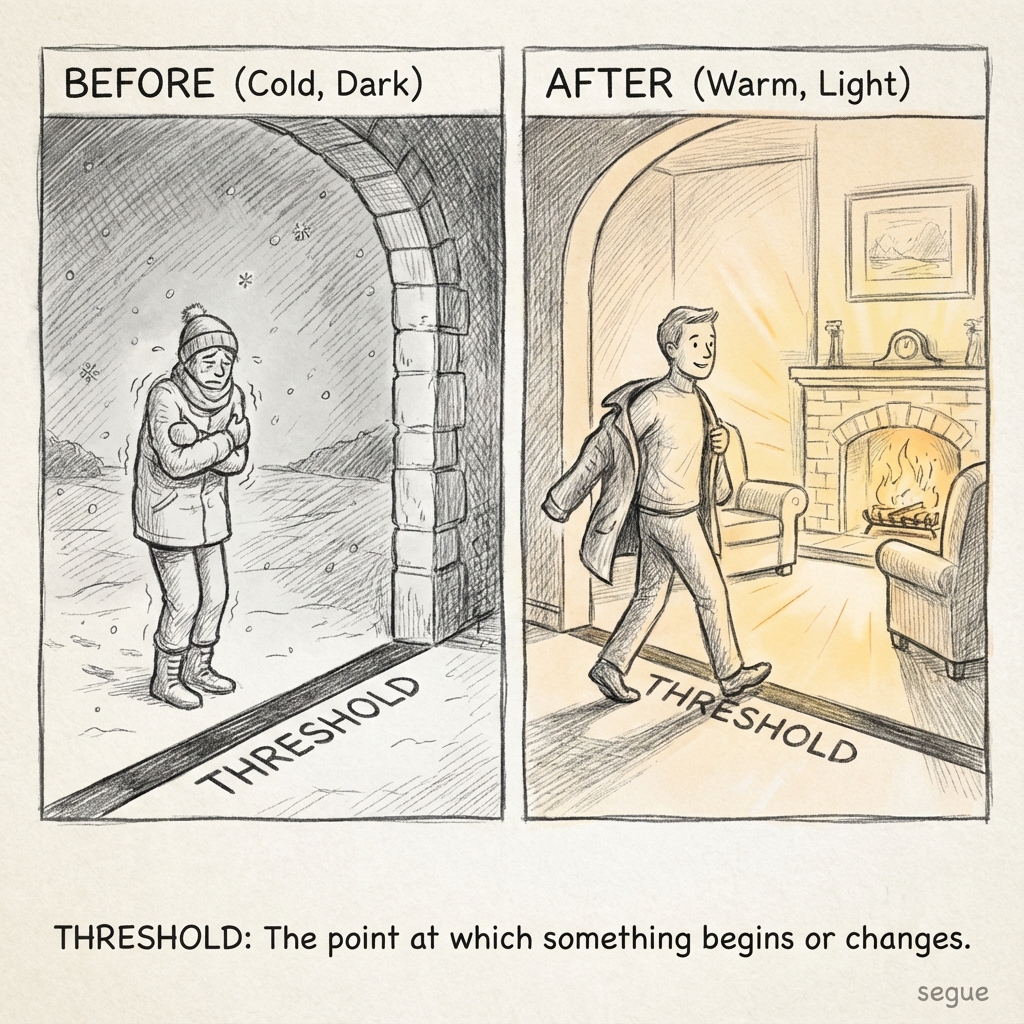
threshold
/ˈθɹɛˌʃoʊɫd/the transitional space between inside and outside
“The threshold created a sense of arrival.”
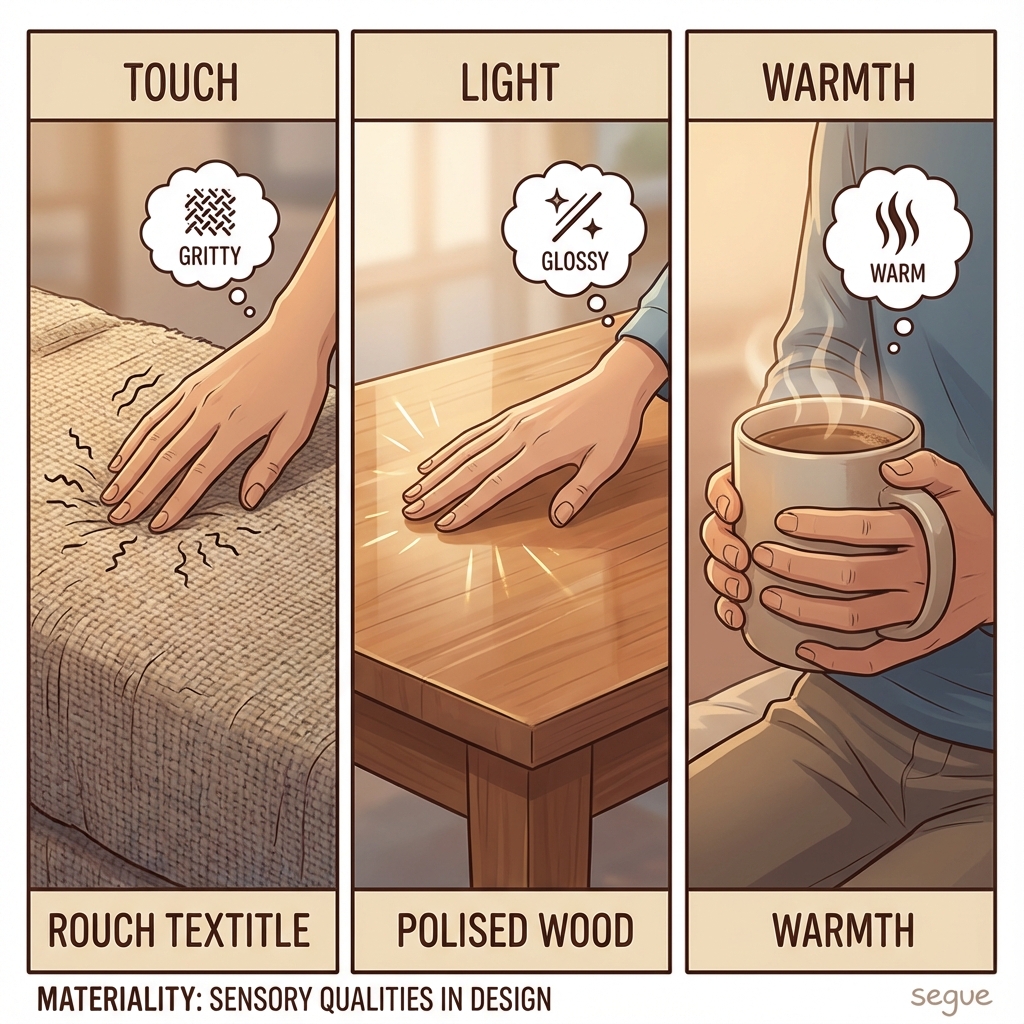
materiality
/məˌtɪɹiˈæɫɪti/the sensory qualities of materials used in design
“The warm materiality of wood contrasted with cool stone.”
More from Arts & Culture
Explore other vocabulary categories in this collection.