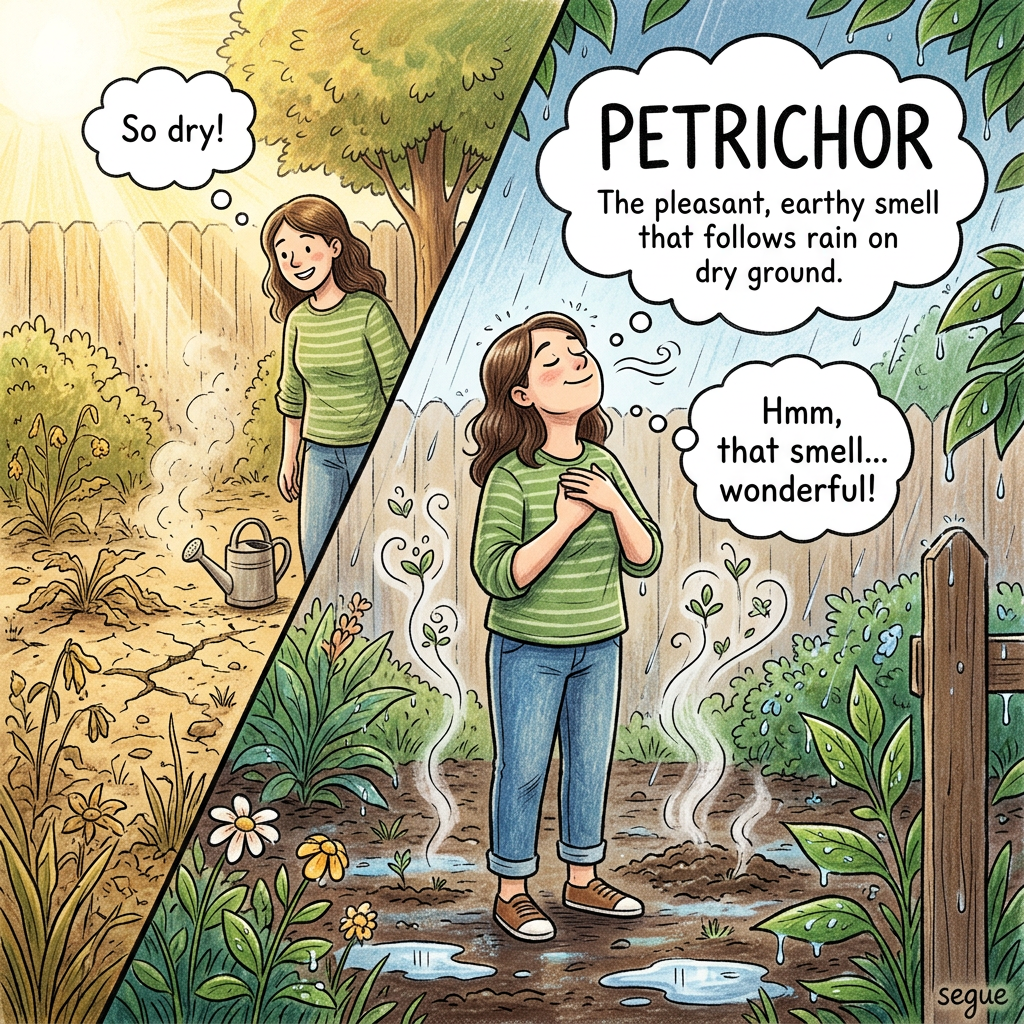
petrichor
/ˈpɛtrɪkɔː/
the pleasant, earthy smell that follows rain on dry ground
petrichor in a sentence
“She opened the window just to breathe in the petrichor after the storm.”
Origin of petrichor
Coined in 1964 from Greek petra stone + ichor the fluid in the veins of the gods
What does petrichor really mean?
Petrichor is the smell of rain on dry earth — mineral, green, and instantly recognizable. The scent is strongest after a long dry spell, when the first drops release months of accumulated plant oils and soil compounds into the air.
The story behind petrichor
Coined in 1964 by Australian CSIRO scientists Isabel Joy Bear and Richard Thomas, from Greek petra (stone) and ichor (the blood of the gods). The chemistry: plant oils absorbed by soil and rock, plus geosmin — a compound produced by soil bacteria to which human noses are extraordinarily sensitive.
How to use petrichor
Use it in sensory and nature writing: "the petrichor rising off the pavement." It is a precise, evocative noun that rewards being used exactly — for the after-rain smell specifically, not rain in general.
Related Words
solitude
the state of being alone, often by choice and at peace
ethereal
extremely delicate and light; seemingly too perfect for this world
luminous
full of or shedding light; radiant
serenity
the state of being calm, peaceful, and untroubled
halcyon
denoting a past time of idyllic happiness and peace
effervescent
vivacious and enthusiastic; bubbling with high spirits